
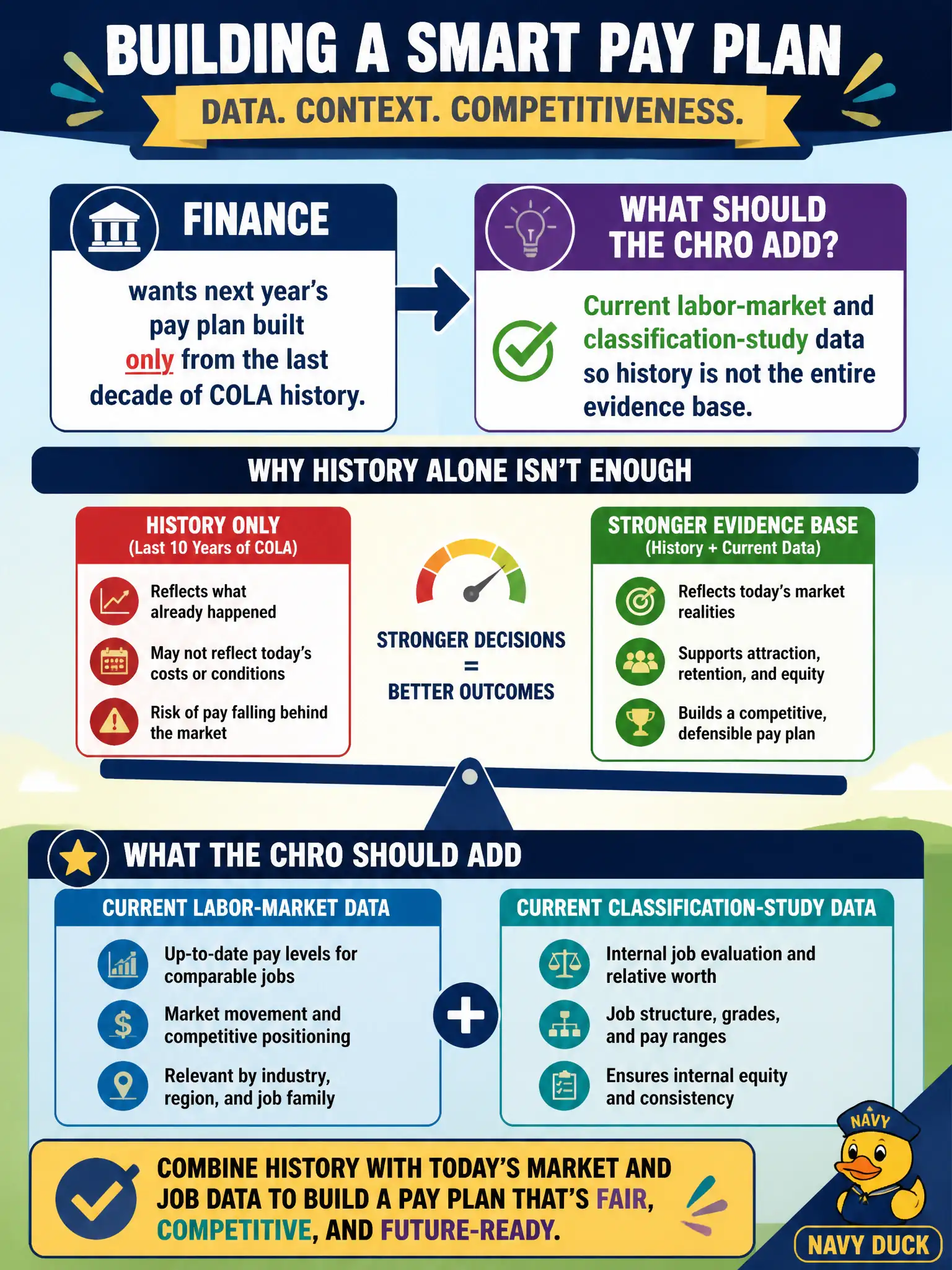
Finance wants next year's pay plan built only from the last decade of COLA history. What should the CHRO add?
Select an answer to reveal the explanation.
Short Explanation
Driving with only the rear-view mirror is how a city prices last decade's labor market. COLA history says what was given, not what jobs cost now or whether classes still match the work. Add current market and classification data or the pay plan is a scrapbook.
Full Explanation
Adding current labor-market and classification-study data so history is not the entire evidence base is correct when finance wants next year’s pay plan built only from a decade of COLA history. Rear-view COLA says what was given, not what jobs cost now or whether class content still matches the work. A larger COLA without market data may still miss hot classes. Across-the-board freezes until the decade average turns negative ignore differentiated markets. Using last decade’s overtime totals as a substitute for external salary evidence confuses premium pay volume with market rates. Exam caveat: SPHR pay planning combines external market and job content evidence with internal history, not history alone. Operational check: commission or buy current surveys, refresh classification matches for changed civic jobs, model range updates by family, and present finance a pay plan where COLA is one input among market and equity factors. In municipal practice, record the rationale in the recommendation packet so future leaders see why rejected options would weaken service, equity, or legal durability for residents. Re-validate after the next budget or bargaining cycle that the control still holds under current staffing and legal constraints.