
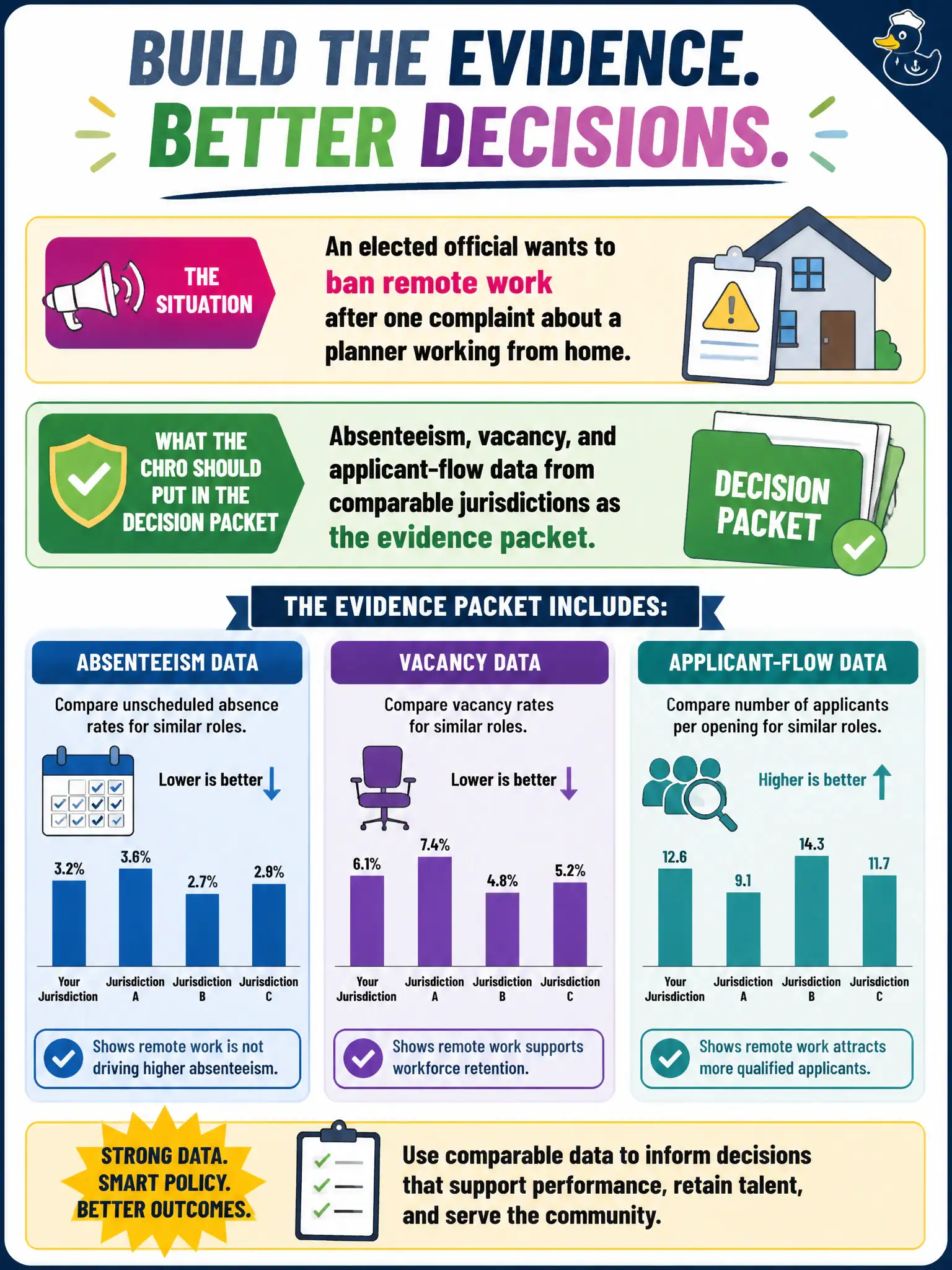
An elected official wants to ban remote work after one complaint about a planner working from home. What should the CHRO put in the decision packet?
Select an answer to reveal the explanation.
Short Explanation
One complaint is a weather report from a single porch, not a climate study. Banning remote work off that porch can blow up vacancy and applicant flow without anyone checking. Bring comparable-jurisdiction data so the decision is a packet, not a reaction.
Full Explanation
Putting absenteeism, vacancy, and applicant-flow data from comparable jurisdictions in the decision packet is correct when an elected official wants to ban remote work after one complaint. SPHR recommendations are evidence packets, not reactions to a single anecdote about a planner at home. The complaint file alone is the fastest path to a brittle policy. Drafting a ban to reverse later if recruiting collapses treats workers as an experiment. Naming remote workers for individual political pressure is retaliatory risk and poor governance. Exam caveat: SPHR policy advice aggregates relevant labor and attendance evidence rather than generalizing from one case. Operational check: assemble comparable-jurisdiction metrics, segment roles that require on-site civic service, propose targeted accountability for abuse instead of a blanket ban, and brief the official on vacancy risk before any ordinance language moves. In municipal practice, record the rationale in the recommendation packet so future leaders see why rejected options would weaken service, equity, or legal durability for residents. Re-validate after the next budget or bargaining cycle that the control still holds under current staffing and legal constraints.