
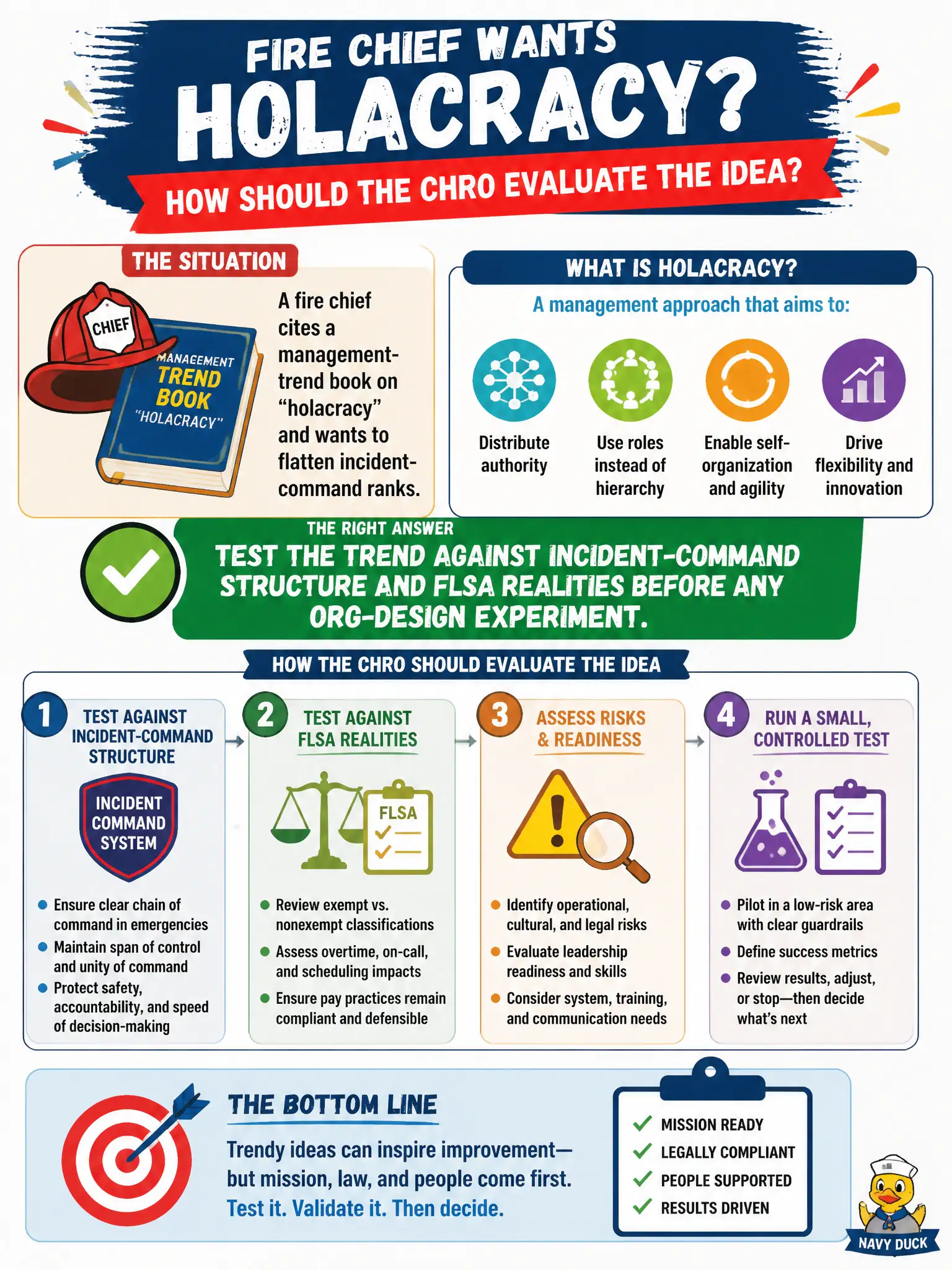
A fire chief cites a management-trend book on "holacracy" and wants to flatten incident-command ranks. How should the CHRO evaluate the idea?
Select an answer to reveal the explanation.
Short Explanation
A trendy org chart that ignores who is in command at a fire is a book club, not a department. Incident command and overtime law are not optional footnotes. Run the idea through those operational and legal filters before anyone experiments with the ranks.
Full Explanation
Testing a holacracy trend against incident-command structure and FLSA realities before any org-design experiment is correct because management books are inputs, not instructions for fire service. Flattening ranks can break unity of command at structure fires and collide with overtime rules that govern hours. Adopting holacracy citywide because a book is published treats print as validation. Piloting on structure fires first experiments with life safety. Replacing FLSA overtime rules with self-managed squads is not available as a local policy choice. Exam caveat: SPHR evaluates management trends against operational, legal, and safety constraints before redesign. Operational check: map proposed role changes to ICS and FLSA, reject elements that break command or wage law, document the analysis for the fire chief and city manager, and only pilot non-emergency administrative work if any experiment proceeds. In municipal practice, record the rationale in the recommendation packet so future leaders see why rejected options would weaken service, equity, or legal durability for residents. Re-validate after the next budget or bargaining cycle that the control still holds under current staffing and legal constraints.