
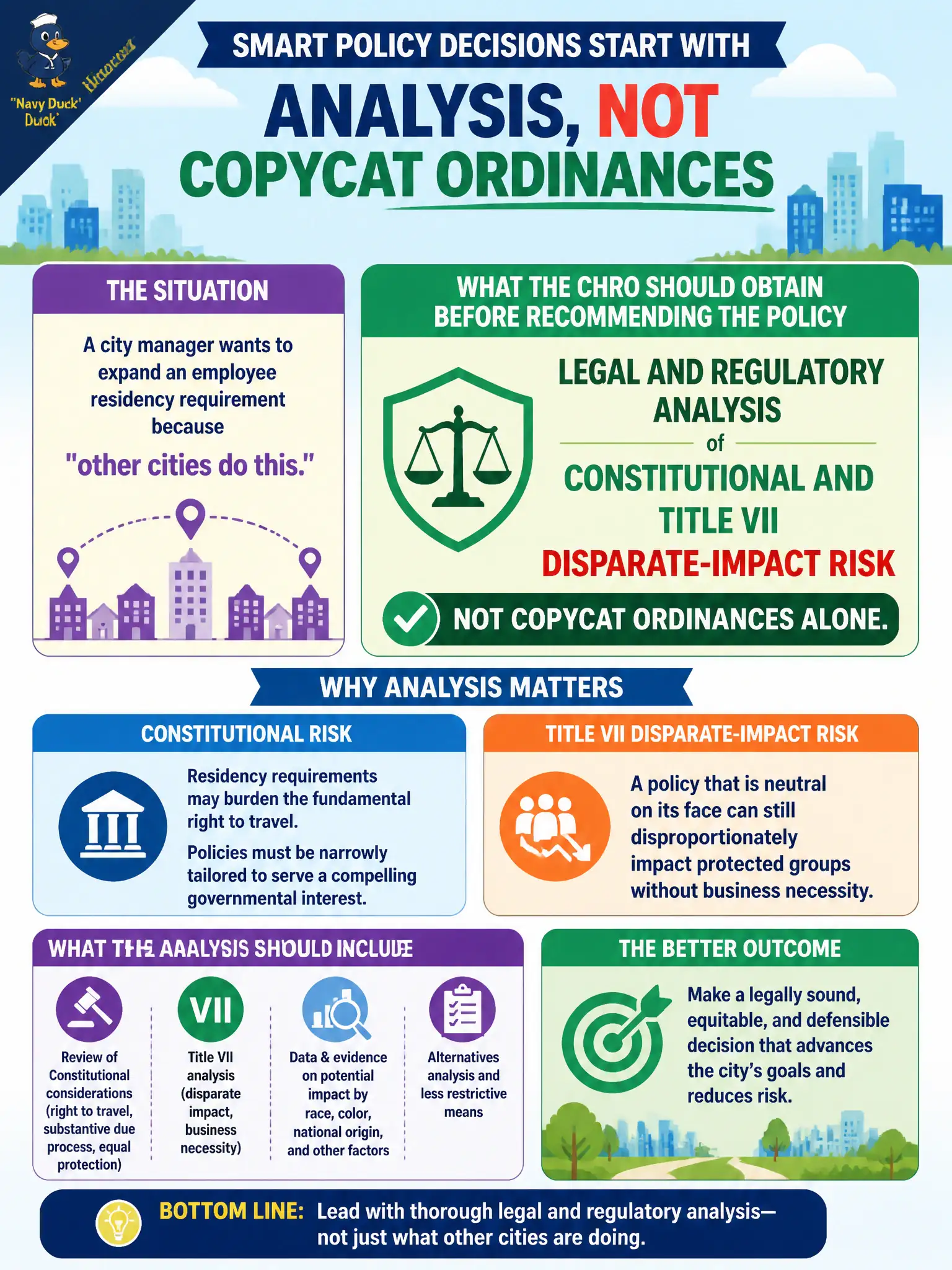
A city manager wants to expand an employee residency requirement because "other cities do this." What should the CHRO obtain before recommending the policy?
Select an answer to reveal the explanation.
Short Explanation
Copying the next town's ordinance is not a legal strategy—it is peer pressure on letterhead. Residency rules can raise constitutional and Title VII disparate-impact issues that a neighbor's habit will not cure. Get the legal analysis before the policy, not after a charge.
Full Explanation
Obtaining legal and regulatory analysis of constitutional and Title VII disparate-impact risk—not copycat ordinances alone—is required before expanding an employee residency requirement. “Other cities do this” is peer pressure, not legal cover. Neighboring ordinance lists do not immunize against constitutional or Title VII claims. An employee vote does not waive statutory or constitutional constraints. Launching communications first and calling counsel only after a charge inverts risk order. Exam caveat: SPHR policy recommendations for residency and similar rules rest on legal analysis plus labor-market effects, not mimicry. Operational check: commission counsel analysis of disparate-impact and constitutional issues, model recruiting effects on hard-to-fill civic classes, present alternatives (response-time requirements, targeted incentives), and recommend only what survives legal and workforce screens. In municipal practice, record the rationale in the recommendation packet so future leaders see why rejected options would weaken service, equity, or legal durability for residents. Re-validate after the next budget or bargaining cycle that the control still holds under current staffing and legal constraints.