
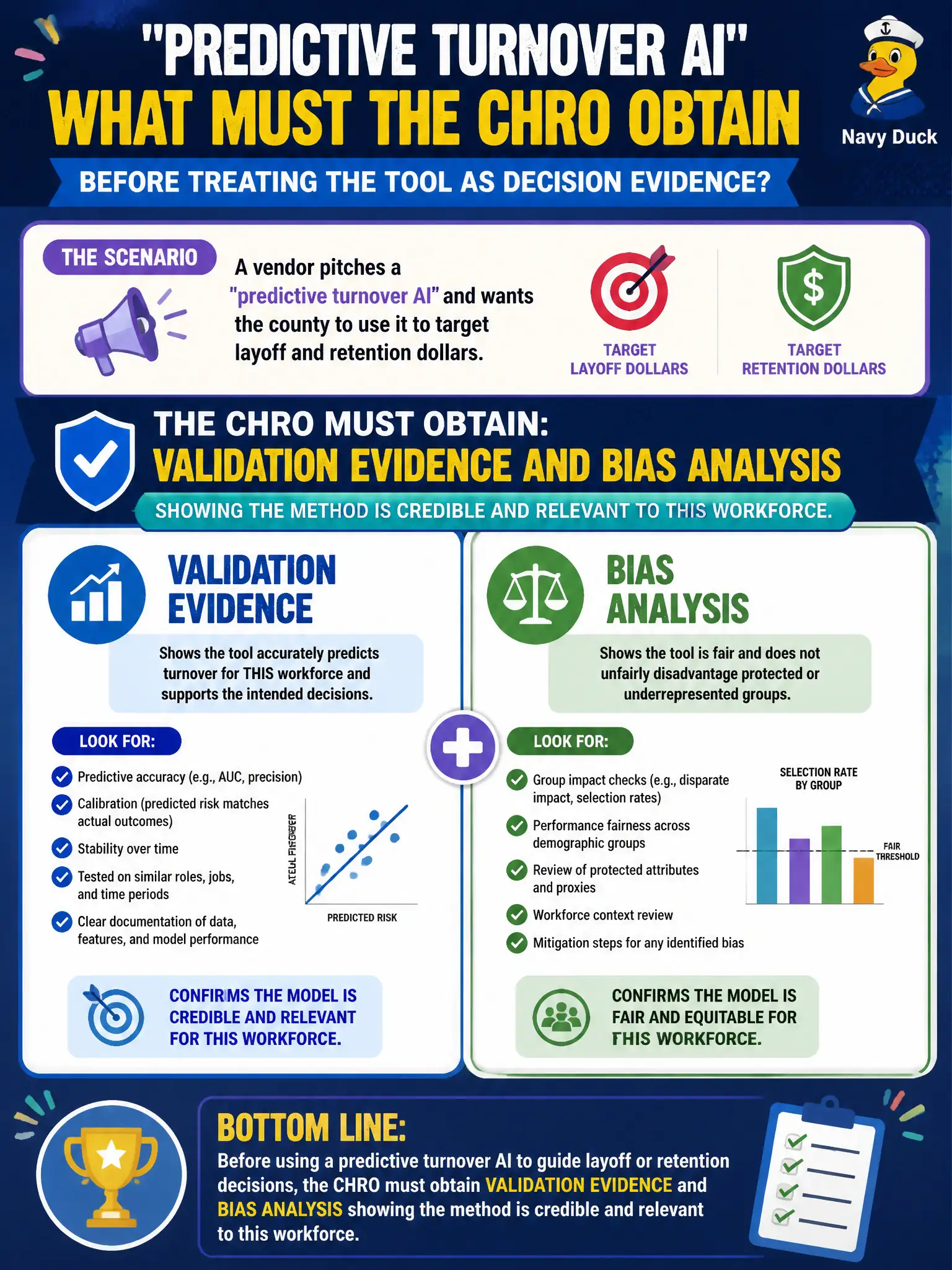
A vendor pitches a "predictive turnover AI" and wants the county to use it to target layoff and retention dollars. What must the CHRO obtain before treating the tool as decision evidence?
Select an answer to reveal the explanation.
Short Explanation
A shiny AI score is not evidence until someone shows the homework. If the model is a black box with a bias problem, it will spend retention money on the wrong people—or worse, target the wrong people for layoff. Ask for validation and bias analysis before a single dollar or name moves.
Full Explanation
Obtaining validation evidence and bias analysis showing the predictive turnover tool is credible and relevant to this workforce is required before treating it as decision evidence for layoff or retention dollars. Vendor pitches and discounted multi-year licenses are not methods review. Testimonials from counties that never examined methods are marketing. Feeding the model into layoff lists first and auditing later experiments on people’s livelihoods. Exam caveat: SPHR evidence standards for analytics require methodological credibility, bias review, and workforce relevance before high-stakes use. Operational check: demand documentation of features, training data, error rates, and adverse-impact analysis; pilot with human review on retention offers only; prohibit automated layoff targeting; and retain audit logs so the county can defend civic people decisions. In municipal practice, record the rationale in the recommendation packet so future leaders see why rejected options would weaken service, equity, or legal durability for residents. Re-validate after the next budget or bargaining cycle that the control still holds under current staffing and legal constraints. Discounted multi-year licenses and peer testimonials without method review are procurement pressure, not validation. High-stakes layoff or retention spend based on opaque scores can encode bias against protected groups in the county workforce and create Title VII exposure. Require human-governed use cases, documented error rates, and adverse-impact testing before any dollar moves, and keep a written refusal right when vendors cannot produce the evidence package.