
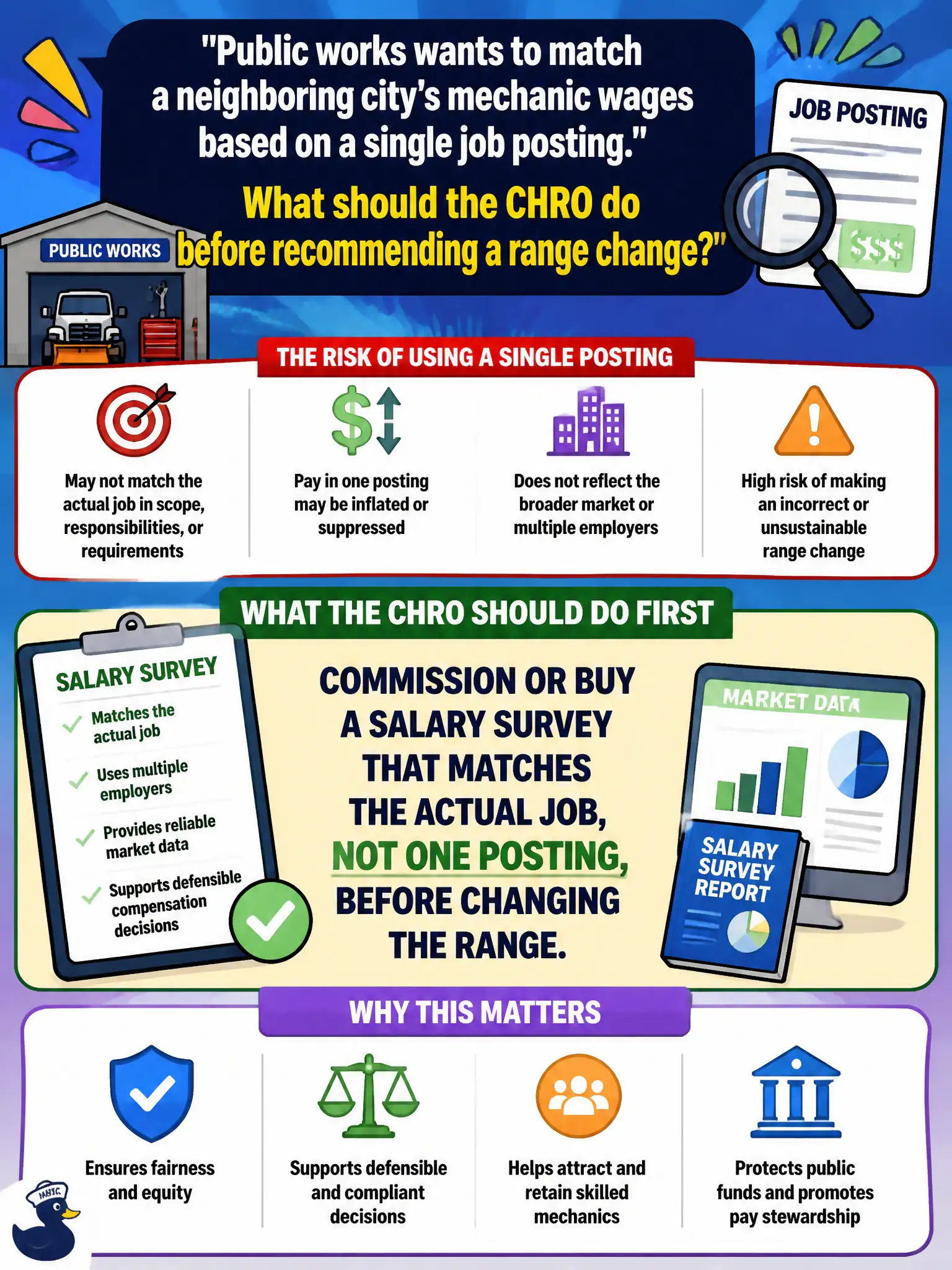
Public works wants to match a neighboring city's mechanic wages based on a single job posting. What should the CHRO do before recommending a range change?
Select an answer to reveal the explanation.
Short Explanation
One job posting is a store-window price, not a market. Maybe that city padded the ad, maybe the job is not the same job, maybe it is a one-week panic hire. A real salary survey matches duties, then prices the job.
Full Explanation
Commissioning or buying a salary survey that matches the actual mechanic job—not copying one neighboring posting—is required before changing a range. A single posting can overstate pay, omit total rewards, or describe different scope; averaging it with last year’s COLA does not create a market. Matching immediately to avoid losing one applicant this week prices panic, not market. Raising only that title while leaving related classifications untouched without analysis creates internal equity fractures across public works. Exam caveat: SPHR pay decisions require job-matched survey evidence from an adequate sample, not storefront postings. Operational check: define the mechanic job content, select a relevant public-sector survey with adequate n, recommend range changes with equity impact on related classes, and document why the lone posting was insufficient evidence for the civic pay plan. In municipal practice, record the rationale in the recommendation packet so future leaders see why rejected options would weaken service, equity, or legal durability for residents. Re-validate after the next budget or bargaining cycle that the control still holds under current staffing and legal constraints.