
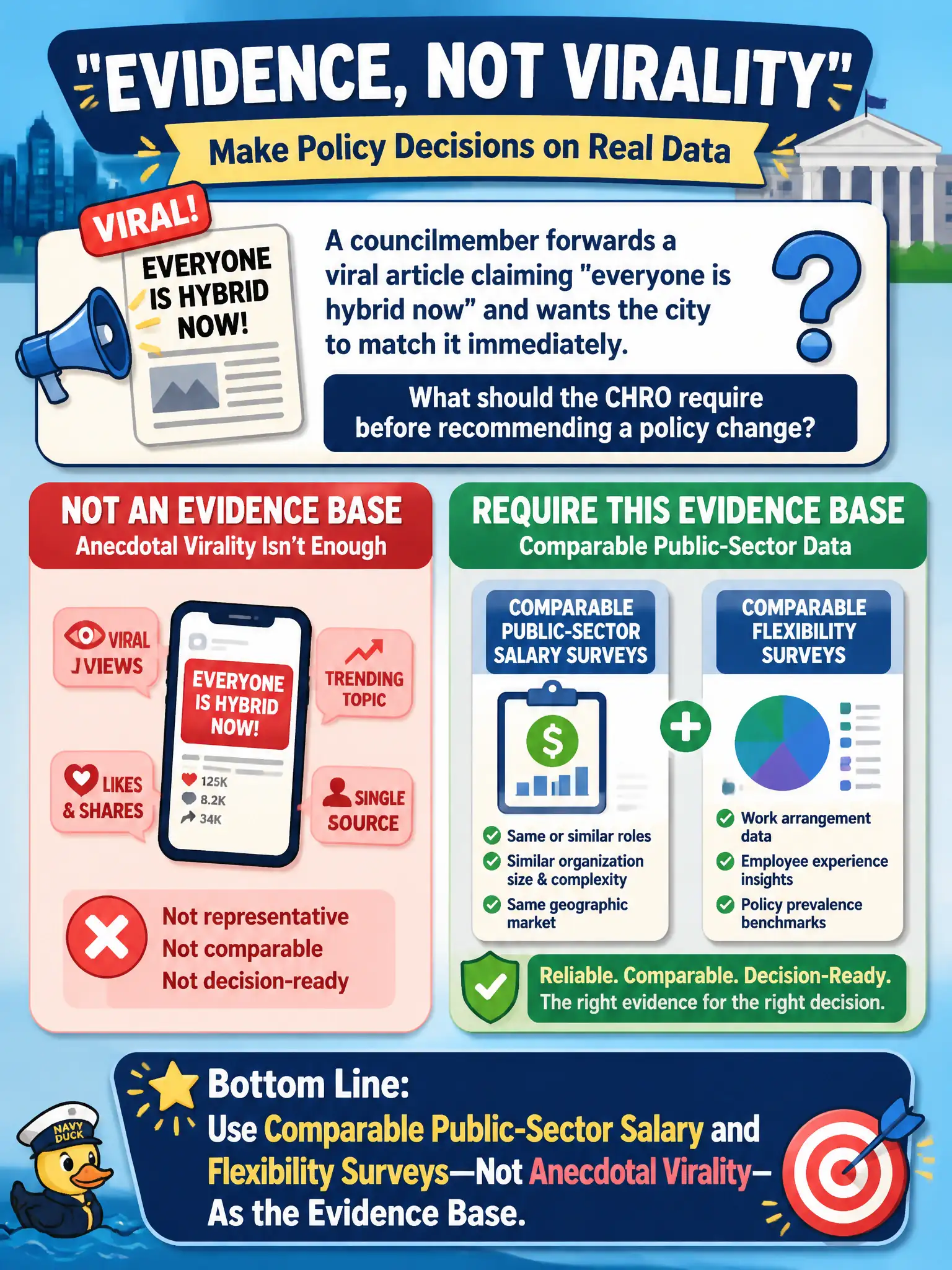
A councilmember forwards a viral article claiming "everyone is hybrid now" and wants the city to match it immediately. What should the CHRO require before recommending a policy change?
Select an answer to reveal the explanation.
Short Explanation
A viral headline is not a labor-market study—it is a billboard that happened to load on a phone. Cities do not set hybrid policy off a billboard. Comparable public-sector surveys on pay and flexibility are the evidence that can actually support a recommendation.
Full Explanation
Requiring comparable public-sector salary and flexibility surveys—not anecdotal virality—as the evidence base is correct before recommending hybrid policy change. A councilmember’s forwarded “everyone is hybrid now” article is not a labor-market study for municipal work constrained by service coverage, bargaining, and public access. Immediate adoption of a headline so the city is not “last” substitutes trend anxiety for evidence. Polling the official’s social-media followers is not a valid sample. Waiting for a private technology firm’s blog likewise mismatches sector and role. Exam caveat: SPHR recommendations rest on credible, relevant sources appropriate to public-sector constraints, not viral anecdotes. Operational check: gather comparable municipal survey data on pay and flexibility by job family, map which civic roles require on-site presence, bargain where required, and only then draft a hybrid policy that protects service coverage for residents. In municipal practice, record the rationale in the recommendation packet so future leaders see why rejected options would weaken service, equity, or legal durability for residents. Re-validate after the next budget or bargaining cycle that the control still holds under current staffing and legal constraints.