
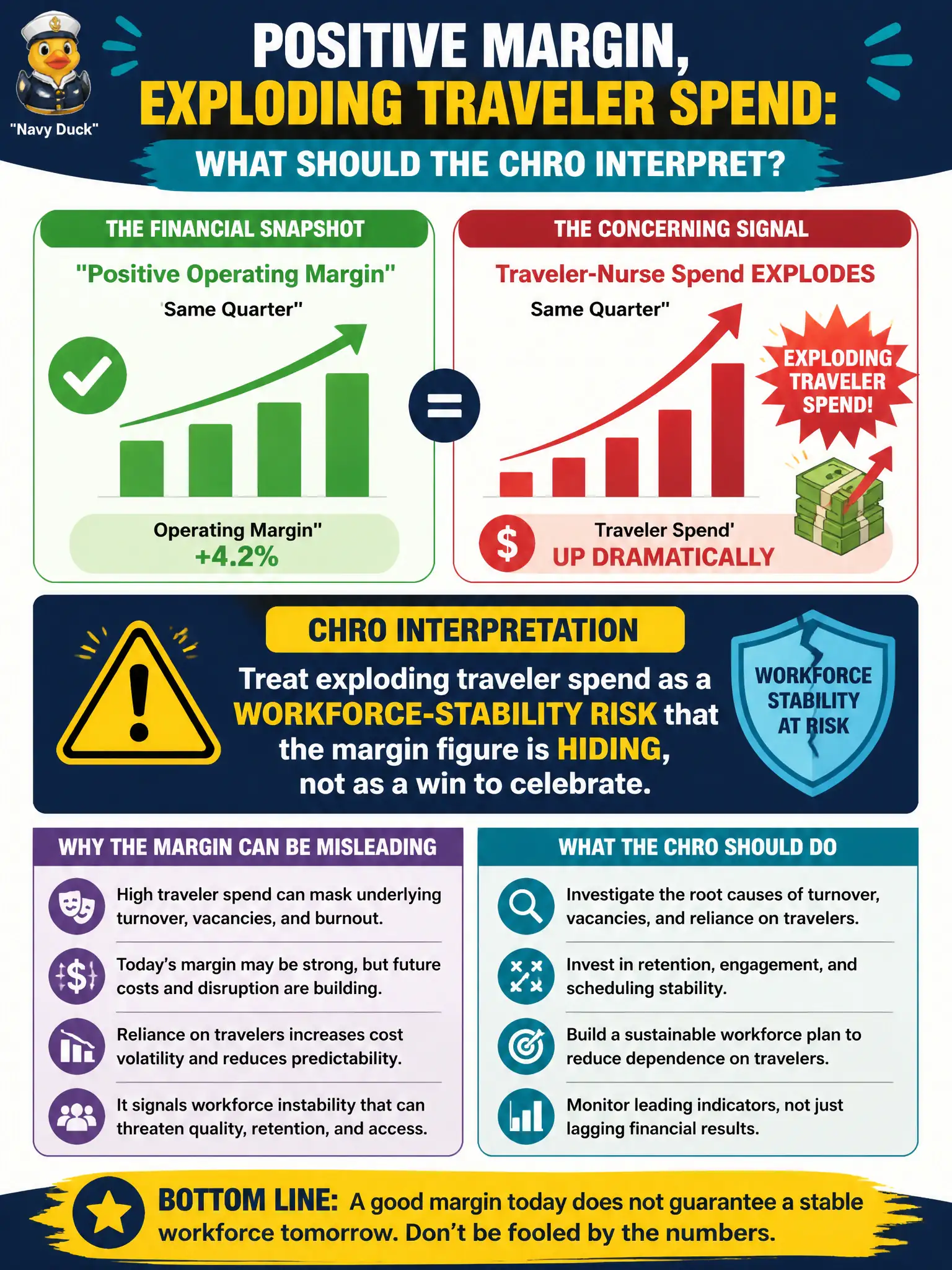
A county hospital district reports a positive operating margin in the same quarter traveler-nurse spend explodes. How should the CHRO interpret that financial pattern?
Select an answer to reveal the explanation.
Short Explanation
Booking a profit by renting every nurse in the region is like paying a rideshare for every commute and calling the car paid off. The margin looks healthy while the workforce is being rented at a premium. That pattern is a stability problem, not a victory lap.
Full Explanation
Treating exploding traveler-nurse spend as a workforce-stability risk that a positive operating margin is hiding is correct because financial statements can mask people-cost instability when contract labor substitutes for a durable workforce. A county hospital district that books margin while renting nursing capacity at a premium is not proving a sustainable model for patient care. Celebrating the margin as proof the traveler strategy works confuses short-term accounting with workforce health. Moving traveler spend into capital outlay to flatter the operating margin is classification gamesmanship, not strategy. Ignoring traveler cost because it sits outside personnel-services still leaves the instability on the civic books. Exam caveat: SPHR financial reading looks through margin to workforce composition and premium labor dependence. Operational check: report traveler hours, cost premium, and vacancy together with margin; set a stability plan to rebuild employed nursing capacity; and stop treating rented labor as a permanent win for the public hospital. In municipal practice, record the rationale in the recommendation packet so future leaders see why rejected options would weaken service, equity, or legal durability for residents.