
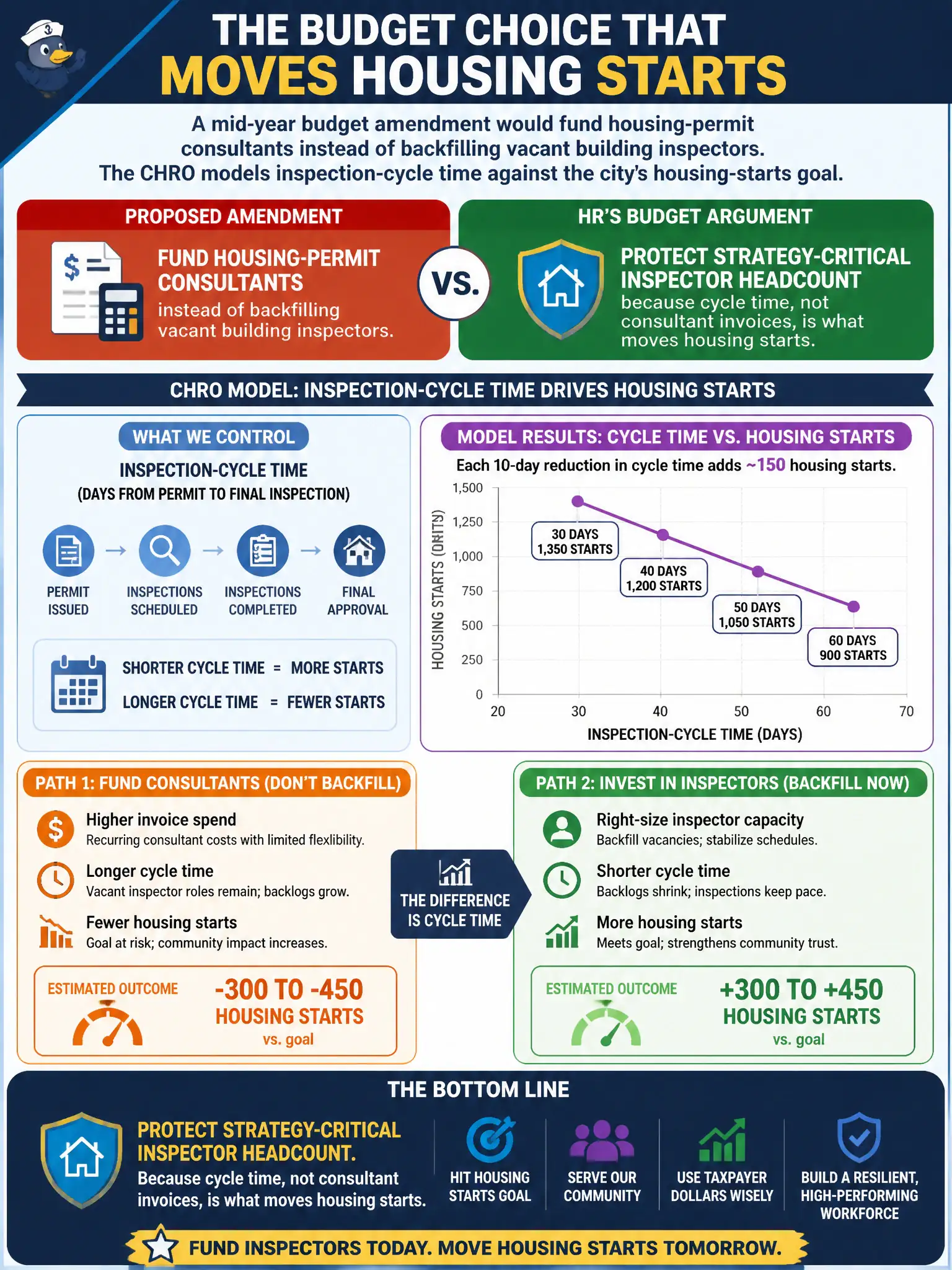
A mid-year budget amendment would fund housing-permit consultants instead of backfilling vacant building inspectors. The CHRO models inspection-cycle time against the city's housing-starts goal. What budget argument should HR make?
Select an answer to reveal the explanation.
Short Explanation
Paying a consultant to write memos while the inspection window sits empty is like hiring a wedding planner and forgetting the officiant. Housing starts move when inspectors can actually close the cycle. The better spend is the people line that shortens that cycle.
Full Explanation
Protecting strategy-critical inspector headcount because inspection-cycle time—not consultant invoices—moves housing starts is the correct budget argument. Mid-year amendments that fund housing-permit consultants while leaving inspector posts vacant buy paper movement without closing the people process that constrains the city’s housing goal. Claiming consultants are always cheaper ignores cycle-time effects on starts and resident wait times. Calling cycle time purely an operations metric so HR stays out abandons SPHR’s role in budget trade-offs that are people strategy. Freezing both consultants and inspectors until a CAFR surplus appears delays housing delivery without diagnosis. Exam caveat: SPHR budget advocacy prioritizes people capacity that constrains strategic outcomes over cheaper substitutes that do not clear the bottleneck. Operational check: model cycle time with and without inspector backfills, present housing-starts impact to the budget office, protect inspector FTE in the amendment, and use consultants only for non-bottleneck surge work that does not replace civic inspection capacity. In municipal practice, record the rationale in the recommendation packet so future leaders see why rejected options would weaken service, equity, or legal durability for residents.