
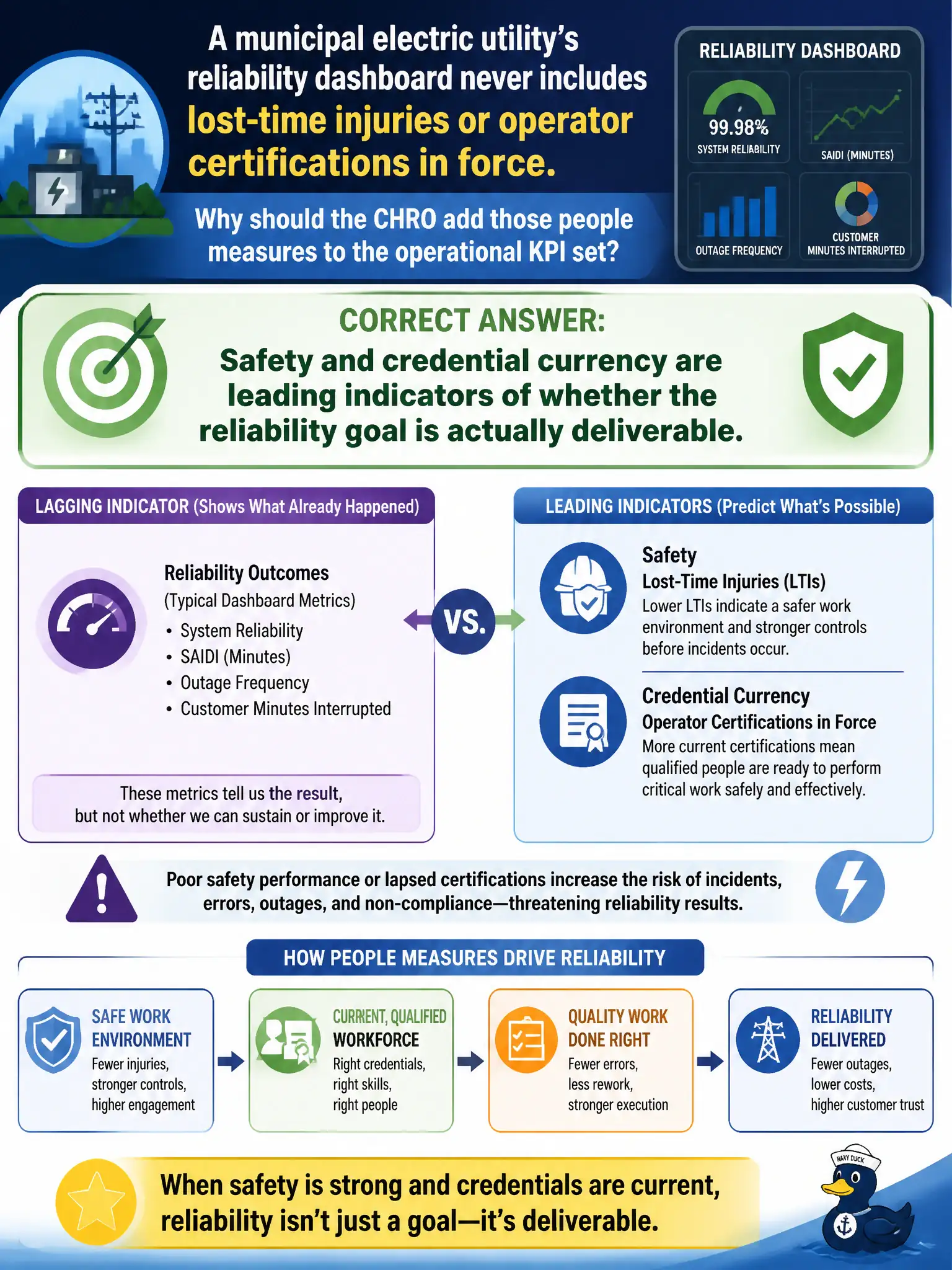
A municipal electric utility's reliability dashboard never includes lost-time injuries or operator certifications in force. Why should the CHRO add those people measures to the operational KPI set?
Select an answer to reveal the explanation.
Short Explanation
A plant that ignores licenses is like an airline that tracks on-time departures but not whether the pilots are current. Reliability is a people-and-safety system, not just a breaker count. Lost-time injuries and live certifications are early warnings that the reliability goal is about to miss.
Full Explanation
Adding lost-time injuries and operator certifications in force to the municipal electric utility’s operational KPI set is correct because safety and credential currency are leading indicators of whether the reliability goal is actually deliverable. Outage minutes alone describe past breaker events; they do not show whether the civic workforce can legally and safely run the plant tomorrow. Treating OSHA logs as a replacement for reliability metrics wrongly forces a choice between safety and service instead of integrating both. Keeping certification counts only in a training catalog hides leading indicators from enterprise oversight. Filing injury rates only in workers’ compensation treats people harm as lagging finance rather than as operational strategy. Exam caveat: SPHR measurement ties people safety and qualification metrics to operational strategy dashboards, not only to HR files. Operational check: place lost-time rate and certifications-in-force beside reliability KPIs, set thresholds that pause noncritical work when credentials lapse, and review both in the same utility performance meeting that serves ratepayers. In municipal practice, record the rationale in the recommendation packet so future leaders see why rejected options would weaken service, equity, or legal durability for residents.