
A parks department is "on budget" only because it stopped filling lifeguard posts and closed municipal pools. How should the CHRO present the year to the city manager?
Select an answer to reveal the explanation.
Short Explanation
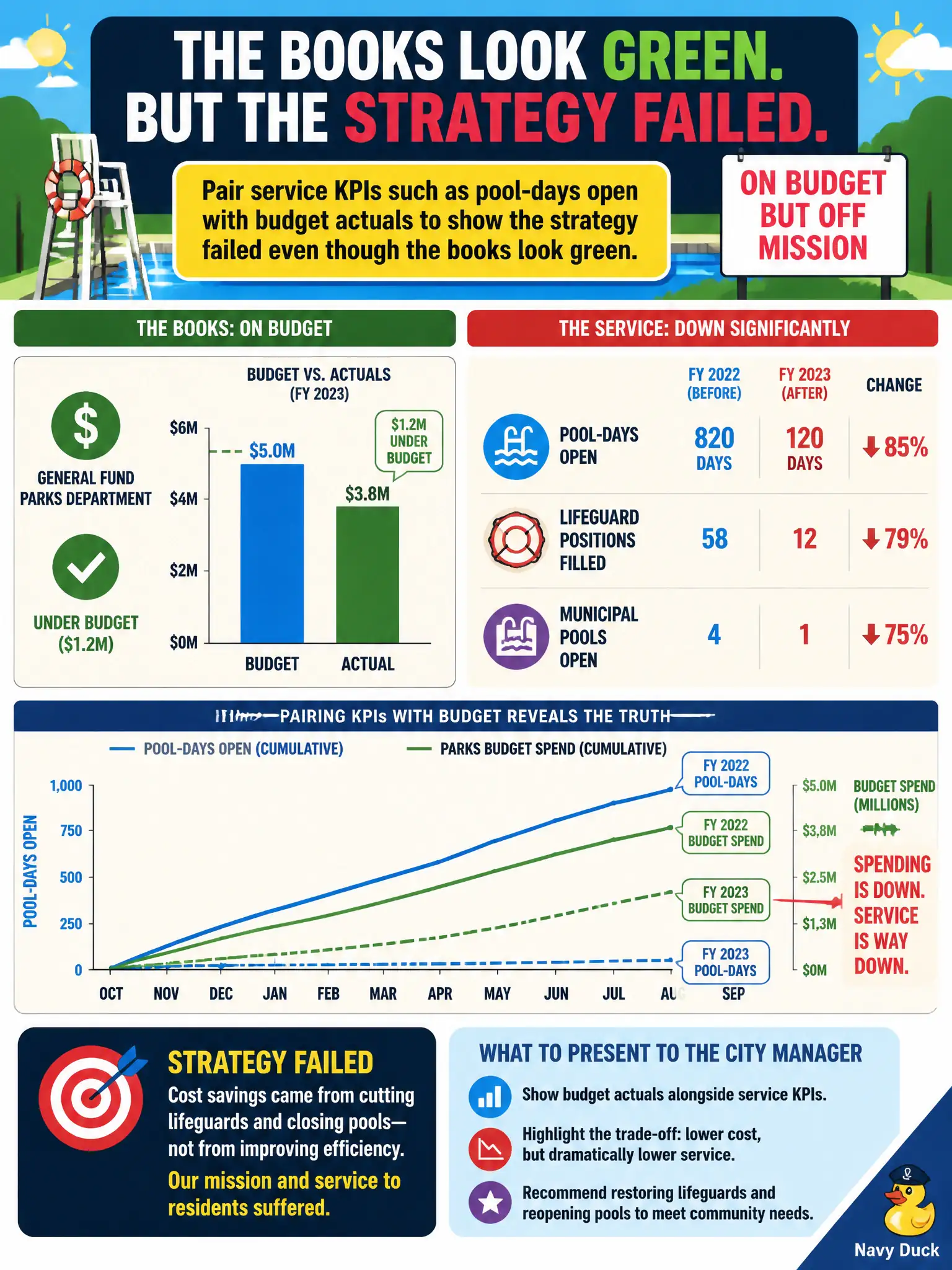
Coming in under budget by shutting the pool is not a win—it is a closed pool with a pretty spreadsheet. Budget compliance without service outcomes is a costume, not a strategy. Pair the ledger with pool-days open so the city manager sees the real result.
Full Explanation
Pairing service KPIs such as pool-days open with budget actuals to show the strategy failed even though the books look green is correct because budget compliance is not service success. A parks department that stays “on budget” by leaving lifeguard posts empty and closing pools converts a recreation goal into an appropriation win while residents lose swimming access. Treating the balanced line as strategy success confuses spending control with outcome delivery. Converting remaining lifeguard FTE to seasonal contractors solely to keep the ledger green may still leave pools closed if coverage is not restored. Hiding closures from the dashboard until the next budget delays accountability. Exam caveat: SPHR measurement pairs financial actuals with service outcomes so under-spend via service cuts is not misread as performance. Operational check: report pool-days open, lifeguard coverage, and budget variance together to the city manager, flag service failure despite green books, and restore staffing or formally revise the civic recreation goal rather than celebrating the under-spend. Green books beside closed pools are a reporting failure as much as a service failure. Mandate paired financial and service indicators for recreation so under-spend via closure cannot be framed as managerial success.