
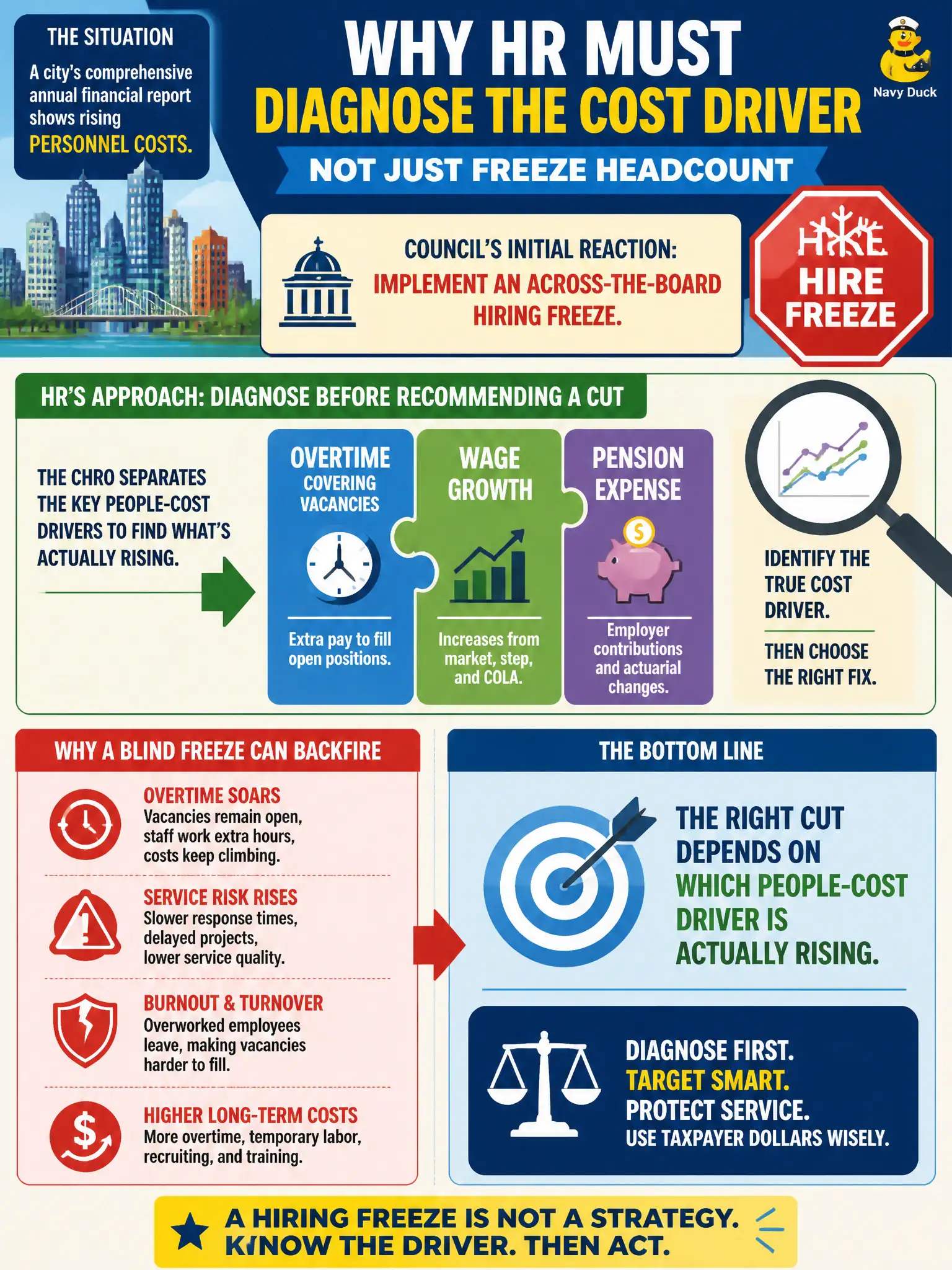
A city's comprehensive annual financial report shows rising personnel costs, and council wants an across-the-board hiring freeze. The CHRO separates overtime covering vacancies, wage growth, and pension expense before recommending a cut. Why must HR diagnose the cost driver instead of freezing headcount?
Select an answer to reveal the explanation.
Short Explanation
If the grocery bill jumped, throwing out the whole cart is not diagnosis—maybe it was steaks, snacks, or the kid's lunch. Personnel cost is the same pile of different drivers. A freeze that ignores overtime-from-vacancies can spend more money and deliver worse service.
Full Explanation
Diagnosing which people-cost driver is rising before recommending cuts is required because personnel cost on financial statements mixes wages, overtime covering vacancies, benefits, and pension—each needing a different fix. An across-the-board hiring freeze aimed at rising CAFR personnel costs can worsen overtime and service risk if vacancies, not headcount growth, are the driver. A freeze is not the only legally defensible control and may be the wrong one. Claiming pension is outside HR’s remit so the freeze should proceed ignores HR’s duty to advise on workforce effects even when finance owns actuarial lines. Asserting CAFR lines cannot be disaggregated excuses analysis the CHRO can still perform with payroll and vacancy data. Exam caveat: SPHR financial interpretation for people decisions requires driver diagnosis before structural cuts. Operational check: separate overtime-from-vacancy, base wage growth, and benefit/pension movement; model service impact of a freeze versus targeted actions; and recommend the cut or investment that matches the true driver for the municipal workforce. Freezing the wrong driver can close counters residents use while overtime balloons elsewhere. Bring a driver tree to budget hearings so cuts target cause, not the entire civic headcount line.