
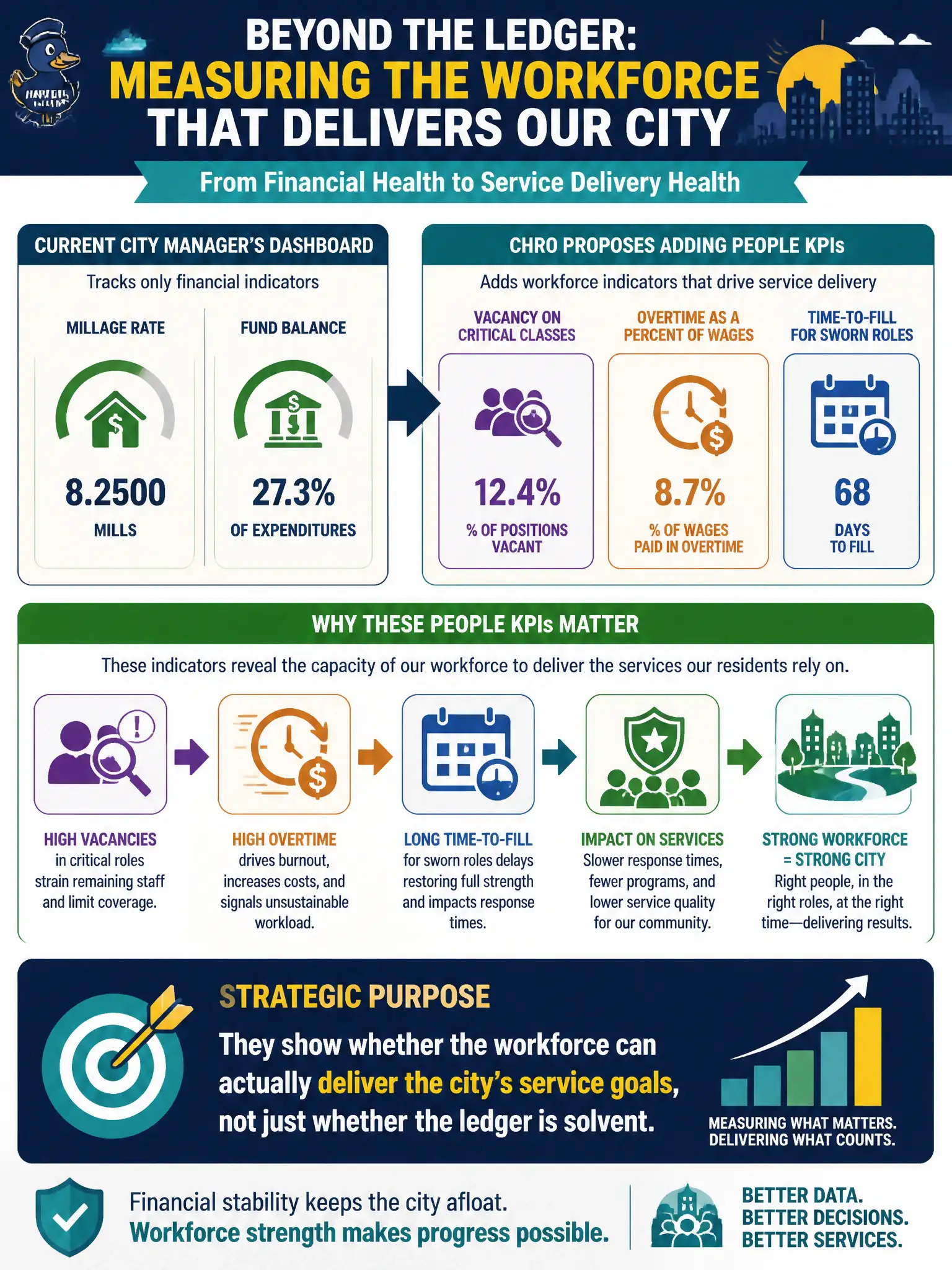
A city manager's dashboard tracks only millage rate and fund balance. The CHRO proposes adding vacancy on critical classes, overtime as a percent of wages, and time-to-fill for sworn roles. What is the strategic purpose of those people KPIs?
Select an answer to reveal the explanation.
Short Explanation
Watching only millage and fund balance is like checking the gas gauge and calling it a road trip. Service still needs drivers, and vacancy, overtime, and time-to-fill say whether those drivers exist. People KPIs tell the city manager if the strategy is actually staffable.
Full Explanation
Adding vacancy on critical classes, overtime as a percent of wages, and time-to-fill for sworn roles shows whether the workforce can deliver the city’s service goals, not merely whether the ledger is solvent—and that is the strategic purpose of those people KPIs. A dashboard that tracks only millage and fund balance checks fiscal fuel without checking whether drivers exist for plows, permits, and patrols. Replacing the CAFR with people KPIs overstates their role; both fiscal and people measures are needed. Using KPIs mainly to benchmark HR’s own staffing ratio is inward-facing and misses enterprise service linkage. Treating them as grant-only metrics denies their role in citywide strategy reviews. Exam caveat: SPHR business metrics include people indicators tied to service and strategy alongside financial measures. Operational check: place critical vacancy, overtime share, and sworn time-to-fill on the city manager’s dashboard beside fiscal KPIs, define thresholds that trigger staffing actions, and review them in the same strategy cadence used for millage and fund balance. Council strategy sessions that ignore critical vacancy while celebrating fund balance misread readiness for snow, crime response, and inspections. Keep people KPIs on the same slide deck as millage so service capacity stays visible.