
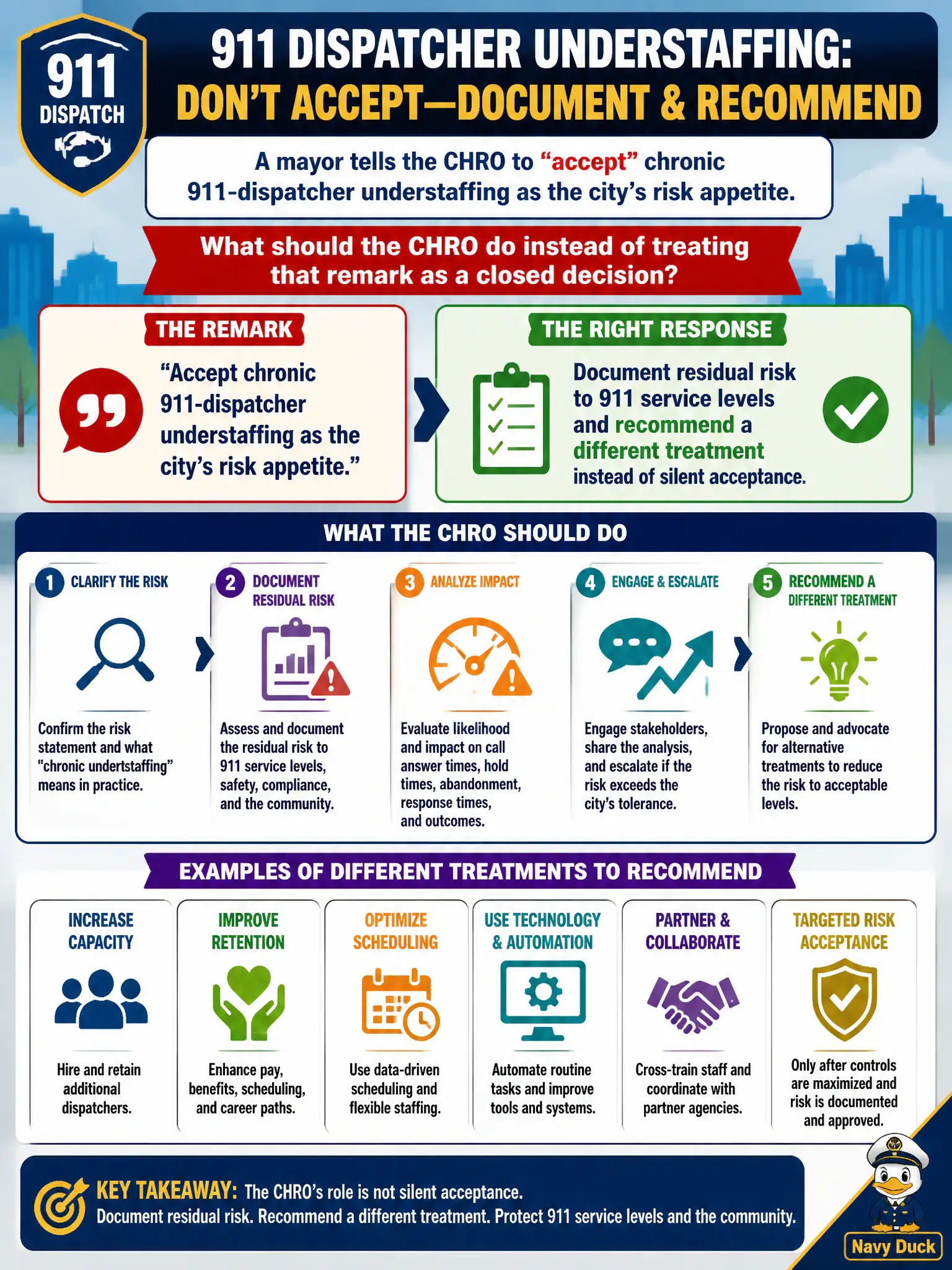
A mayor tells the CHRO to "accept" chronic 911-dispatcher understaffing as the city's risk appetite. What should the CHRO do instead of treating that remark as a closed decision?
Select an answer to reveal the explanation.
Short Explanation
Saying the city will just live with empty 911 seats is not a risk appetite—it is leaving the station unlocked and hoping nobody notices. Real acceptance is a conscious call after leftover risk to service levels is written down. The CHRO's job is to put that residual risk on the table and push a different treatment, not to file a shrug as a closed decision.
Full Explanation
Documenting residual risk to 911 service levels and recommending a different treatment instead of silent acceptance is correct when a mayor tells the CHRO to “accept” chronic dispatcher understaffing. Risk acceptance is a deliberate executive choice that requires residual-risk transparency, not neglect of a known gap that endangers callers. Recording the remark as register closeout so council never revisits staffing converts informal pressure into false closure. Rebranding vacancies as a recruiting campaign without stating residual service risk hides the decision’s consequences. Waiting for accreditation to avoid embarrassing officials delays treatment while 911 performance remains exposed. Exam caveat: SPHR risk acceptance requires documented residual risk and informed decision-making, not informal “live with it” remarks. Operational check: quantify call-taking and answer-time residual risk, present treatment options (staffing, scheduling, mutual aid, technology), record any true acceptance with owner and review date, and escalate to council if informal direction conflicts with published service standards. Callers experiencing emergencies experience residual dispatcher risk whether or not leaders use the word “accept.” Insist on written residual-risk statements and scheduled review dates whenever staffing treatments are deferred for political comfort.