
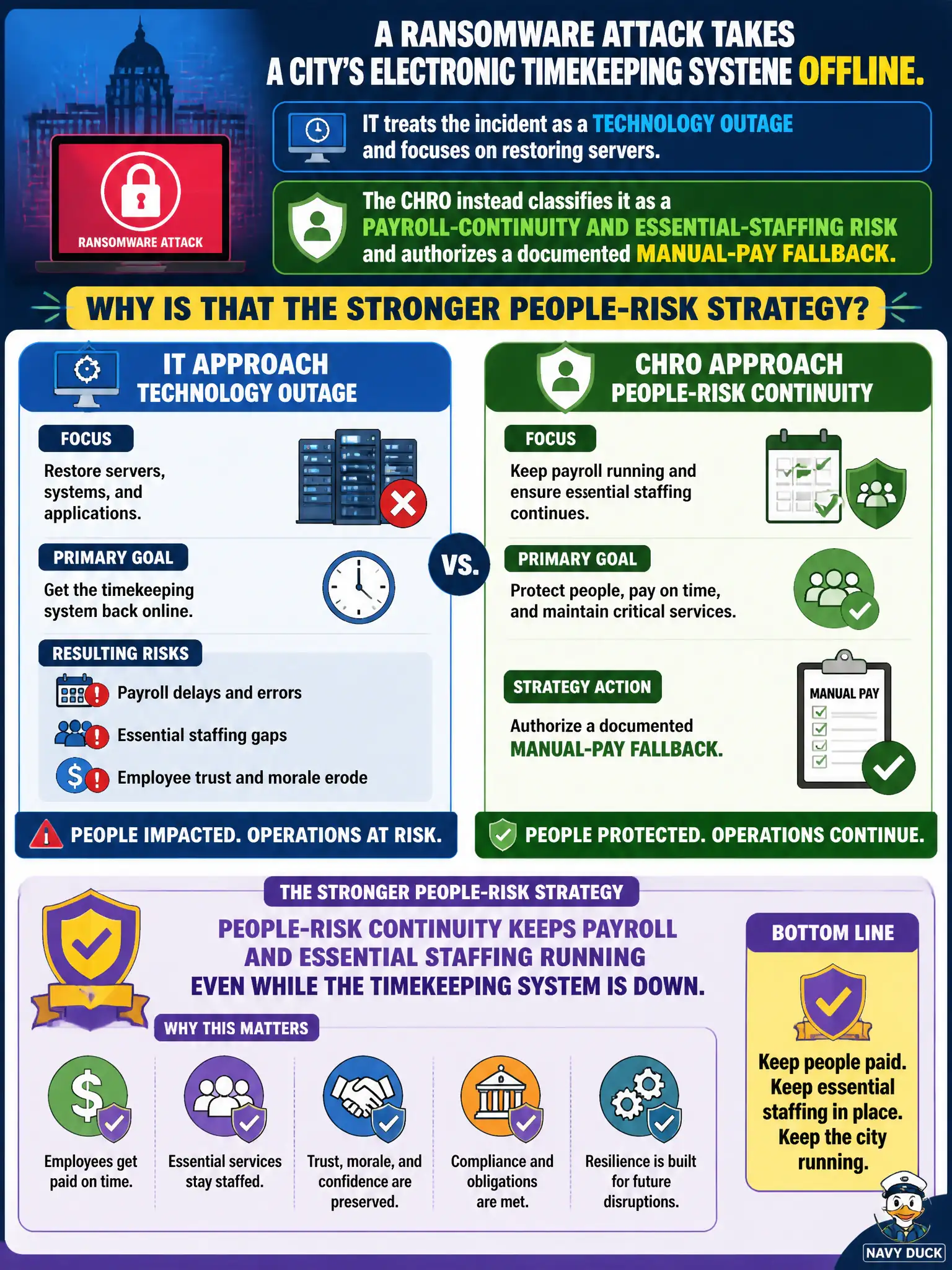
A ransomware attack takes a city's electronic timekeeping system offline. IT treats the incident as a technology outage and focuses on restoring servers. The CHRO instead classifies it as a payroll-continuity and essential-staffing risk and authorizes a documented manual-pay fallback. Why is that the stronger people-risk strategy?
Select an answer to reveal the explanation.
Short Explanation
When the cash register dies, the store still sells milk on a paper ticket—it does not close until the server boots. Payroll is the same: people already worked, and they still have to be paid. Naming a timekeeping outage as people risk means standing up a manual-pay fallback so continuity does not wait on IT's restore clock.
Full Explanation
Classifying the ransomware outage as a payroll-continuity and essential-staffing risk and authorizing a documented manual-pay fallback is the stronger people-risk strategy because business continuity is a people-management problem, not only a server-restoration plan. Employees already worked; wage-hour and morale obligations continue while timekeeping is down. Treating the incident solely as IT availability assumes pay accuracy returns automatically with servers and ignores interim controls. Waiting for a federal disaster declaration before manual pay invents a needless gate and risks missed civic paydays. Labeling the event as people risk does not excuse delaying IT coordination; both tracks must run. Exam caveat: SPHR risk strategy keeps payroll and essential staffing running through documented fallbacks during technology outages. Operational check: activate a written manual-pay procedure with approvals and audit trails, prioritize essential public-service staff, coordinate restoration milestones with IT, reconcile to electronic records after recovery, and update the municipal continuity plan with lessons learned. Missed municipal paydays cascade into hardship for essential workers who kept clinics and plants running during the outage. Keep the manual-pay fallback rehearsed, dual-controlled, and reconciled so continuity never waits on a server reboot alone.