
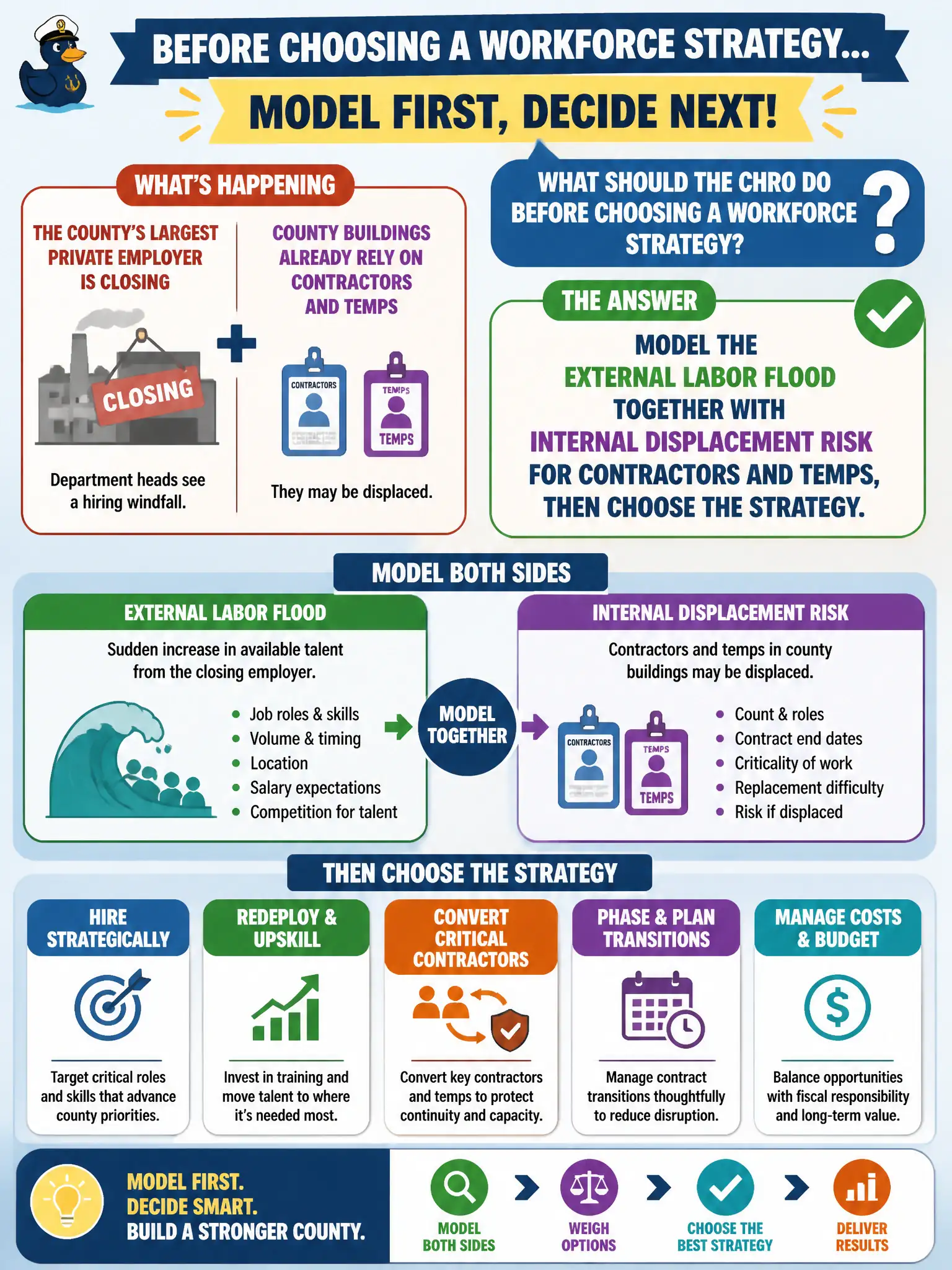
The county's largest private employer is closing, and department heads see a hiring windfall. The CHRO also knows county buildings already rely on contractors and temps who may be displaced. What should the CHRO do before choosing a workforce strategy?
Select an answer to reveal the explanation.
Short Explanation
A plant closing looks like a hiring buffet until you notice the contractors already in the county's own hallways. External flood and internal displacement are the same weather system. Model both, then pick the strategy — do not just open the doors or lock them.
Full Explanation
Modeling the external labor flood together with internal displacement risk for contractors and temps before choosing a workforce strategy is correct because internal and external people factors are assessed together. A major private employer’s closure can look like a hiring windfall while simultaneously displacing contractors and temps already inside county buildings—the same weather system. Launching an external hiring blitz while ignoring people already working for the county risks replacing known performers and creating equity and continuity problems. Freezing all hiring until the plant’s last day for optics delays needed civic hiring without solving displacement. Offering every displaced private-sector worker a permanent civil-service seat without assessment abandons merit and fit. Exam caveat: SPHR environmental assessment weighs internal and external labor impacts jointly before strategy selection. Operational check: inventory contractors and temps at risk, project external applicant surge by skill, design a dual strategy for priority civic vacancies and fair assessment of both internal displaced workers and external talent, and brief elected leaders on the combined model. Counties that chase only the external flood can displace the contractors already keeping buildings open for the public. Sequence assessments so internal displacement and external hiring share one transparent civic workforce strategy.