
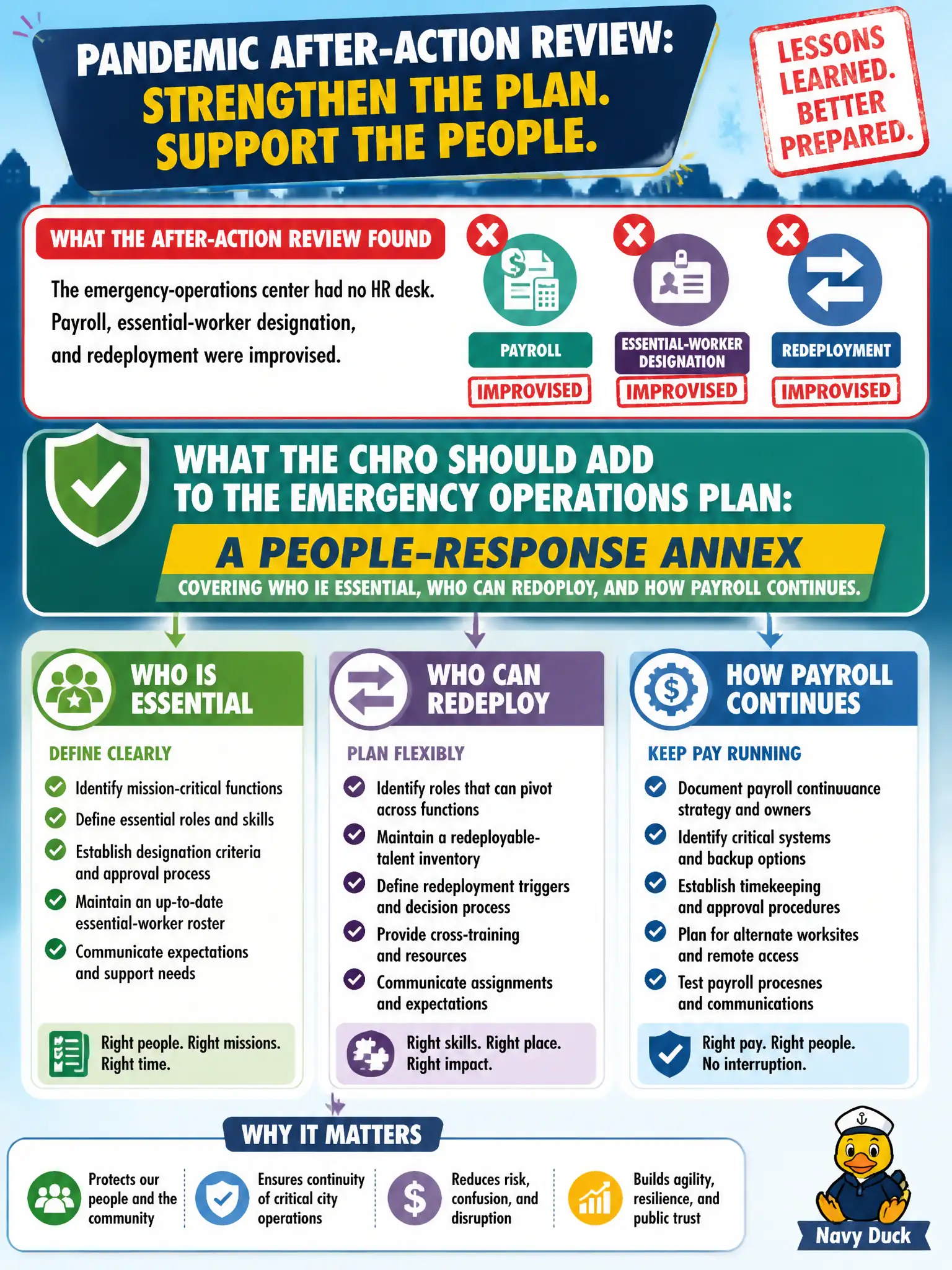
A city's pandemic after-action review shows the emergency-operations center had no HR desk. Payroll, essential-worker designation, and redeployment were improvised. What should the CHRO add to the emergency operations plan?
Select an answer to reveal the explanation.
Short Explanation
An EOC with no HR desk is a command post that forgot the people who keep the lights on. Who is essential, who can move, and how pay still hits the bank are not afterthoughts. Write a people-response annex into the emergency plan now.
Full Explanation
Adding a people-response annex covering who is essential, who can redeploy, and how payroll continues is correct because emergency operations plans need human-capital content, not only public-safety tactics. Pandemic after-action evidence that the EOC lacked an HR desk and improvised payroll, essential designation, and redeployment shows a planning gap that harmed continuity for residents who needed city services. A longer radio protocol with no people content does not fix that gap. A note that HR will join if someone remembers to call is improvisation written down. A post-event survey without a pre-event people plan studies failure after repeating it. Exam caveat: SPHR continuity planning requires a human-capital annex integrated into emergency operations before the next incident. Operational check: draft and exercise a people-response annex with essential lists, redeployment rules, payroll fallback, and EOC desk staffing; place it in the municipal EOP; and retest after each major drill or real event. Residents judge emergency response by whether trash, shelters, and paychecks still function; a people annex makes that possible. Exercise the annex with finance and department heads so essential lists and redeployment paths are not theoretical.