
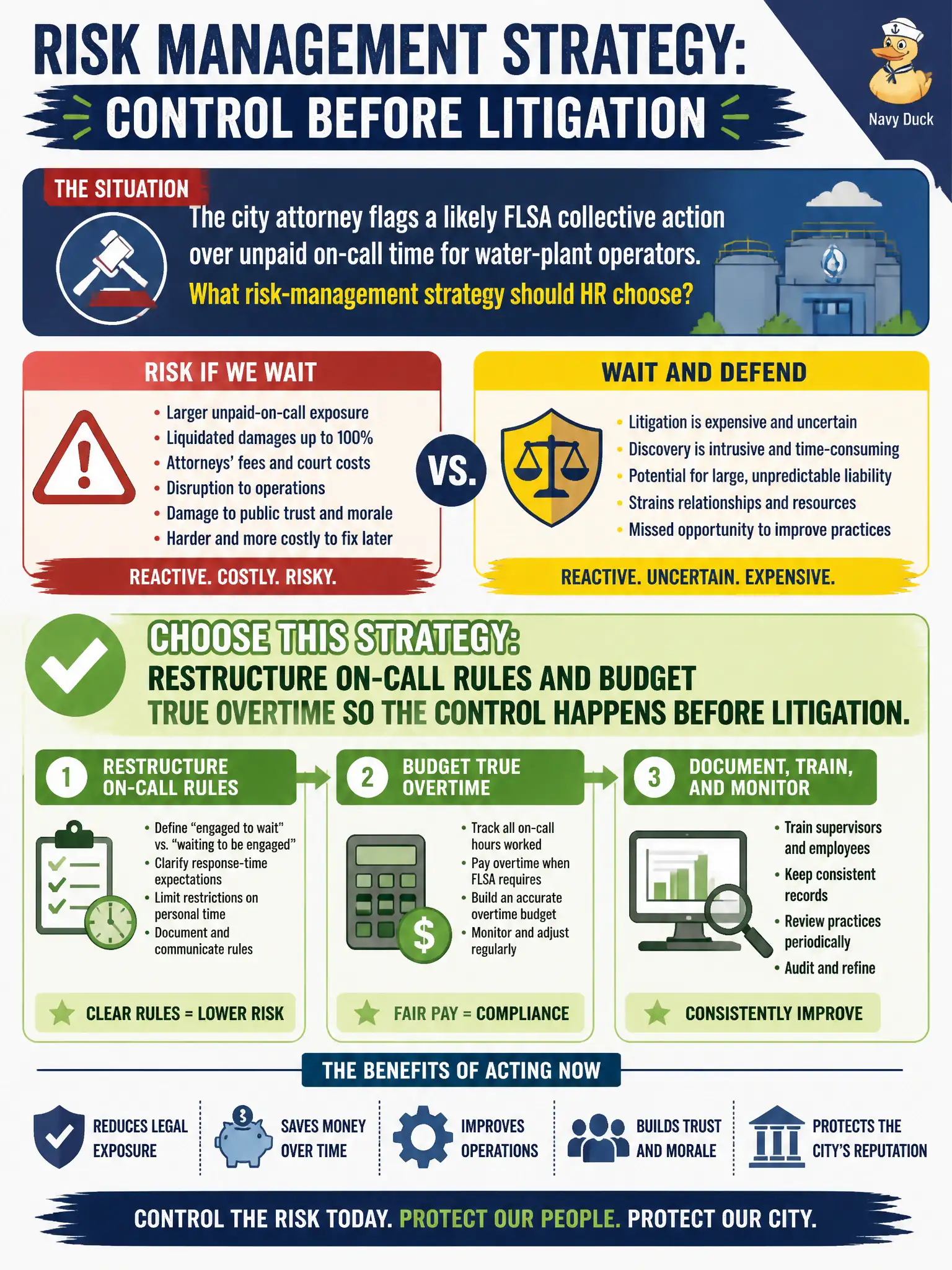
The city attorney flags a likely FLSA collective action over unpaid on-call time for water-plant operators. Risk management offers to wait and defend. What risk-management strategy should HR choose?
Select an answer to reveal the explanation.
Short Explanation
Waiting for a lawsuit is not a strategy — it is a calendar. If unpaid on-call is the exposure, fix the on-call rules and put real overtime in the budget now. Insurance and waivers do not make the hours stop being hours.
Full Explanation
Restructuring on-call rules and budgeting true overtime so control happens before litigation is the correct risk-management strategy when the city attorney flags a likely FLSA collective action over unpaid on-call for water-plant operators. Operational redesign is a valid treatment; waiting to defend, buying more insurance, or seeking waivers leaves the wage practice intact. Waiting for a filed complaint and then hiring counsel accepts preventable exposure. Larger employment-practices insurance without rule change transfers some financial risk while employees continue unpaid work time. Asking operators to waive on-call as never work is legally fragile and ethically poor for a public employer. Exam caveat: SPHR risk management includes preventing legal exposure through people-practice redesign, not only transferring or accepting residual legal risk. Operational check: redefine compensable on-call with legal review, budget overtime and staffing to match real response patterns, communicate new rules to operators, audit timekeeping for compliance, and track residual FLSA risk until the municipal practice is clean. Public employers are expected to correct wage practices before courts compel them; redesigning on-call is stewardship, not softness. Publish the new rules, train timekeepers, and sample pay periods until unpaid on-call disappears from the municipal record.