
After several first-responder suicides, a fire-district board asks HR for a poster campaign. The CHRO sees mental health as an operational people-risk, not a communications project. What should the CHRO put in the risk strategy?
Select an answer to reveal the explanation.
Short Explanation
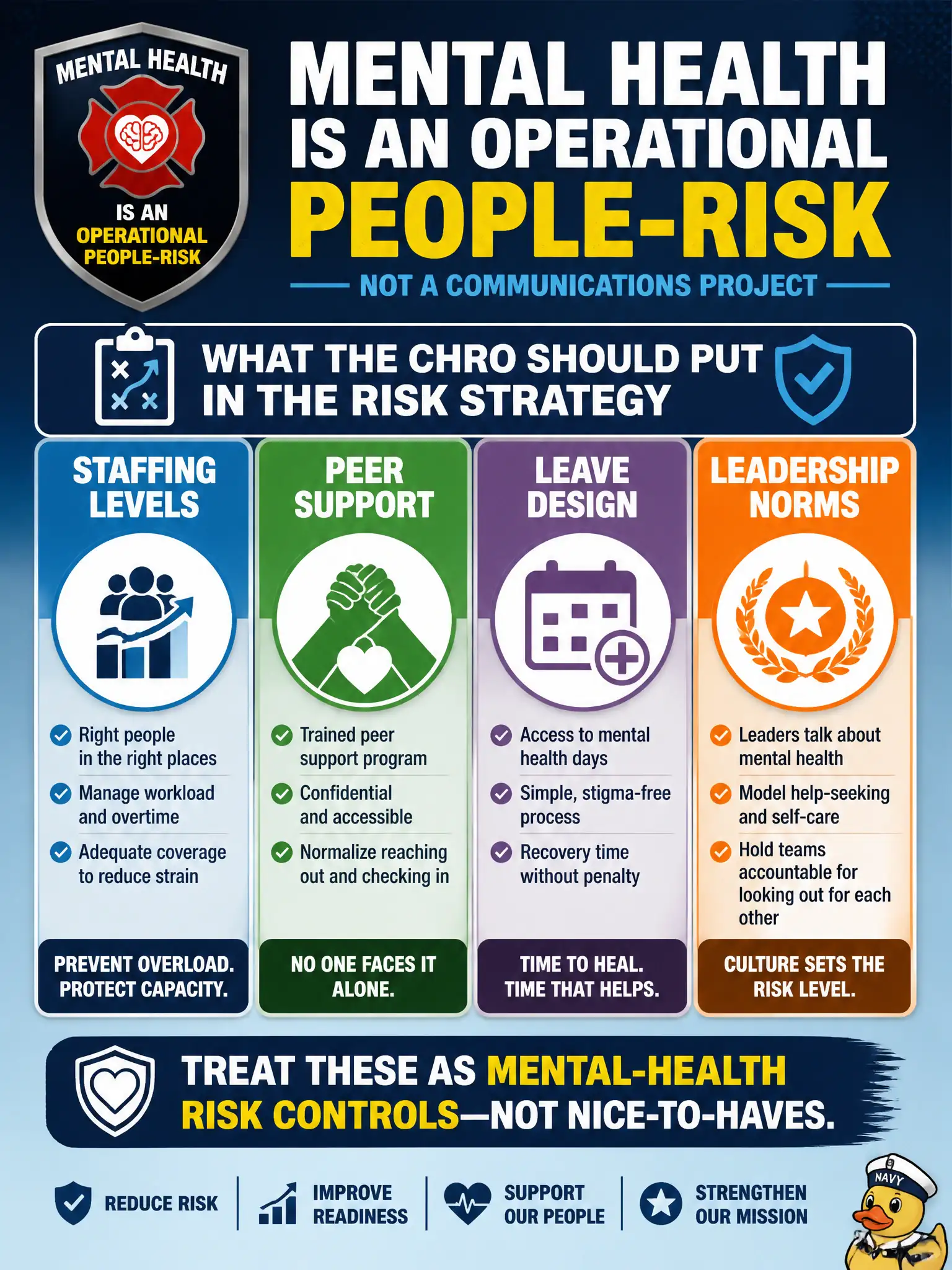
Posters do not staff a truck or give someone a way out of a bad shift. After suicides, mental health is an operational risk — staffing, peer support, leave, and how bosses talk. Put those controls in the strategy, not another slogan on the bay door.
Full Explanation
Treating staffing levels, peer support, leave design, and leadership norms as mental-health risk controls is correct after first-responder suicides because SPHR frames mental health as an operational people-risk factor, not a poster campaign. A fire-district board’s request for posters and a recruit-school video addresses awareness without changing the work system that may be harming members. A single EAP flyer with no change to staffing or leave offers a channel without capacity or recovery time. Delaying until the next labor contract keeps mental health out of operations while risk continues. Exam caveat: SPHR risk strategy expects mental-health controls in staffing, support structures, leave, and leadership behavior—not communications alone. Operational check: assess staffing against response load, stand up peer support with protected time, redesign leave and return-to-work pathways, train officers on norms that invite help-seeking, measure utilization and critical-incident follow-through, and report residual risk to the board until controls are funded for the civic fire service. First-responder mental health is inseparable from staffing and leave design in a fire district that answers civic alarms. Fund the controls as operations, report them beside response metrics, and resist reducing the strategy to awareness artwork.