
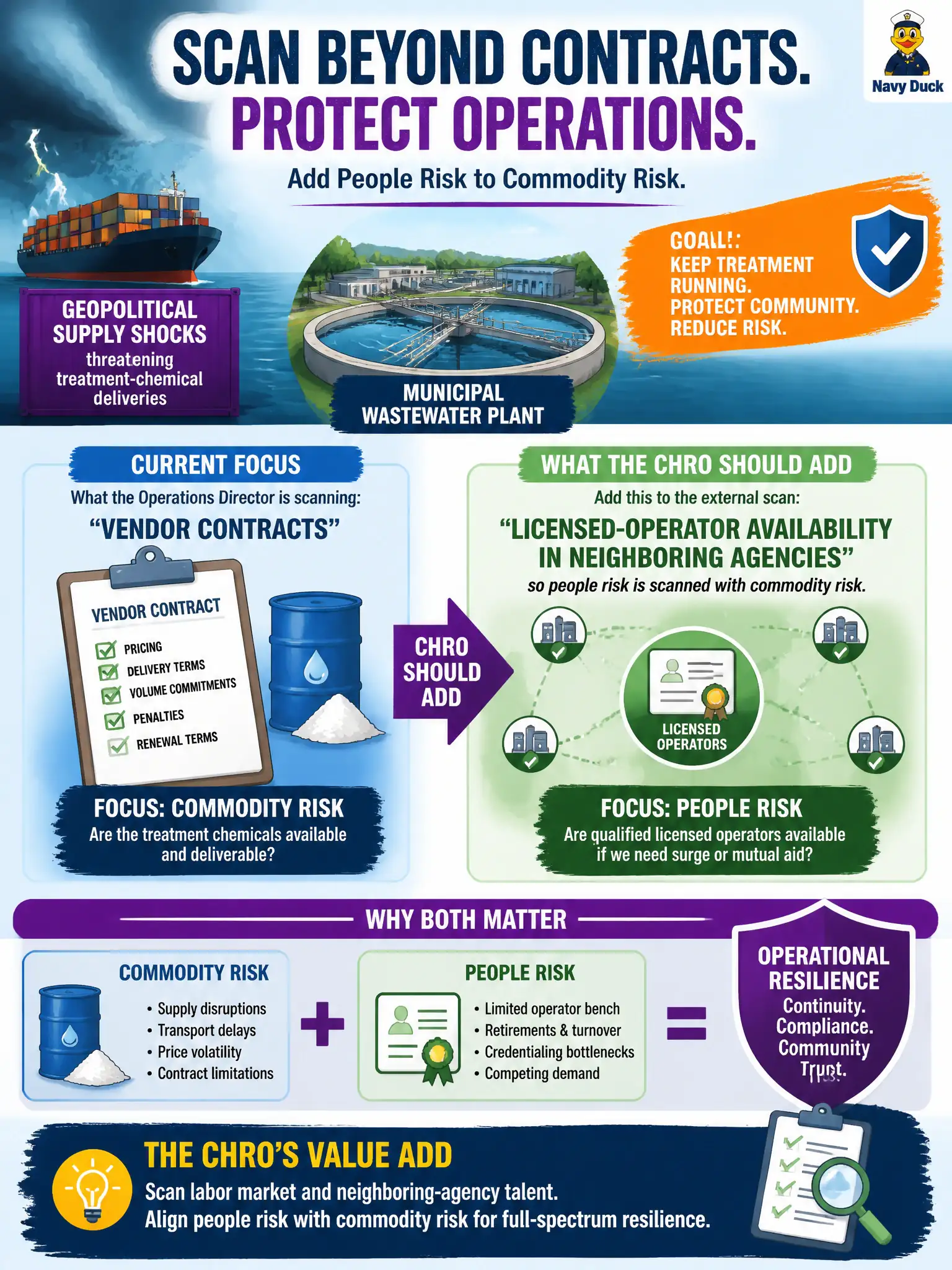
Geopolitical supply shocks are threatening treatment-chemical deliveries to a municipal wastewater plant. The operations director is scanning only vendor contracts. What should the CHRO add to the external scan?
Select an answer to reveal the explanation.
Short Explanation
Chemicals are not the only thing that can run dry. If a shock hits the plant, licensed operators next door matter as much as the tanker on the highway. Scan the labor market and the credentialed bench, not just the vendor list.
Full Explanation
Adding licensed-operator availability in neighboring agencies to the external scan is correct because people risk must be scanned with commodity risk when geopolitical shocks threaten treatment chemicals. A municipal wastewater plant that tracks only vendor contracts misses whether credentialed operators exist to run alternate processes, emergency schedules, or mutual aid if supply and operations both strain. A downtown referral bonus for office staff does not address plant credentials. Pausing all environmental scanning until chemicals run out guarantees late discovery. Rebranding the plant as a green workplace is marketing, not scanning. Exam caveat: SPHR external scanning for human-capital risk includes labor markets and scarce credentials alongside supply-chain signals. Operational check: include regional licensed-operator supply and mutual-aid contacts in the utility’s external scan, refresh the scan on the same cadence as chemical supply risk, and pre-negotiate people mutual aid so commodity and labor responses travel together for civic wastewater continuity. Wastewater upsets harm rivers and ratepayers; scanning only tankers while ignoring licensed operators next door is an incomplete external scan. Pair chemical contingency plans with people contingency plans in the same risk packet for elected oversight.