
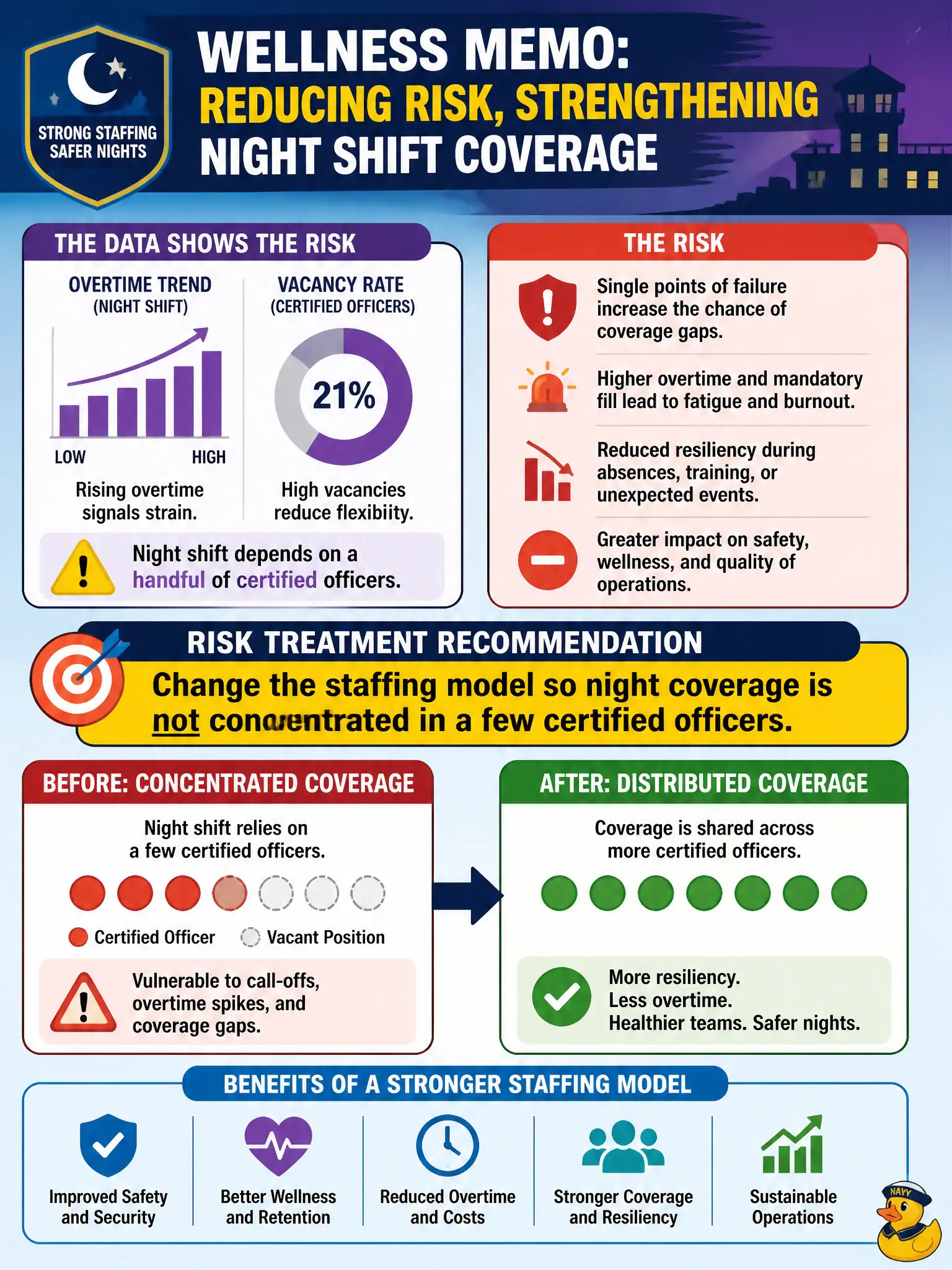
Overtime and vacancy data show a county jail's night shift depends on a handful of certified officers. A supervisor wants another wellness memo. What should HR recommend as the risk treatment?
Select an answer to reveal the explanation.
Short Explanation
When the whole night jail hangs on a few badges, that is a concentration risk, not a scheduling gripe. Another memo about sleep will not create certified officers at 2 a.m. Change the staffing model so the shift is not one resignation away from collapse.
Full Explanation
Changing the staffing model so night coverage is not concentrated in a few certified officers is the correct risk treatment when overtime and vacancy data show a county jail’s night shift hangs on a handful of badges. Concentration of critical skills is a human-capital risk visible in the data, not a wellness-memo problem. Another sleep reminder does not create certified officers at 2 a.m. A pizza night on the next fully staffed shift is symbolic and does not redistribute capability. Hiding vacancy data from the sheriff until the next budget year conceals residual risk to inmate and staff safety. Exam caveat: SPHR risk management treats skill and coverage concentration as a design problem requiring staffing-model change, not communications alone. Operational check: model minimum certified night coverage, reduce single points of failure through hiring, scheduling, and cross-certification, set overtime thresholds that trigger escalation, and report concentration risk on the sheriff’s and county risk dashboards until the model is diversified. Jails are 24/7 civic facilities; concentration risk is a public-safety exposure, not an HR curiosity. Require monthly certification-coverage reports for night posts and escalate when the model again depends on a handful of officers.