
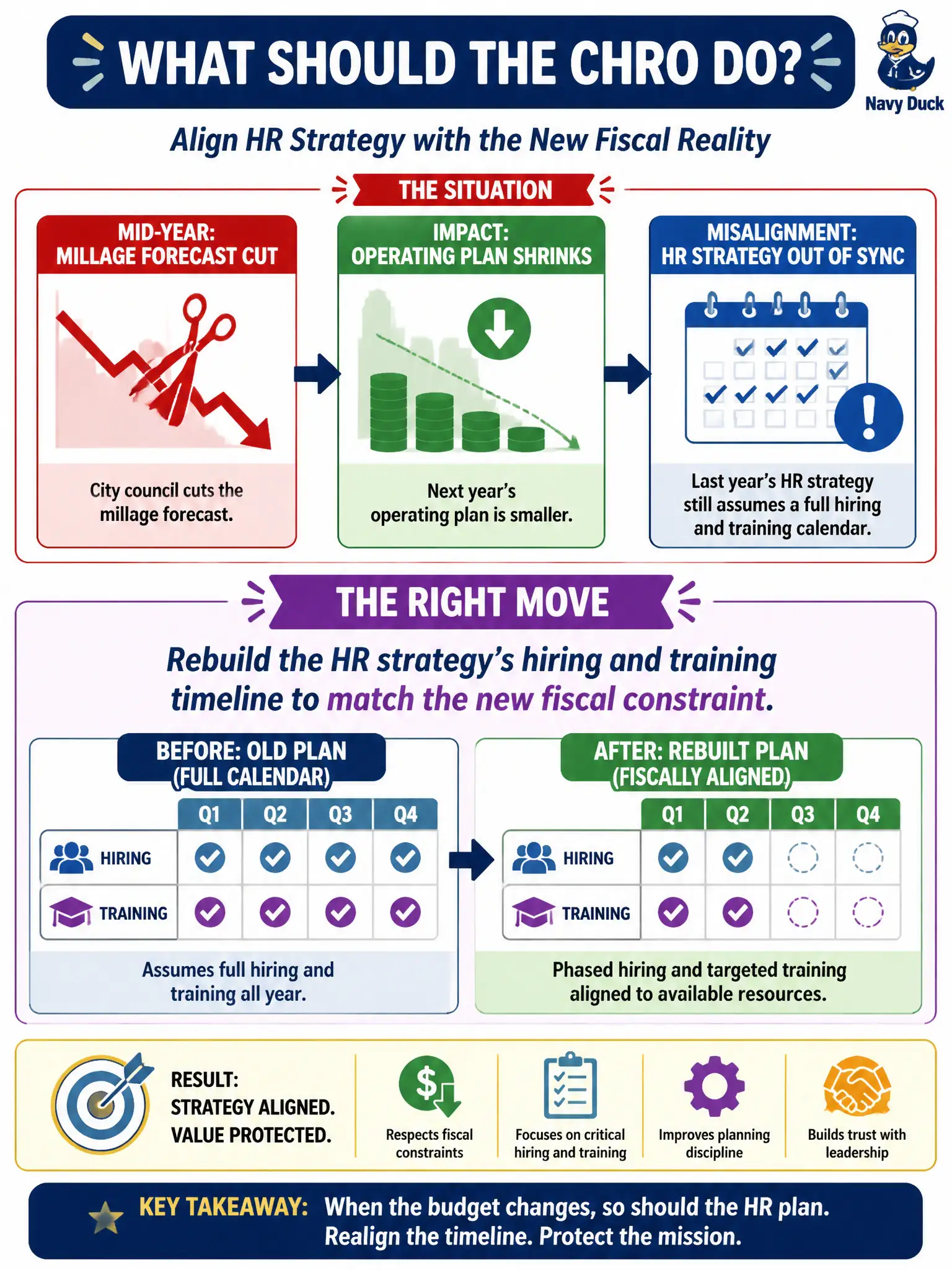
Mid-year, city council cuts the millage forecast and shrinks next year's operating plan. Last year's HR strategy still assumes a full hiring and training calendar. What should the CHRO do?
Select an answer to reveal the explanation.
Short Explanation
When council cuts the millage, last year's HR calendar is a souvenir, not a plan. Running the old hiring and training slate on a smaller wallet just hides the cut in unpaid overtime. Rebuild the timeline to the new money.
Full Explanation
Rebuilding the HR strategy’s hiring and training timeline to match the new fiscal constraint is correct because HR strategy is re-planned when the organizational plan’s constraints change. A mid-year millage cut revises the city’s operating plan; running last year’s full hiring and training calendar on a smaller wallet hides the cut in unpaid overtime and broken promises. Protecting every training contract while cutting only public-facing services may preserve HR vendors at residents’ expense and still ignores the new constraint on hiring. Pausing all HR communication until millage restoration is certain leaves managers without a realistic people plan during the downturn. Exam caveat: SPHR treats HR strategy as dynamic with organizational fiscal and operating changes, not as a static annual brochure. Operational check: inventory committed hiring and training against revised appropriations, sequence critical civic services first, renegotiate or defer noncritical contracts, communicate the revised timeline to departments, and refresh the plan if further millage actions land. Municipal hiring calendars that ignore millage cuts create phantom requisitions departments cannot fund and erode trust with applicants who receive offers the city cannot sustain. Keep a living crosswalk between appropriations and people commitments and refresh it after every mid-year amendment.