
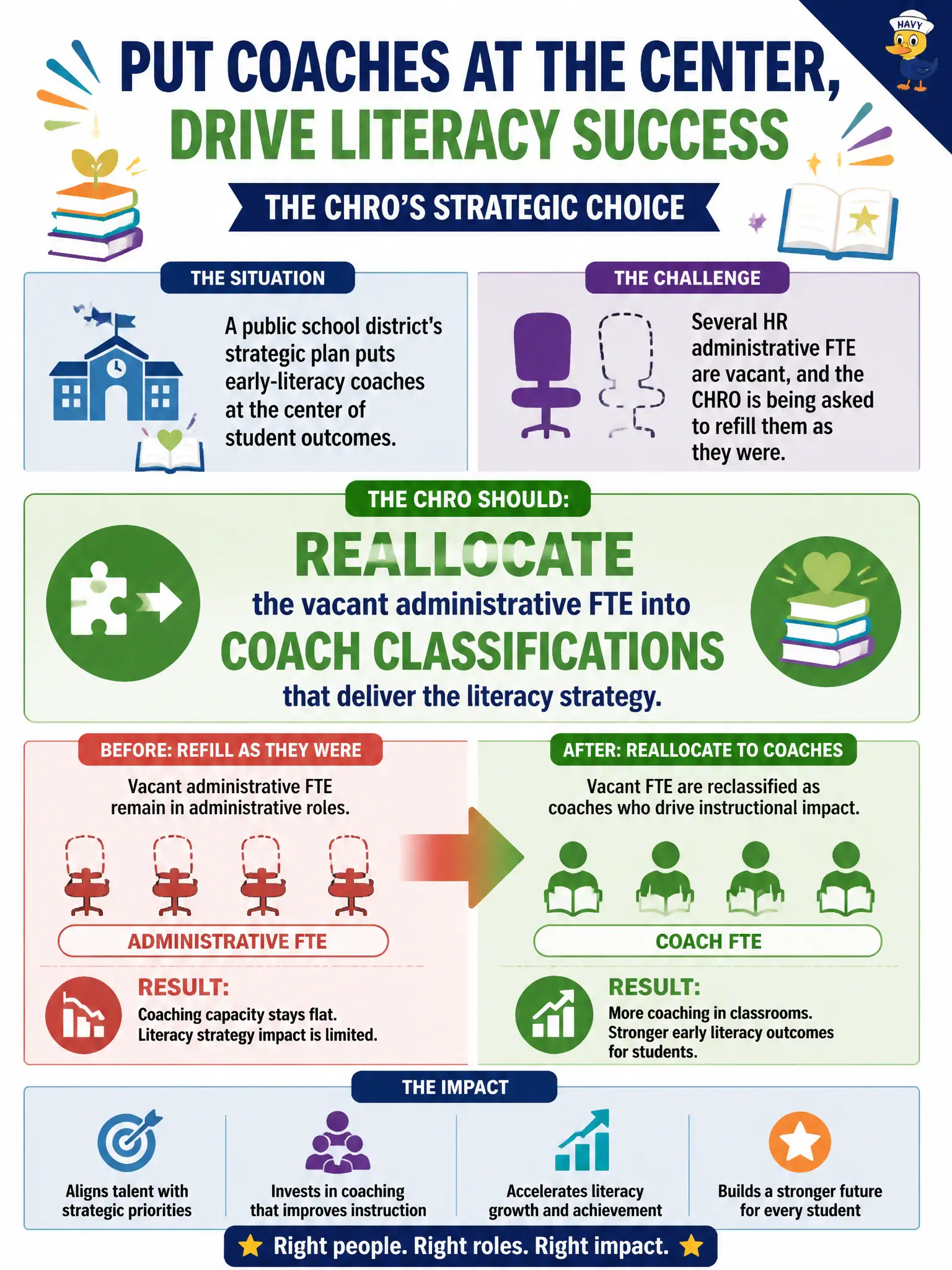
A public school district's strategic plan puts early-literacy coaches at the center of student outcomes. Several HR administrative FTE are vacant, and the CHRO is being asked to refill them as they were. What should the CHRO do?
Select an answer to reveal the explanation.
Short Explanation
An org chart is not a museum piece. If the district's plan is literacy coaches and HR is sitting on empty admin seats, those FTE should move. Flex the structure to the strategy — do not defend last year's boxes.
Full Explanation
Reallocating vacant administrative FTE into coach classifications that deliver the literacy strategy is correct because HR structure must flex to strategy, not preserve last year’s org chart. The district’s plan centers early-literacy coaches as the lever for student outcomes; empty administrative seats are a reallocation opportunity, not museum pieces. Refilling vacant administrative seats first to keep the HR org chart intact defends structure over mission. Freezing all vacancies until a new superintendent is hired pauses delivery of an already adopted plan. Converting vacant FTE into a new HR analytics unit that is not in the strategic plan creates another untethered structure while literacy capacity stays short. Exam caveat: SPHR expects organizational design and FTE deployment to follow strategic priorities when vacancies create flexibility. Operational check: freeze noncritical admin backfills, reclassify or rebudget vacant FTE into coach roles, partner with instructional leaders on qualifications and pipelines, and report FTE movement against literacy-coach coverage targets for the civic school system. In a public school setting, FTE is a scarce civic asset; moving vacant administrative capacity into literacy-coach classifications is how structure serves students rather than serving the chart. Document the reallocation rationale for the board so future vacancy decisions follow the same strategy screen.