
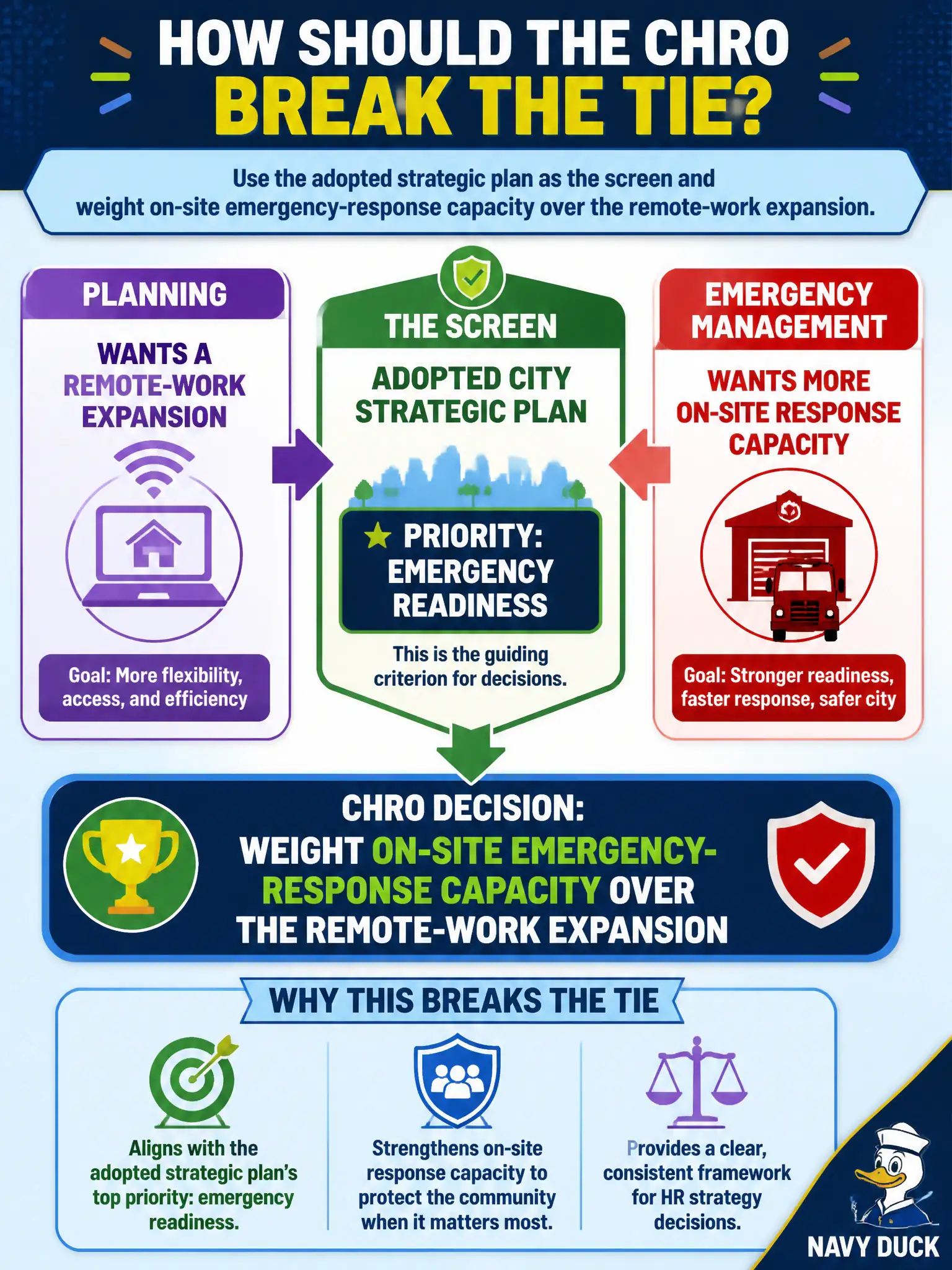
Planning wants a remote-work expansion; emergency management wants more on-site response capacity. Both want the CHRO to bake their ask into the HR strategy. The adopted city strategic plan prioritizes emergency readiness. How should the CHRO break the tie?
Select an answer to reveal the explanation.
Short Explanation
When two departments yell, the plan is the referee — not the louder voice. The city already said emergency readiness comes first. Weight the on-site response capacity and stop treating volume or a 50/50 split as strategy.
Full Explanation
Using the adopted strategic plan as the screen and weighting on-site emergency-response capacity over remote-work expansion is correct because alignment resolves conflicting HR asks by organizational priority, not by departmental volume. Planning’s remote-work request and emergency management’s on-site capacity request cannot both dominate the HR strategy when the city has already named emergency readiness as the priority residents funded. Splitting the difference so each department gets half substitutes political peace for strategy and may underdeliver readiness. Awarding the win to whichever director escalates to the mayor first replaces the plan with lobbying. Delaying both asks until an engagement survey ranks employee preferences elevates preference data over an already adopted civic priority. Exam caveat: SPHR alignment uses the organizational strategic plan as the decision screen when people initiatives conflict. Operational check: cite the emergency-readiness goal in the recommendation memo, fund on-site response staffing and related classifications first, place remote-work expansion behind readiness thresholds, and document residual risk if political pressure reverses the sequence.