
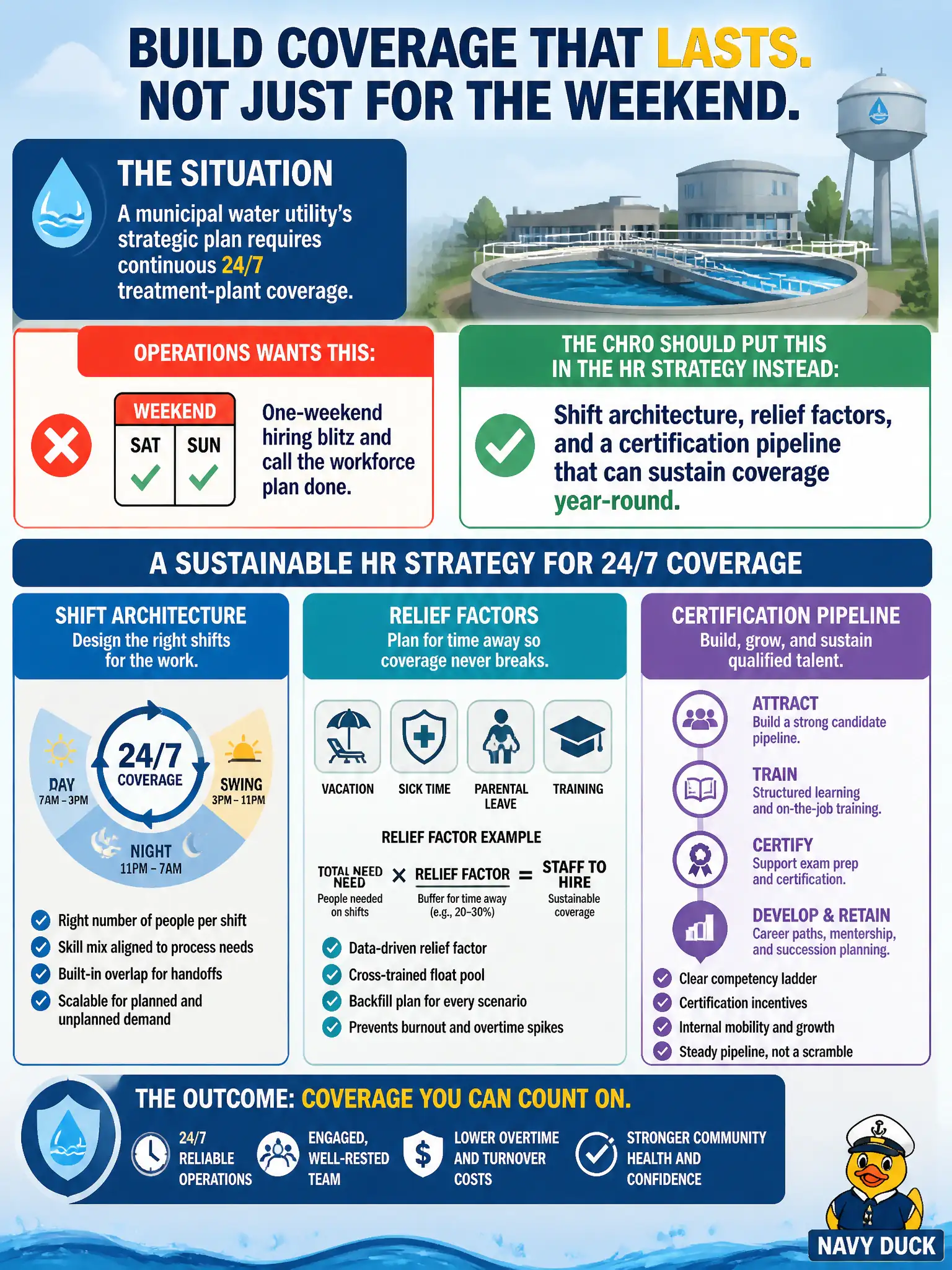
A municipal water utility's strategic plan requires continuous 24/7 treatment-plant coverage. Operations wants HR to run a one-weekend hiring blitz and call the workforce plan done. What should the CHRO put in the HR strategy instead?
Select an answer to reveal the explanation.
Short Explanation
A hiring weekend is a burst, not a 24/7 plant. Continuous coverage needs shifts, relief bodies, and a pipeline of certified operators — not one frantic Saturday. Build the system that still works in February, not just the event that looks busy in May.
Full Explanation
Building shift architecture, relief factors, and a certification pipeline that sustain year-round 24/7 treatment coverage is correct because executing HR strategy for continuous utility operations requires durable workforce design, not a one-weekend hiring blitz. A municipal water plant’s strategic need is continuous coverage that protects drinking-water quality; a blitz plus signing-bonus flyer creates a temporary headcount spike without relief depth or certified successors. A contractor-only model may fill gaps but often fails to design stable shifts and institutional knowledge for regulated treatment work. A single overtime mandate that keeps current operators on duty indefinitely is fatigue and compliance risk disguised as coverage and will eventually fail residents. Exam caveat: SPHR execution of strategy for continuous services emphasizes structural workforce design—shifts, relief, and pipelines—over episodic recruiting events. Operational check: design shifts and relief percentages for 24/7 posts, map certification lead times into a pipeline, fund recruiting against that model, track coverage and certification currency monthly, and retire the “blitz equals plan” narrative in favor of coverage metrics that hold across seasons for the civic utility.