
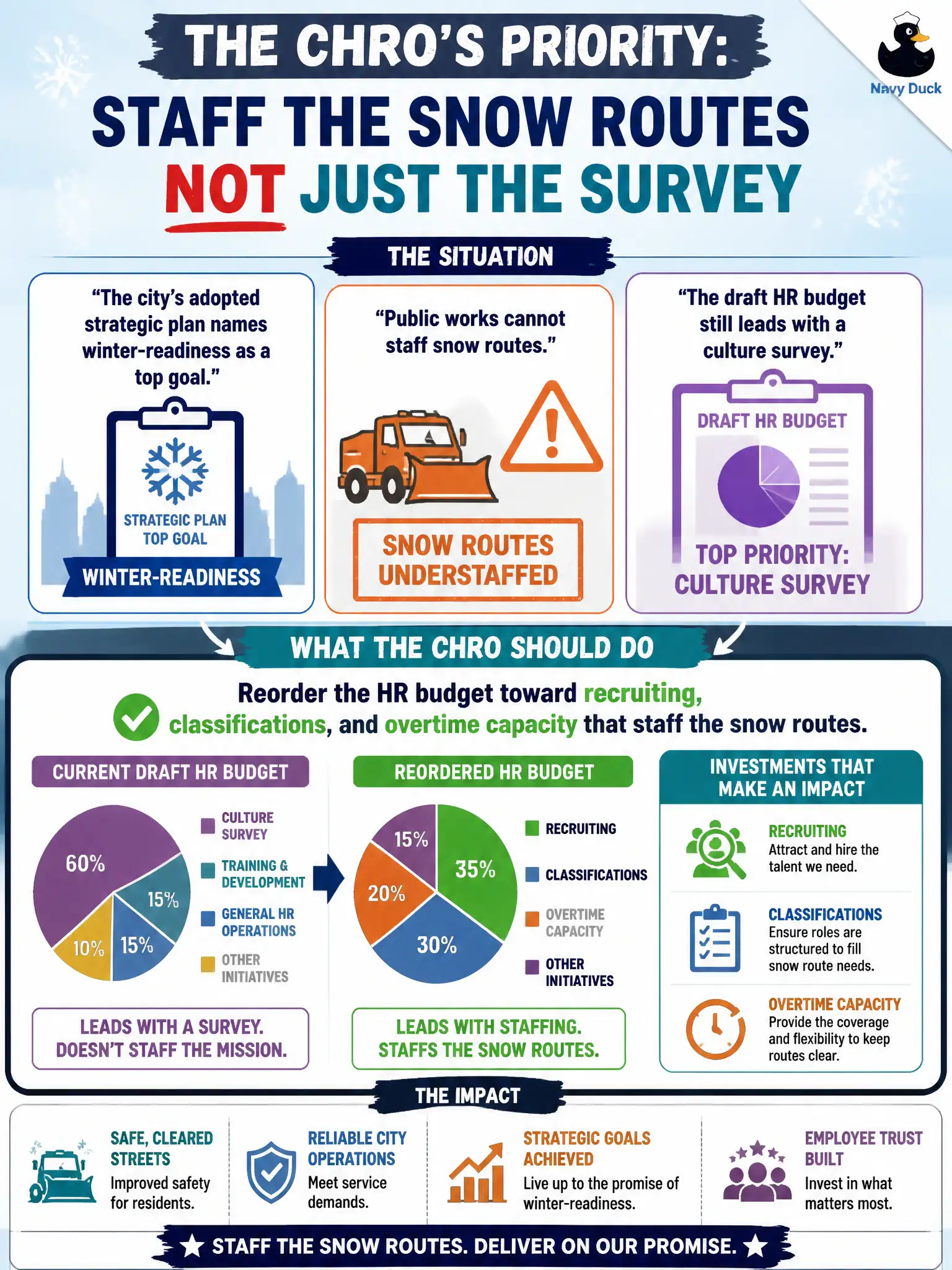
The city's adopted strategic plan names winter-readiness as a top goal, but public works cannot staff snow routes. The draft HR budget still leads with a culture survey. What should the CHRO do?
Select an answer to reveal the explanation.
Short Explanation
A culture survey will not plow a street. When the city's plan says winter-readiness and the routes are empty, the HR budget is a strategy tool, not a pet-project fund. Move the money to the people work that actually staffs the snow.
Full Explanation
Reordering the HR budget toward recruiting, classifications, and overtime capacity that staff snow routes is correct because an HR budget is a strategy instrument for municipal service delivery. When the adopted plan names winter-readiness and public works cannot staff routes, leading with a culture survey misallocates scarce dollars away from the people work that keeps streets passable for residents, schools, and emergency access. Protecting the survey contract as an always-first HR priority elevates a preferred tool over plan outcomes and treats engagement measurement as more urgent than plowing capacity. Splitting survey budget evenly across departments optimizes fairness optics among directors, not winter readiness for the public. Delaying winter staffing spend until next year’s millage vote abandons the current plan’s top goal through inaction and leaves this season’s routes empty. Exam caveat: SPHR expects HR resource allocation to follow organizational strategic priorities when conflicts arise between popular programs and plan-critical staffing. Operational check: freeze or defer noncritical HR projects, redirect funds to snow-route recruiting and classification actions, define coverage targets by route, and report weekly vacancy and overtime against winter-readiness until civic routes are staffable.