
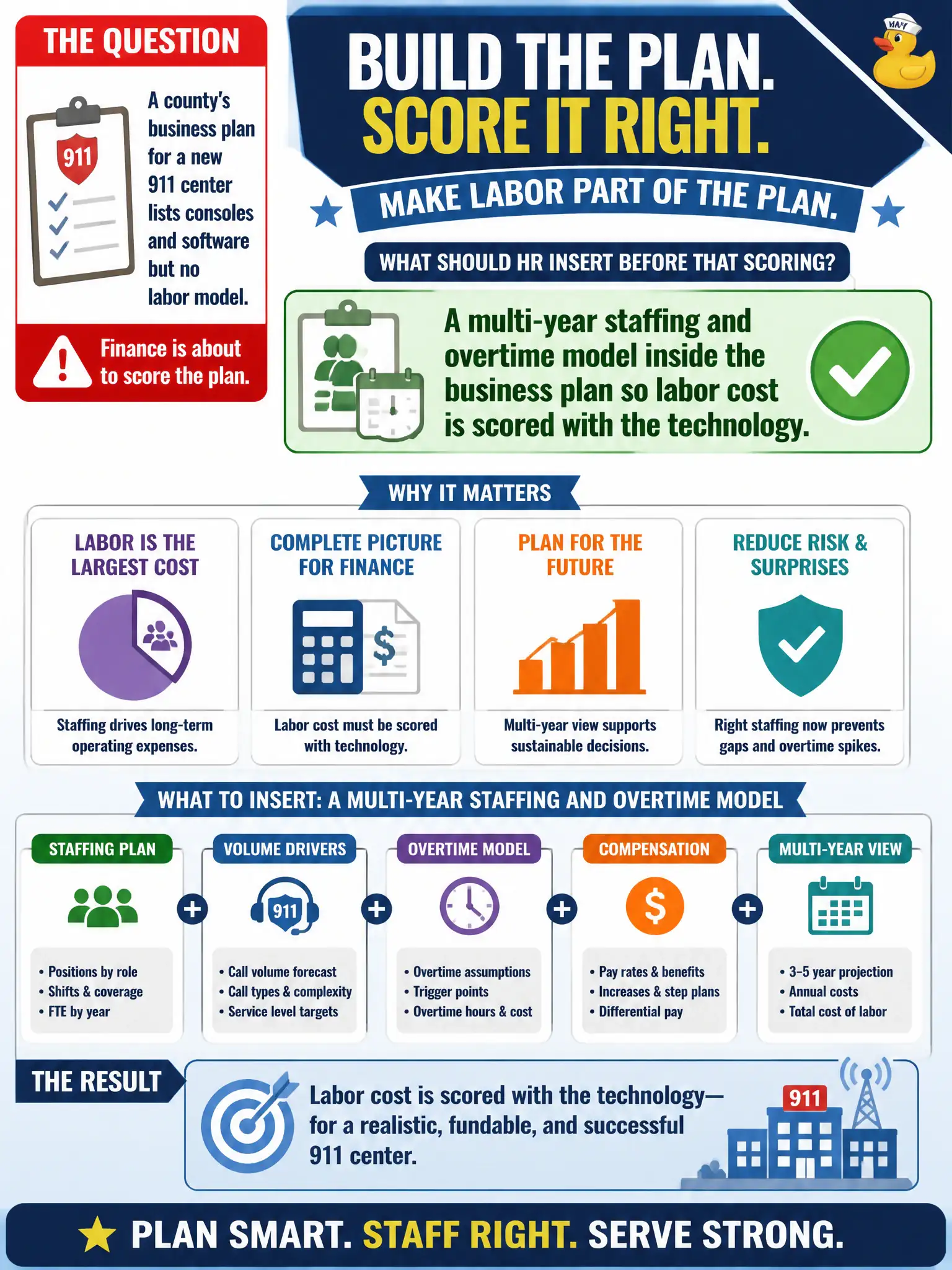
A county's business plan for a new 911 center lists consoles and software but no labor model. Finance is about to score the plan. What should HR insert before that scoring?
Select an answer to reveal the explanation.
Short Explanation
A 911 center with pretty consoles and no labor math is a room, not a service. Finance will score whatever is in the packet — so the staffing and overtime model has to be in there now. "We'll figure people out later" is how a county buys technology it cannot sit.
Full Explanation
Inserting a multi-year staffing and overtime model into the 911-center business plan before finance scoring is correct because labor cost is part of the true cost of continuous emergency communications, not an appendix after technology funding. Consoles and software without a labor model produce a room, not a public-safety service residents can rely on at 3 a.m. Scoring capital without staffing understates need and sets up chronic vacancy, overtime spikes, and call-taking risk after go-live. A one-page note that staffing will be determined later deliberately blinds the fiscal screen so technology can win funding without people math. An employee-recognition theme for opening day is ceremonial and irrelevant to cost scoring. Hiring a consultant after go-live to study dispatcher burnout accepts foreseeable understaffing instead of designing capacity up front when the county can still change the plan. Exam caveat: SPHR places HR strategy inside business planning so people costs are evaluated with other investments. Operational check: model multi-year headcount, relief, training pipeline, and overtime for console coverage; place that model in the plan finance will score; and require revision if technology phasing changes staffing demand for the civic 911 operation.