
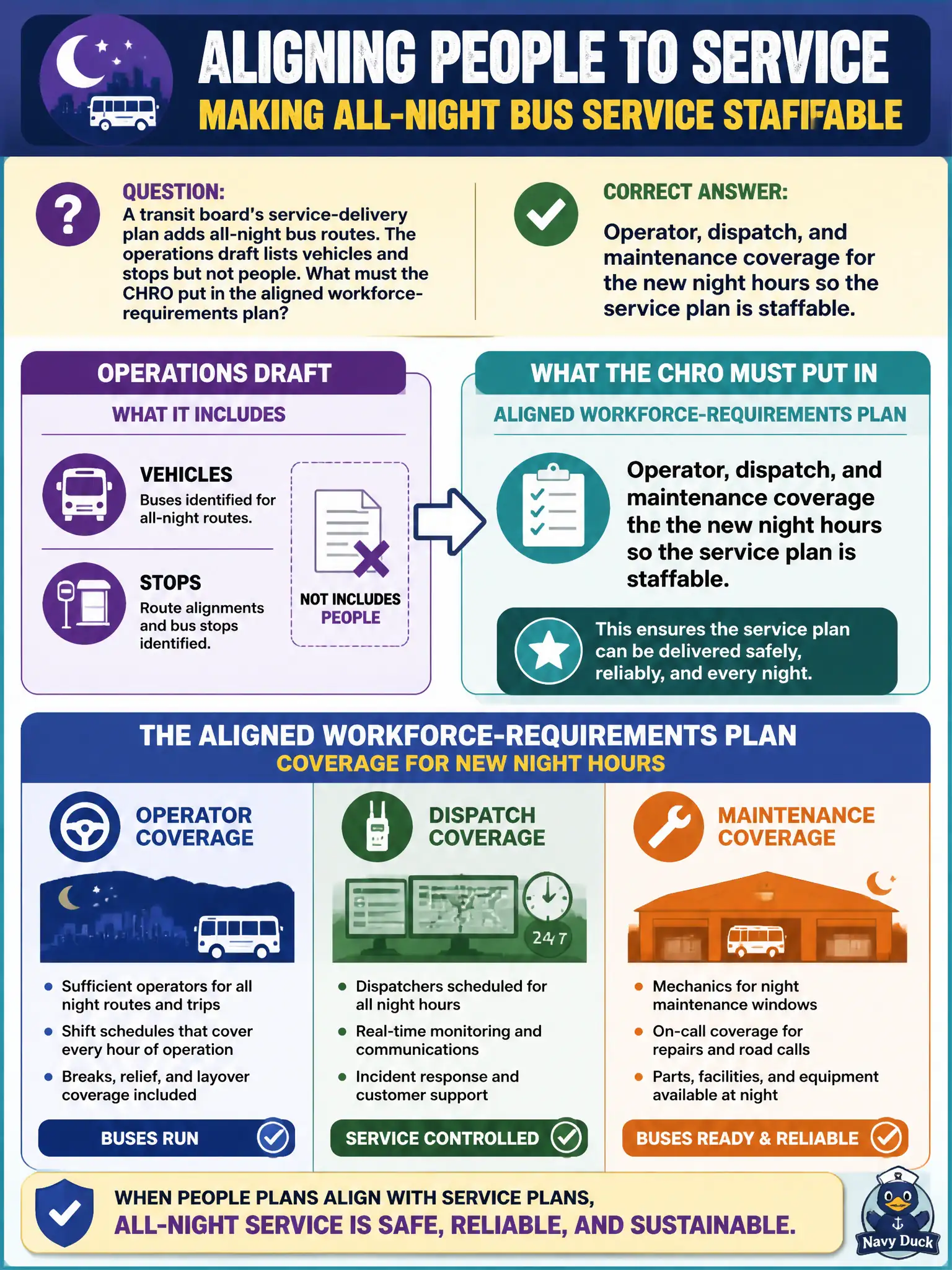
A transit board's service-delivery plan adds all-night bus routes. The operations draft lists vehicles and stops but not people. What must the CHRO put in the aligned workforce-requirements plan?
Select an answer to reveal the explanation.
Short Explanation
A night-bus map with no operators is a drawing, not a service. Vehicles and stops do not drive themselves at 2 a.m. The workforce plan has to show who runs, dispatches, and fixes those routes at the new hours — or the service plan is fiction.
Full Explanation
Putting operator, dispatch, and maintenance coverage for the new night hours into the workforce-requirements plan is correct because service-delivery plans and workforce requirements are one alignment problem. Adding all-night bus routes with vehicles and stops but without people for those hours produces an unstaffable service promise to riders and leaves the transit board blind to true cost. The CHRO must specify coverage by function across the new schedule so operations and finance see the staffing load before launch marketing begins. A daytime-only recruiting calendar that assumes night coverage will later come from voluntary overtime builds fatigue, grievance risk, and unreliable service into the model. A wellness-fair schedule may support climate after launch but does not create operators at 2 a.m. A brand-refresh of uniforms timed to launch is cosmetics without coverage and confuses appearance with staffability. Exam caveat: SPHR alignment items expect workforce plans to mirror service-hour and role requirements of the operational plan. Operational check: translate night-route schedules into operator, dispatch, and maintenance FTEs and relief factors; cost overtime versus additional headcount; and refuse to certify the civic service plan as staffable until those numbers sit in the board packet.