
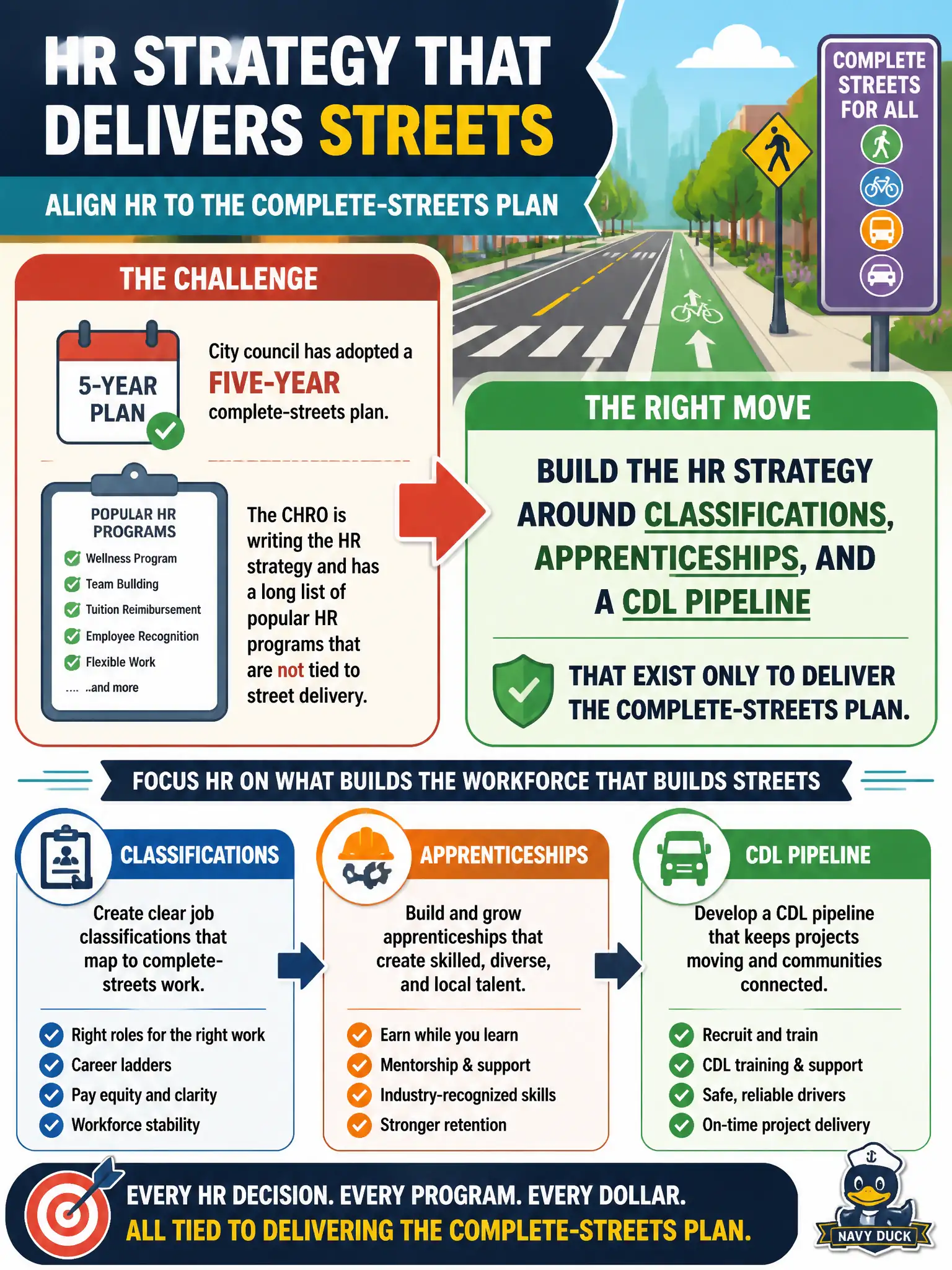
City council has adopted a five-year complete-streets plan. The CHRO is writing the HR strategy and has a long list of popular HR programs that are not tied to street delivery. What should the CHRO do?
Select an answer to reveal the explanation.
Short Explanation
An HR strategy that does not trace to the city's plan is just a wish list with better paper. Complete-streets needs classifications, apprentices, and CDL drivers — not a buffet of popular programs. Build only the people work that actually pours those streets.
Full Explanation
Building the HR strategy around classifications, apprenticeships, and a CDL pipeline that exist to deliver the adopted complete-streets plan is correct because HR strategy must align to organizational strategy rather than float as a buffet of popular programs. Street delivery depends on people systems that produce the right classes of workers on time; untethered wellness or “HR excellence” agendas consume resources without moving the city’s named goal. Funding popular HR programs first while streets wait inverts priority and treats employee preference as strategy. Publishing a generic HR agenda with complete-streets in a footnote performs alignment theater. Holding the HR strategy until every department submits a wish list optimizes for political peace, not plan delivery, and recreates a disconnected catalog. Exam caveat: SPHR requires HR strategies that cascade from the organization’s strategic plan, with people programs justified by plan outcomes. Operational check: inventory plan-critical classifications and skill pipelines for complete-streets, fund those first, sunset or defer untethered programs, and report HR progress in terms of street-delivery capacity rather than program count.