
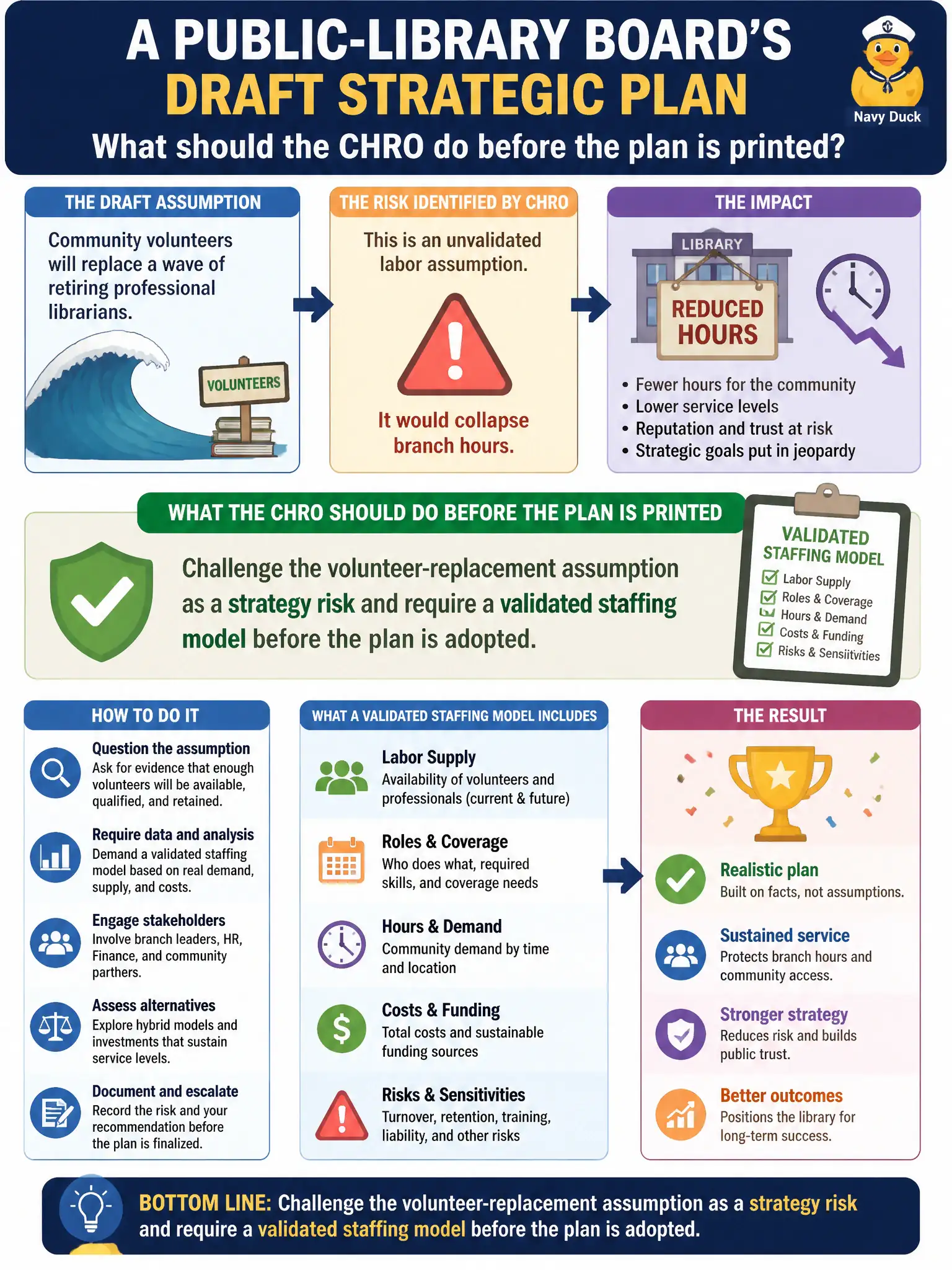
A public-library board's draft strategic plan assumes community volunteers will replace a wave of retiring professional librarians. The CHRO sees an unvalidated labor assumption that would collapse branch hours. What should the CHRO do before the plan is printed?
Select an answer to reveal the explanation.
Short Explanation
Volunteers are not a secret stash of licensed librarians hiding in the stacks. If the plan bets branch hours on unpaid replacements, that is a strategy risk, not a scheduling footnote. Call the assumption out and make the board prove the staffing math before the plan goes to print.
Full Explanation
Challenging the volunteer-replacement assumption as a strategy risk and requiring a validated staffing model before the plan is printed is correct because unvalidated labor assumptions can collapse branch hours once professional librarians retire. Volunteers are not a licensed substitute workforce; treating them as a secret staffing stash hides continuity risk inside a feel-good narrative. The CHRO’s challenge forces the library board to size hours to a realistic mix of professional and volunteer capacity. Accepting the assumption and building a volunteer schedule after adoption leaves the plan’s false math intact until residents face closures. Quietly posting librarian vacancies after adoption avoids political embarrassment but does not correct the strategy document’s labor fiction. Converting remaining librarian jobs to internships to make the plan’s math “look closer to true” worsens professional capacity while cosmeticizing the numbers. Exam caveat: SPHR strategy challenge includes testing labor assumptions before plans are adopted, especially when unpaid labor is proposed as replacement for credentialed roles. Operational check: model retirements against required professional coverage, stress-test volunteer supply and reliability, present residual risk to hours and accreditation, and revise the plan’s staffing basis before printing.