
A housing authority board is considering converting its waiting-list operation into a mobility-counseling service. Leadership is ready to adopt the new service model in the strategic plan. What should HR contribute before the model is adopted?
Select an answer to reveal the explanation.
Short Explanation
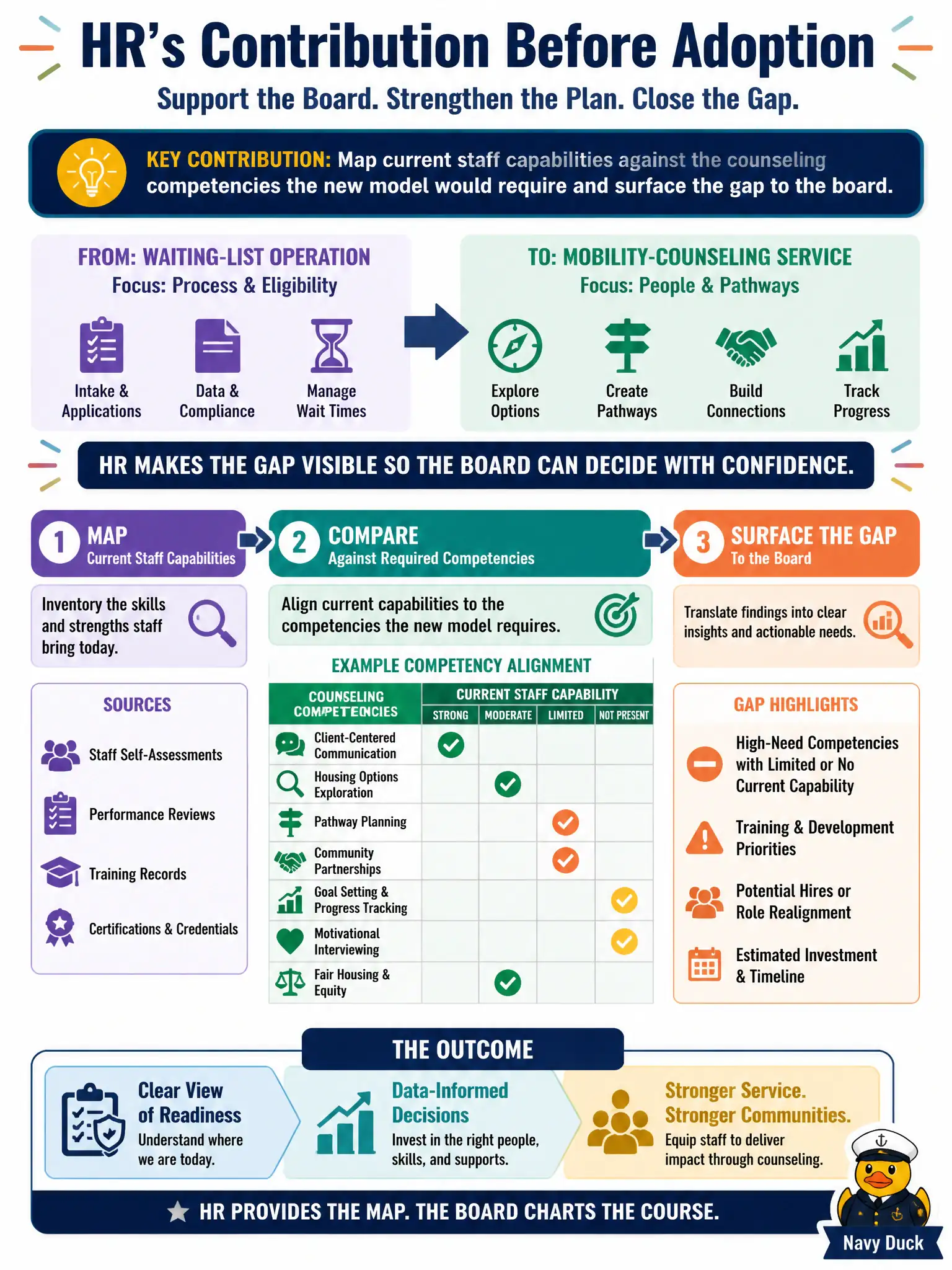
Changing the service is easy on a whiteboard and hard in the cubicles. Waiting-list clerks are not automatically mobility counselors just because the board likes the new name. Map what people can do today against what the new model needs, then let the board see the gap before it votes.
Full Explanation
Mapping current staff capabilities against the counseling competencies the new mobility model requires, and surfacing the gap before adoption, is correct strategy contribution. Converting a housing-authority waiting-list operation into mobility counseling changes the work; clerks are not automatically counselors because the board likes a new service name. Capability-gap evidence lets the board price training, hiring, redesign, or deferral before the strategic plan locks the model. Drafting layoff notices for waiting-list clerks the week after the vote assumes displacement without assessing transferable skill and invites avoidable labor and service damage. Ordering business cards with new titles before competencies are defined performs rebranding without capability. Benchmarking private broker commissions to copy a pay model after adoption jumps to compensation mimicry without proving the competency model or public-sector constraints. Exam caveat: SPHR expects capability assessment before service-model adoption, not title or pay changes in isolation. Operational check: define counseling competencies, assess incumbents against them, present gap size and build-versus-buy options with cost and timeline, and require that package in the board packet before strategic-plan adoption.