
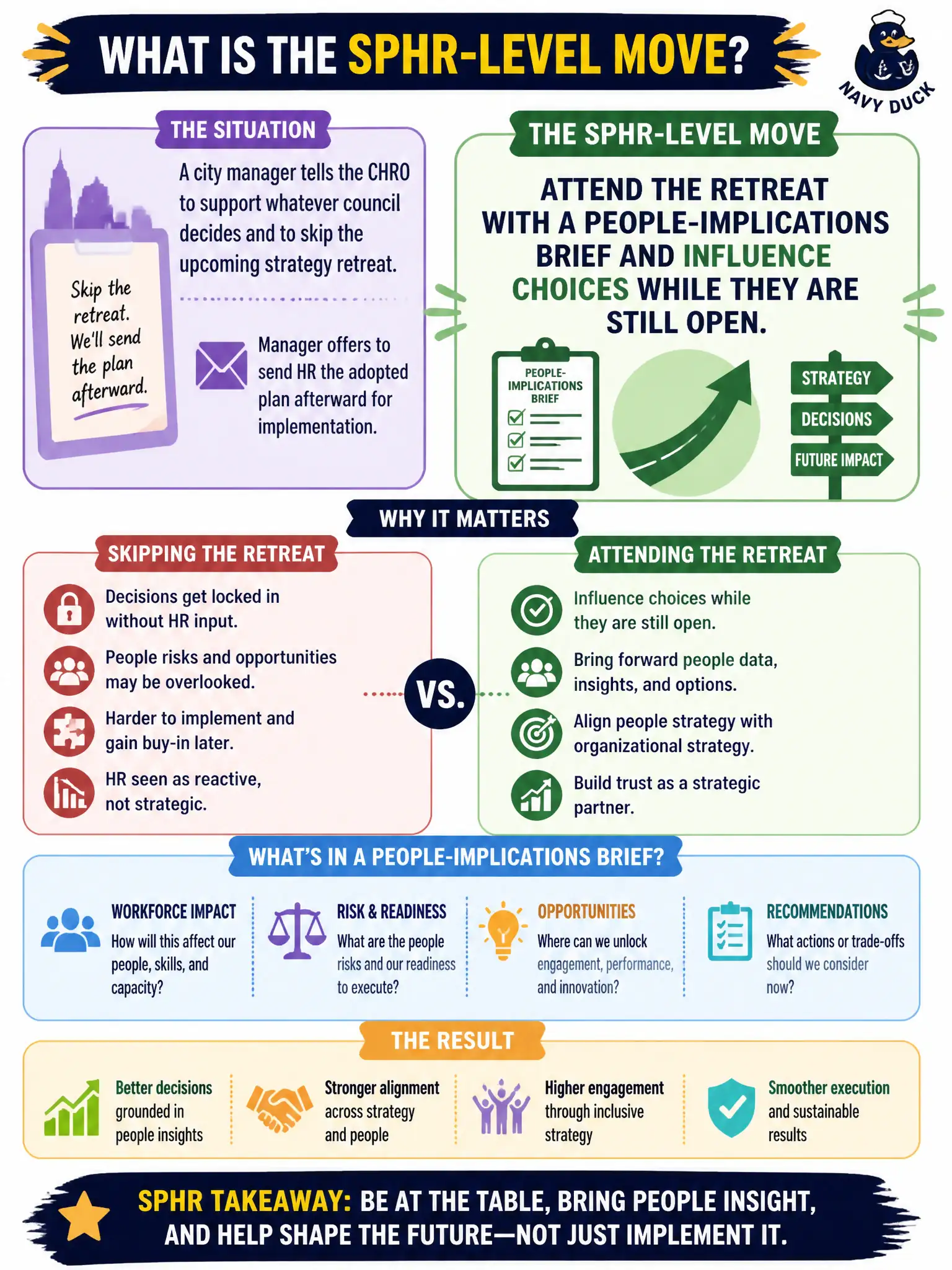
A city manager tells the CHRO to support whatever council decides and to skip the upcoming strategy retreat. The manager offers to send HR the adopted plan afterward for implementation. What is the SPHR-level move?
Select an answer to reveal the explanation.
Short Explanation
"Support whatever they decide" is code for showing up after the pizza is gone. Implementation calendars and junior note-takers are downstream work, not strategy. Sit at the retreat with a people brief and shape the choices while they can still change.
Full Explanation
Attending the strategy retreat with a people-implications brief and influencing choices while they remain open is the SPHR-level move because contribution to organizational strategy means presence and influence in planning, not only polished downstream implementation. A city manager’s invitation to “support whatever council decides” after the fact excludes the workforce lens from trade-offs on service levels, timing, and risk that residents will feel. Skipping the retreat to prepare an implementation calendar accepts a plan whose people assumptions were never tested and turns HR into a scheduling clerk for decisions already made. Sending a junior analyst for notes preserves calendar space but not strategic voice and signals that senior HR is clerical to strategy. Waiting for the adopted plan and then writing civil-service rule changes further delays influence until options are closed and only compliance drafting remains. Exam caveat: SPHR leadership items distinguish strategic participation during formation from post-adoption execution support. Operational check: secure retreat attendance, bring a concise brief on capacity, scarce skills, labor constraints, and change load for options under discussion, document people risks of preferred alternatives for the municipal record, and only then build implementation plans that match the chosen civic strategy.