
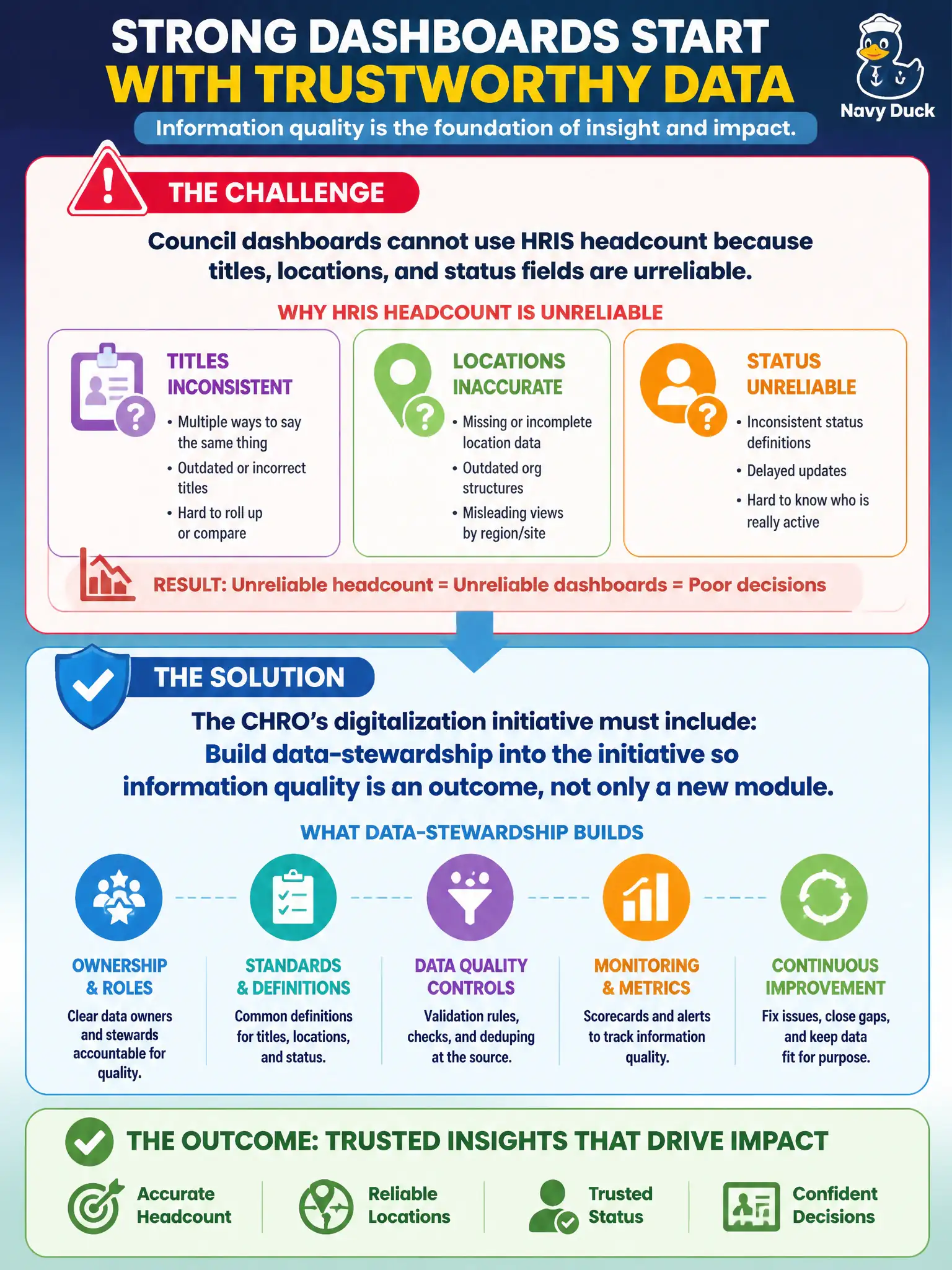
Council dashboards cannot use HRIS headcount because titles, locations, and status fields are unreliable. What should the CHRO's digitalization initiative include?
Select an answer to reveal the explanation.
Short Explanation
A shiny dashboard on dirty titles is like a GPS that thinks city hall is in the river. Another module will not fix location and status fields that nobody owns. Stewardship—who cleans, who certifies—is the digitalization outcome.
Full Explanation
Data quality is a digitalization outcome, not a side effect of buying visualization. Building data stewardship into the HRIS initiative—stewards, standards, and certification for titles, locations, and status—so council dashboards can trust headcount treats information quality as the product. A new module on dirty fields remains unusable.
Buying another dashboard module and leaving source data as-is spends money on a prettier wrong number. Hiding the HRIS from council until a new vendor is selected delays accountability without fixing stewardship. Letting each department keep its own spreadsheet as the official count recreates the fragmentation that made the HRIS unreliable.
Exam caveat: stewardship needs executive cover when departments resist standard titles; standards are change management, not only a data dictionary. Operational check: name stewards per domain, certify critical fields on a schedule, and withhold "official" dashboard status until certification thresholds are met. Document ownership so auditors can see who maintains the control. Re-test the control after the next tabletop or hiring cycle. Keep the civic workforce impact visible in the evaluation notes. Document ownership so auditors can see who maintains the control.