
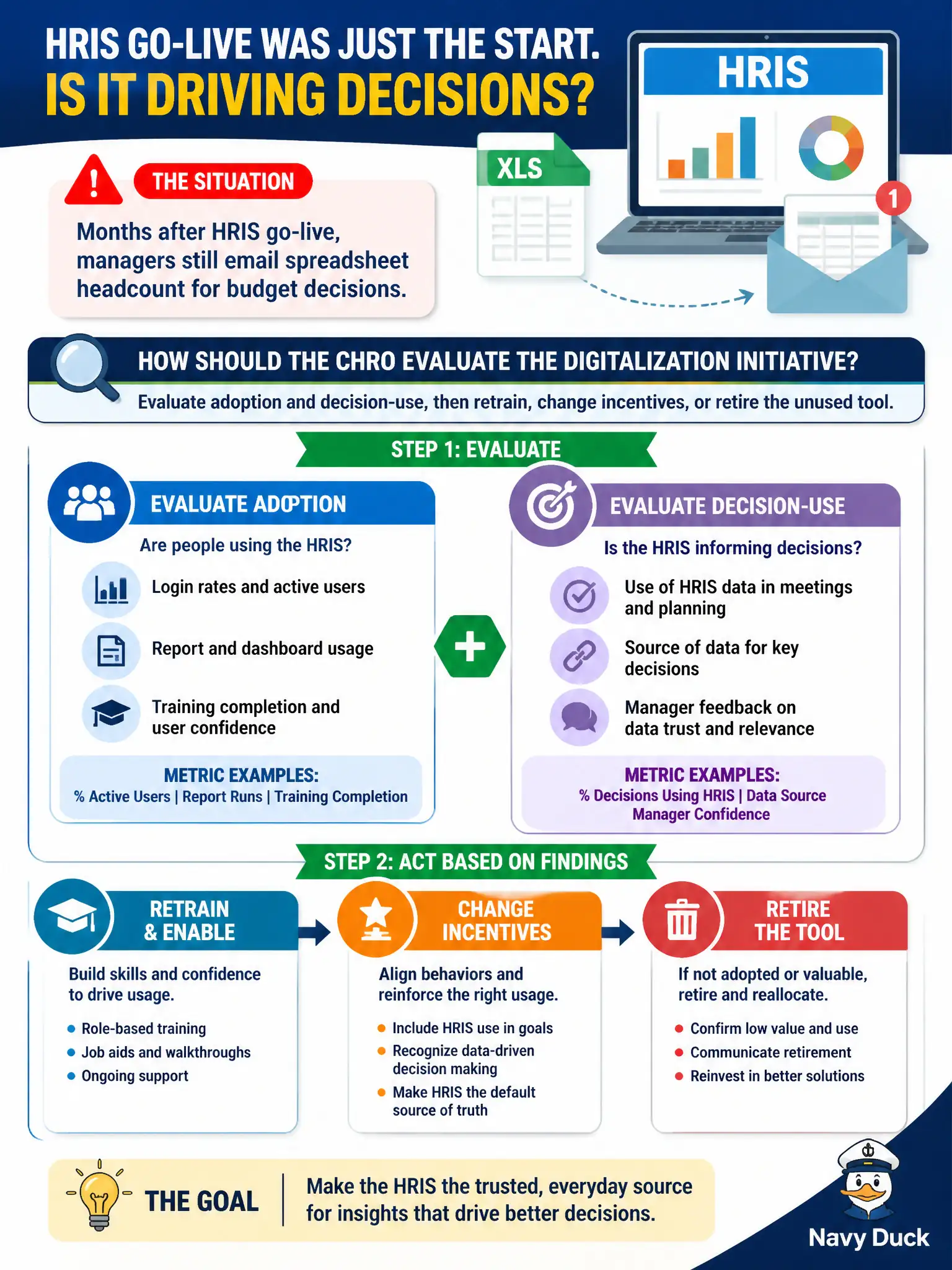
Months after HRIS go-live, managers still email spreadsheet headcount for budget decisions. How should the CHRO evaluate the digitalization initiative?
Select an answer to reveal the explanation.
Short Explanation
If budget talks still run on emailed spreadsheets, the HRIS is a very expensive coat rack. Go-live is a date, not a result. Check whether people actually decide from the system—then train, change the incentives, or pull the plug.
Full Explanation
Evaluation of HR digitalization is adoption and decision-use, not the go-live calendar. When managers still email spreadsheet headcount for budget decisions months after HRIS launch, the CHRO should evaluate adoption, then retrain, change incentives, or retire the unused tool. Persistent shadow files mean the initiative has not changed how the city decides.
Counting go-live as success because the system is technically available mistakes infrastructure for outcomes. Mandating a new module purchase without checking why spreadsheets persist stacks technology on an unresolved behavior gap. Ignoring spreadsheets as a fad that will fade leaves official decisions on unofficial data.
Exam caveat: sometimes the tool truly fails field needs; willingness to retire or re-scope is part of honest evaluation, not only more training. Operational check: measure percentage of budget decisions sourced from HRIS versus spreadsheets, remove rewards for shadow files, run targeted manager enablement, and set a kill-or-fix decision date. Document ownership so auditors can see who maintains the control. Re-test the control after the next tabletop or hiring cycle. Keep the civic workforce impact visible in the evaluation notes.