
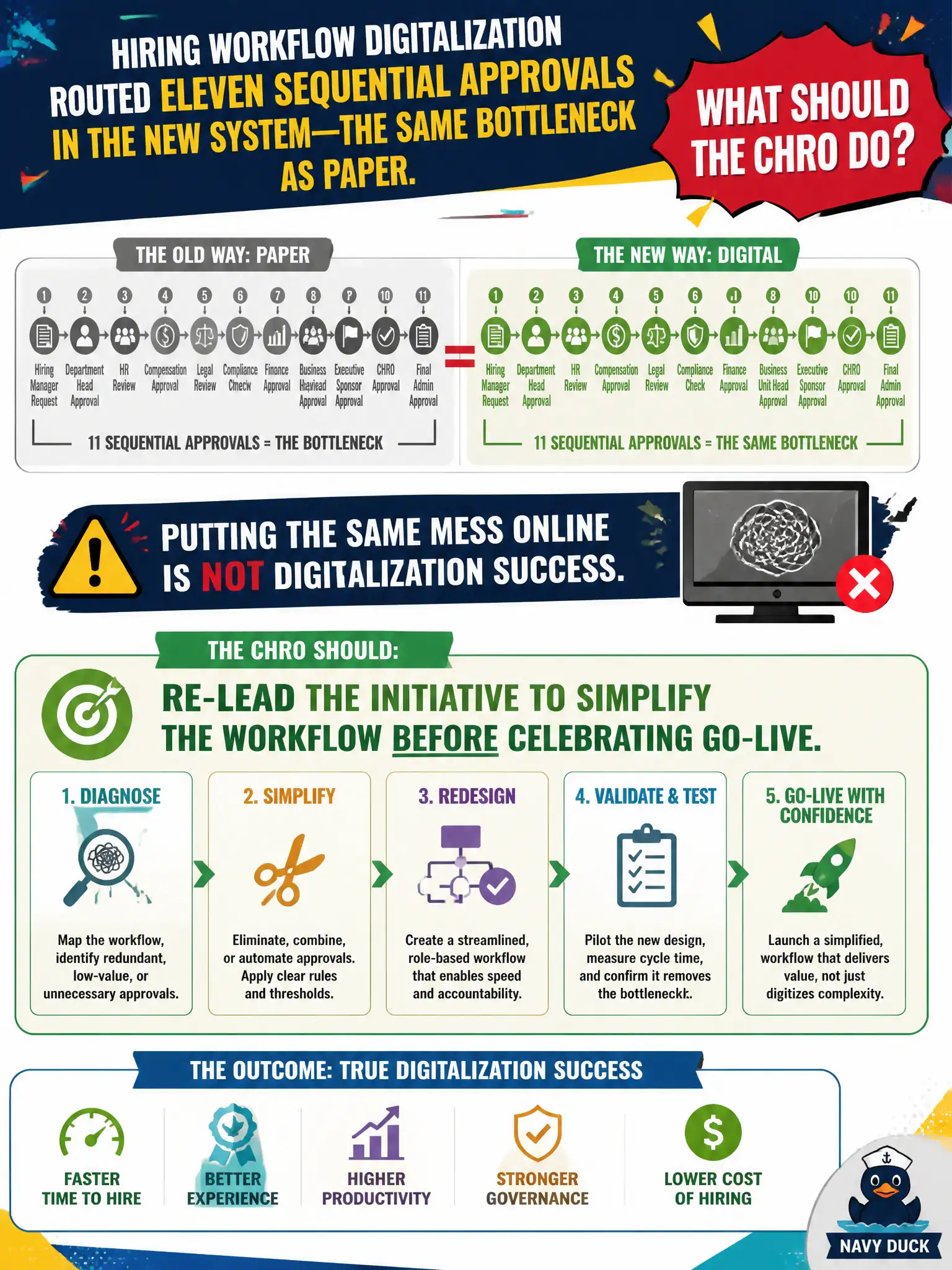
Hiring workflow digitalization routed eleven sequential approvals in the new system—the same bottleneck as paper. What should the CHRO do?
Select an answer to reveal the explanation.
Short Explanation
Putting eleven signatures on a screen is still eleven signatures. Digitalization is supposed to shorten the line, not photocopy the traffic jam. Go-live is not a win if hiring still waits on the same pile of approvals.
Full Explanation
Digitizing a bad process is not digitalization success. Re-leading the hiring-workflow initiative to simplify eleven sequential approvals before celebrating go-live restores the point of automation: risk-appropriate speed, not the same bottleneck online. SPHR leadership redesigns approvals, then automates the simpler path.
Keeping all eleven approvals because digital routing makes delay "acceptable" preserves the defect with a better audit trail of waste. Adding three more electronic reviewers so the trail feels stronger increases cycle time without adding decision quality. Measuring success only by whether the workflow tool is live confuses availability with outcomes.
Exam caveat: some approvals are legally or charter-required; simplification removes non-value handoffs, not mandated authorities. Operational check: map each of the eleven steps to risk or statute, cut or parallelize the rest, and compare time-to-offer before versus after the redesign. Document ownership so auditors can see who maintains the control. Re-test the control after the next tabletop or hiring cycle. Keep the civic workforce impact visible in the evaluation notes. Document ownership so auditors can see who maintains the control.