
The city's risk-management system and HRIS do not share incident data, so people-risk cannot inform council strategy. What should the CHRO lead?
Select an answer to reveal the explanation.
Short Explanation
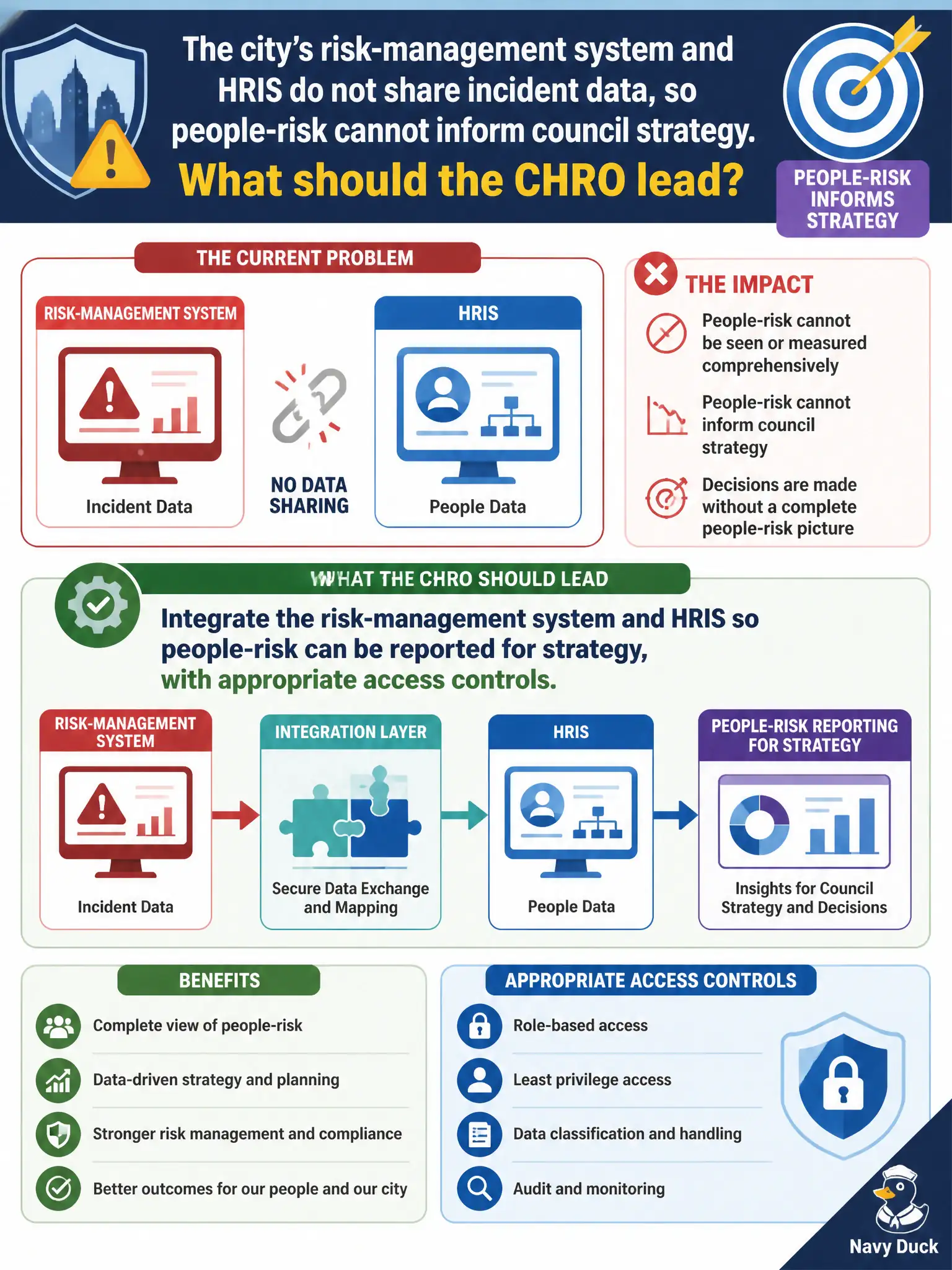
When claims live in one silo and people live in another, council is flying with half the instruments. Privacy is handled with access rules, not by refusing to connect the pipes. Digitalization here means joining risk and HR data so strategy can see people-risk.
Full Explanation
HR digitalization includes connecting people and risk data so leaders can report people-risk against strategy for council. Integrating the risk-management system and HRIS—with least-privilege access, purpose limitation, and audit—creates that usable view instead of leaving systems silent to each other. Separation is not automatically privacy success.
Keeping the systems separate so privacy is "automatically solved" often just blinds strategy while shadow spreadsheets proliferate. Printing risk reports and having analysts retype names into the HRIS multiplies error and exposure. Dropping people-risk from strategy dashboards because the systems do not talk accepts a reporting failure.
Exam caveat: integration should share the minimum fields needed for the strategy metric, not a full clinical or claims dump into general HRIS users' hands. Operational check: define the people-risk data elements and access roles, implement a controlled interface, and verify council dashboards refresh without manual rekeying. Document ownership so auditors can see who maintains the control. Re-test the control after the next tabletop or hiring cycle. Keep the civic workforce impact visible in the evaluation notes.