
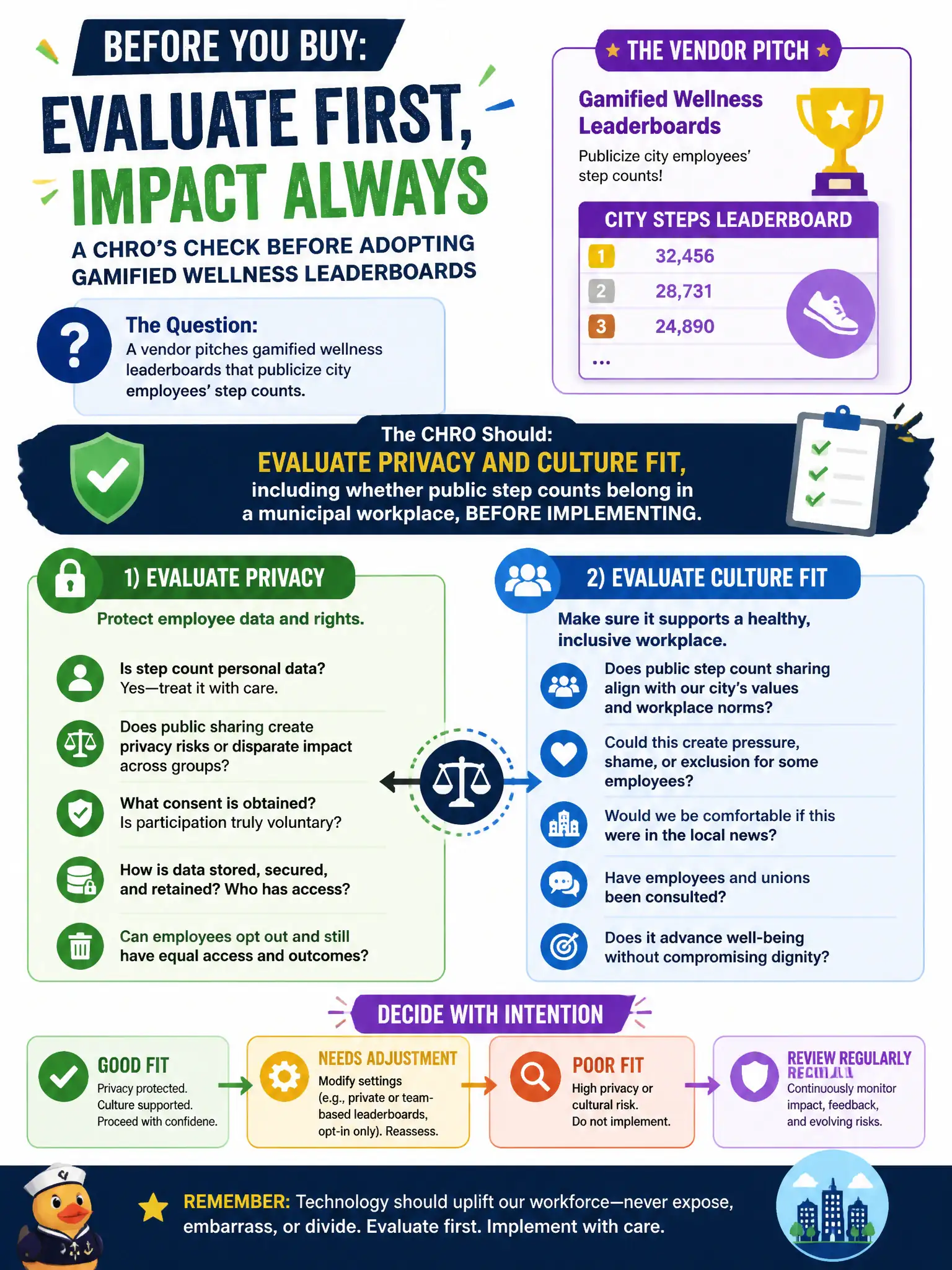
A vendor pitches gamified wellness leaderboards that publicize city employees' step counts. What should the CHRO do before buying the emerging technology?
Select an answer to reveal the explanation.
Short Explanation
A public step-count board is like pinning everyone's medical chart in the break room and calling it a contest. Some cultures will hate it, and health data does not belong on a scoreboard. Evaluate privacy and fit before the city buys the game.
Full Explanation
Gamification and other emerging HR technologies can conflict with privacy expectations and workplace culture, so they require evaluation before implementation. Assessing whether public step-count leaderboards belong in a municipal workplace—including lawful basis, voluntariness, and cultural fit—comes before buying a vendor pitch that treats publicity as automatic engagement. Processing decisions are not marketing slogans.
Buying the leaderboard because gamification always raises engagement skips privacy and culture review. Launching a pilot first on sanitation crews because they walk the most scales biometric or activity publicity onto a group that may feel coerced. Requiring every department to post weekly step totals on the intranet mandates exposure rather than testing consent.
Exam caveat: even voluntary wellness tech can become coercive if prizes or social pressure effectively compel participation. Operational check: run a privacy and culture review with counsel and employee representatives, require opt-in without public leaderboards unless clearly justified, and document the go/no-go before procurement. Document ownership so auditors can see who maintains the control. Re-test the control after the next tabletop or hiring cycle.