
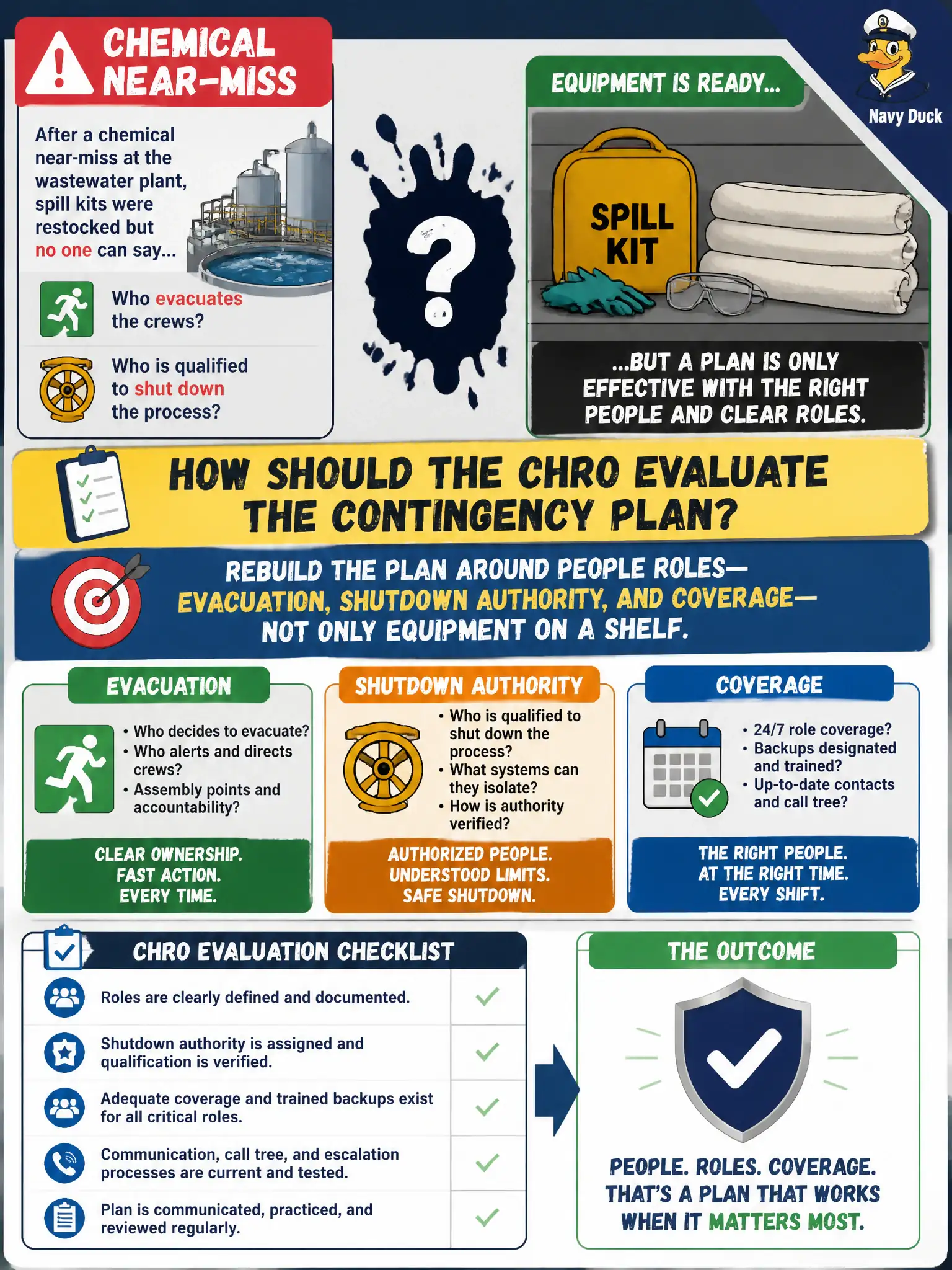
After a chemical near-miss at the wastewater plant, spill kits were restocked but no one can say who evacuates crews or who is qualified to shut down the process. How should the CHRO evaluate the contingency plan?
Select an answer to reveal the explanation.
Short Explanation
A restocked spill kit with nobody assigned is like a fire extinguisher in a locked closet and no one holding the key. Contingency work is about who moves, who shuts down, and who covers—not just gear on a pallet. People roles make the plan real.
Full Explanation
Contingency planning for employee safety requires named human roles—evacuation, qualified shutdown, communication, and backup coverage—in addition to equipment. After a chemical near-miss at the wastewater plant, rebuilding the plan around those people roles rather than counting restocked spill kits tests whether the plan would protect crews under time pressure. Capability is staffed and trained humans, not shelf inventory alone.
Counting restocked kits as a completed contingency strategy mistakes supplies for command. Outsourcing all shutdown decisions to the chemical supplier's hotline leaves the plant without on-site authority when seconds matter. Filing the near-miss only as a workers' compensation claim closes the review without creating operational readiness.
Exam caveat: roles must match qualifications and union or licensing constraints for who may shut down a process. Operational check: name primary and backup evacuation and shutdown authorities on the posted plan, verify training dates, and run a timed drill that does not depend on a vendor call. Document ownership so auditors can see who maintains the control. Re-test the control after the next tabletop or hiring cycle.