
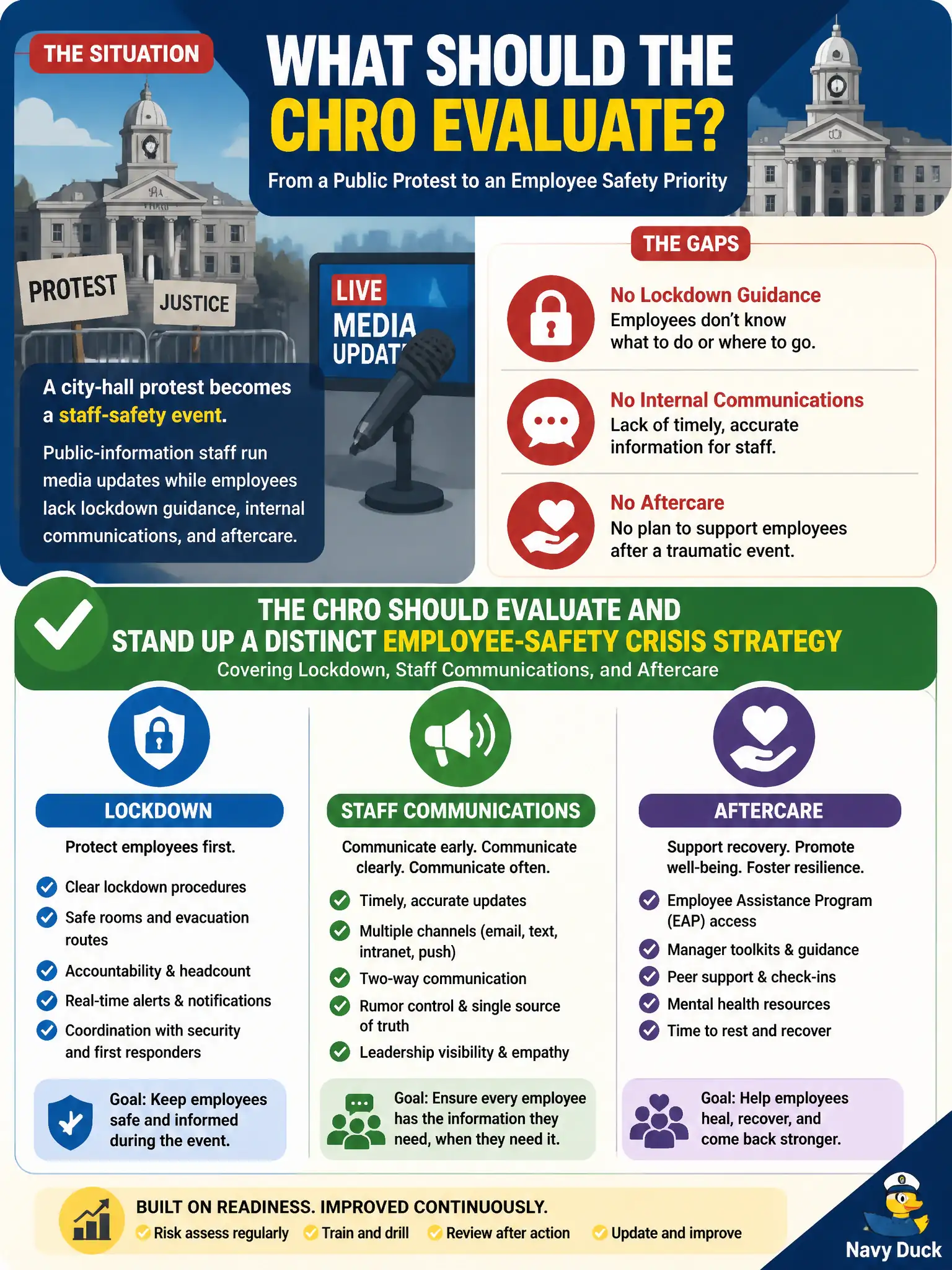
A city-hall protest becomes a staff-safety event. Public-information staff run media updates while employees lack lockdown guidance, internal communications, and aftercare. What should the CHRO evaluate?
Select an answer to reveal the explanation.
Short Explanation
A press briefing is not a lockdown. Staff still need a signal, a safe place, and someone checking on them after the crowd thins. Employee crisis management is its own playbook, not a leftover from the PIO desk.
Full Explanation
Employee-safety crisis management is a distinct strategy from public-information operations, even when both respond to the same civic protest. Standing up lockdown guidance, staff communications, accountability for who is on site, and aftercare gives employees a plan that media updates cannot supply. The CHRO evaluates and owns that employee-facing capability separately from the city's public narrative.
Treating public-information operations as the employee crisis plan because the event is in the news leaves staff without protective instructions. Sending employees home without a plan and addressing safety only after the protest ends abandons those still inside or commuting through the event. Letting department heads improvise lockdowns because every floor is different guarantees inconsistent and untested responses.
Exam caveat: coordination with public information still matters for message consistency; separation of purpose is not isolation from the EOC. Operational check: publish an employee crisis annex with lockdown and aftercare steps, test internal alert reach during a drill, and confirm EAP or peer support is queued for post-event care. Document ownership so auditors can see who maintains the control.