
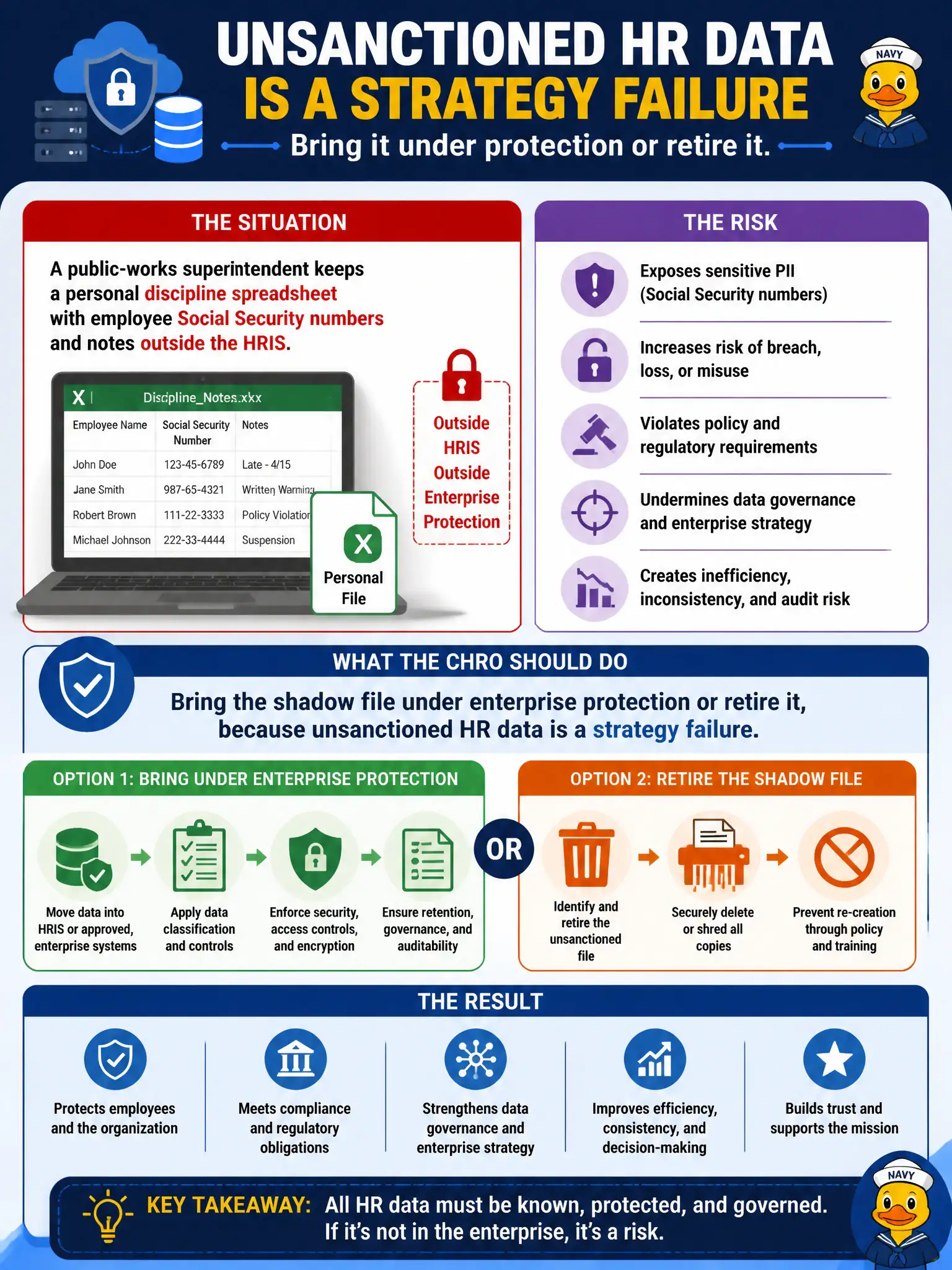
A public-works superintendent keeps a personal discipline spreadsheet with employee Social Security numbers and notes outside the HRIS. The CHRO is aligning HR processes to the enterprise data-protection strategy. What should the CHRO do?
Select an answer to reveal the explanation.
Short Explanation
A private discipline workbook with SSNs is a second personnel file hiding in a desk drawer. Calling it a supervisor tool does not put it under the city's protection rules. Either fold it into the official system or kill it—do not clone it onto a shared drive.
Full Explanation
Shadow HR systems are a data-protection failure because they hold sensitive personnel data outside access control, retention, and audit. Bringing a superintendent's personal discipline spreadsheet with Social Security numbers under enterprise protection—or retiring it—is how the CHRO aligns processes to the city's strategy. Employee data should live only in sanctioned repositories.
Ignoring the spreadsheet because it is a "supervisor tool" rather than an HR system misstates risk ownership. Copying it onto a shared drive so HR can see it too expands exposure instead of containing it. Asking the superintendent only to lock the laptop leaves the unsanctioned store in place with the same content risk.
Exam caveat: migrating discipline notes must preserve due-process and grievance records; retirement of the shadow file needs a documented transfer, not silent deletion of needed evidence. Operational check: inventory shadow HR files in public works, migrate required content into the HRIS or case system, wipe residual local copies, and recheck in sixty days. Document ownership so auditors can see who maintains the control. Re-test the control after the next tabletop or hiring cycle. Keep the civic workforce impact visible in the evaluation notes.