
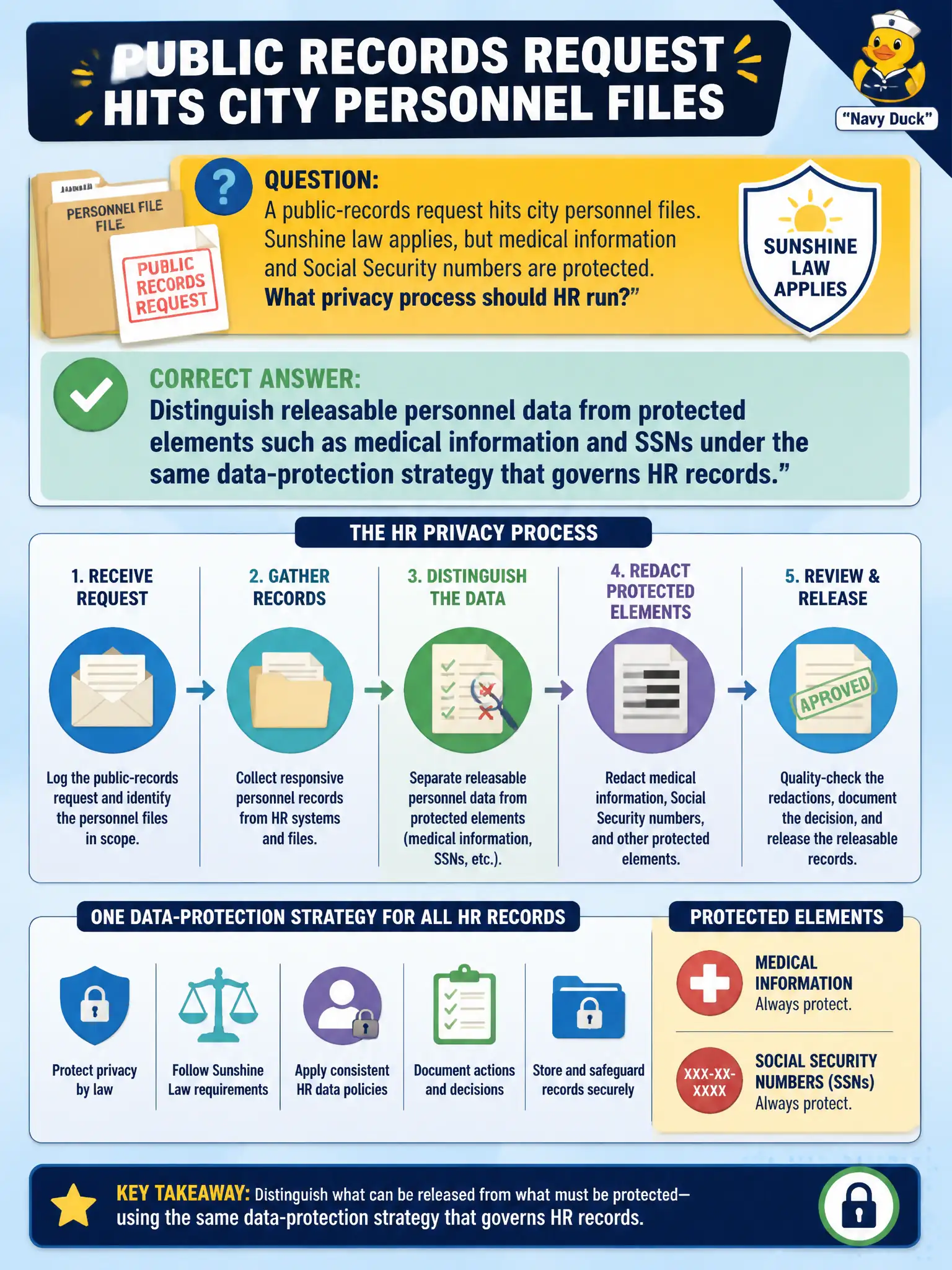
A public-records request hits city personnel files. Sunshine law applies, but medical information and Social Security numbers are protected. What privacy process should HR run?
Select an answer to reveal the explanation.
Short Explanation
Sunshine on the porch, shades on the bedroom. Public jobs come with disclosure, not with handing over diagnoses and Social Security numbers. The process is a sort, not a dump and not a stonewall.
Full Explanation
Sunshine and public-records regimes still require a personnel-data protection process. Distinguishing releasable employment information from protected elements such as medical information and Social Security numbers—under the same data-protection strategy that governs HR records—is how a city honors both disclosure duties and privacy. Blanket approaches and informal workarounds are process failures.
Releasing the entire personnel file because public-sector employment is "fully public" over-discloses exempt and sensitive content. Withholding the entire file, including non-exempt employment dates, because privacy always beats disclosure ignores lawful transparency obligations and invites challenge. Asking a reporter to interview the employee instead of applying a records protocol substitutes improvisation for a documented review.
Exam caveat: exemptions and redaction rules are jurisdiction-specific; the SPHR skill is running a consistent segregate-and-release process with counsel, not memorizing every statute line. Operational check: maintain a redaction checklist for personnel requests, log what was released versus withheld, and have counsel sample two recent responses for over- or under-disclosure.