
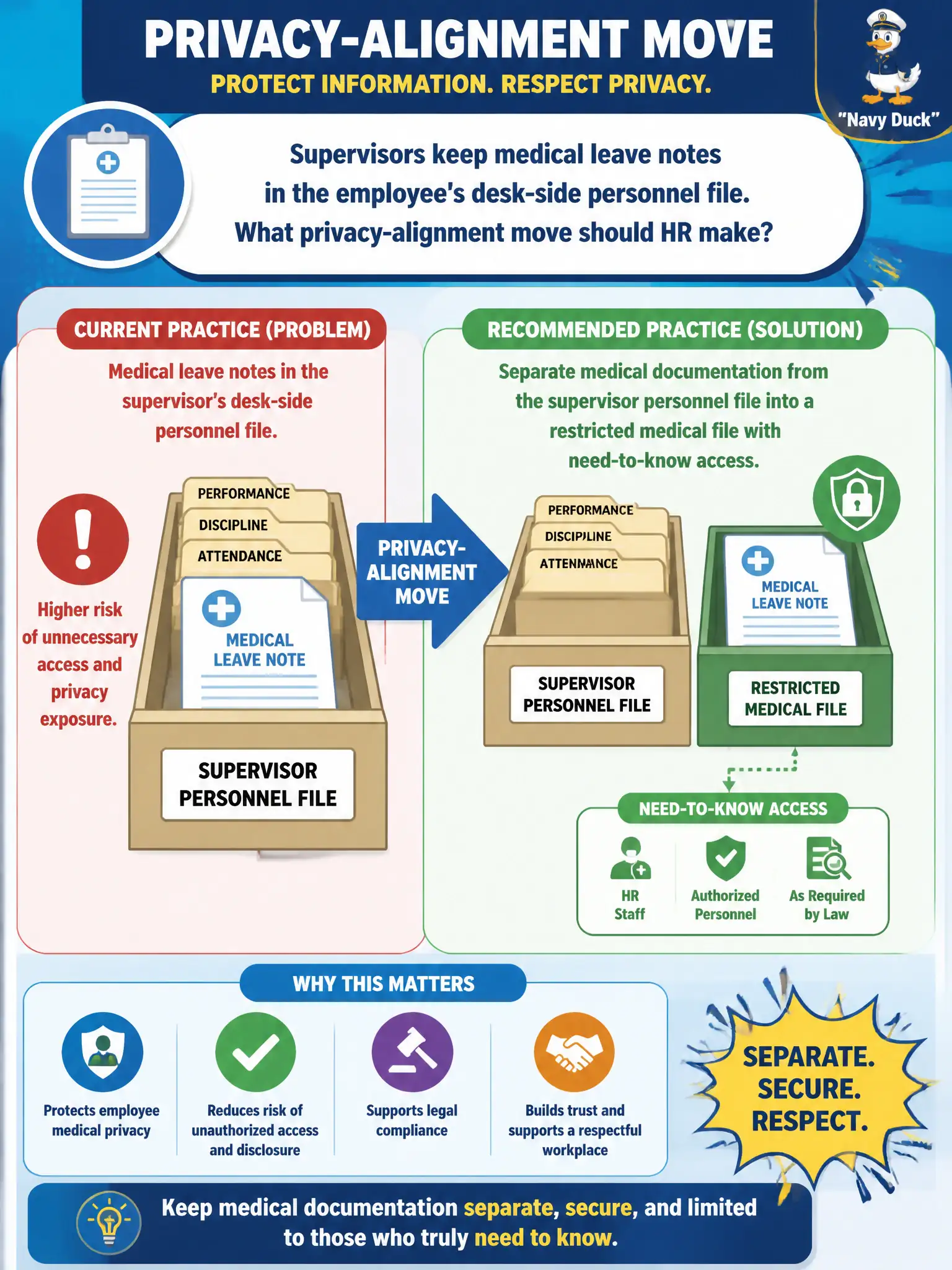
Supervisors keep medical leave notes in the employee's desk-side personnel file. What privacy-alignment move should HR make?
Select an answer to reveal the explanation.
Short Explanation
A diagnosis sticky-noted on the supervisor's clipboard is not confidential just because it lives in a folder. Medical notes do not belong next to the attendance sheet. Split the files so only people who must know can see the health details.
Full Explanation
Medical documentation must be segregated from the general personnel or supervisor file, with access limited to those with a need to know for leave, accommodation, or occupational-health purposes. Separating medical notes from the desk-side personnel file into a restricted medical file is the privacy-alignment move under typical ADA and FMLA recordkeeping expectations and under HIPAA where it applies. Segregation is file-system design, not a slogan.
Training supervisors to highlight diagnoses in the desk file so accommodations are easier to remember increases unnecessary medical detail in the wrong place. Scanning medical notes into the shared departmental drive with the rest of the personnel file broadcasts protected information. Emailing medical notes to the whole crew for coverage transparency is a disclosure failure dressed as operations planning.
Exam caveat: supervisors may receive limited functional restrictions without full medical charts; need-to-know is not zero information and not the entire diagnosis history. Operational check: audit supervisor files for medical content, migrate findings into the restricted medical repository, revoke shared-drive medical folders, and retrain on what may sit in the working personnel file.