
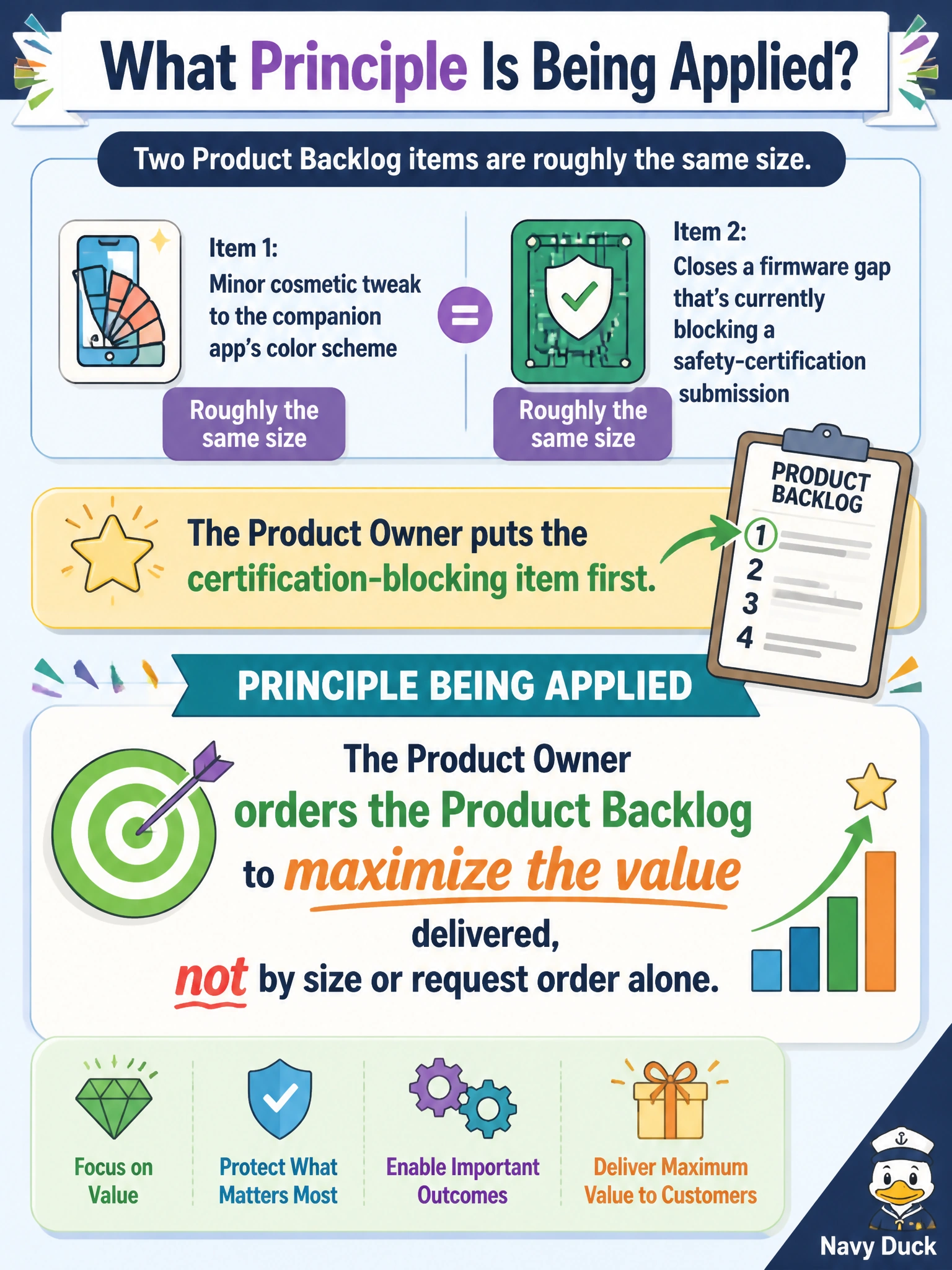
Two Product Backlog items are roughly the same size. One is a minor cosmetic tweak to the companion app's color scheme; the other closes a firmware gap that's currently blocking a safety-certification submission. The Product Owner puts the certification-blocking item first. What principle is being applied?
Select an answer to reveal the explanation.
Short Explanation
Same size, wildly different stakes — a color tweak and a certification blocker aren't remotely equal just because they'd take about as long to build. Ordering by value, the way the Product Owner just did, means the thing actually holding up the launch goes first.
Full Explanation
Product Backlog ordering is a value judgment the Product Owner makes, and size alone, or the order requests happened to arrive in, or alphabetical tidiness, isn't a substitute for that judgment. In this scenario, a certification-blocking firmware gap threatens the entire product's ability to ship at all, while a color-scheme tweak has no bearing on whether the robot can legally reach retail shelves; putting the certification item first reflects that enormous gap in consequence even though the two items look similar in effort. Ordering chronologically by request date would let an old, low-stakes request sit ahead of an urgent blocker just because it was asked for first, which has nothing to do with value. Ordering by smallest estimate rewards easy wins over important ones, which can leave a company shipping polish while a launch-blocking gap festers. Alphabetical ordering is arbitrary and ignores value entirely — it's mentioned here only as an example of a rule Scrum does not prescribe. A concrete check: if two items are similar in size, does the Product Backlog reflect which one the business actually needs more urgently, or just which one happened to get typed in first?