
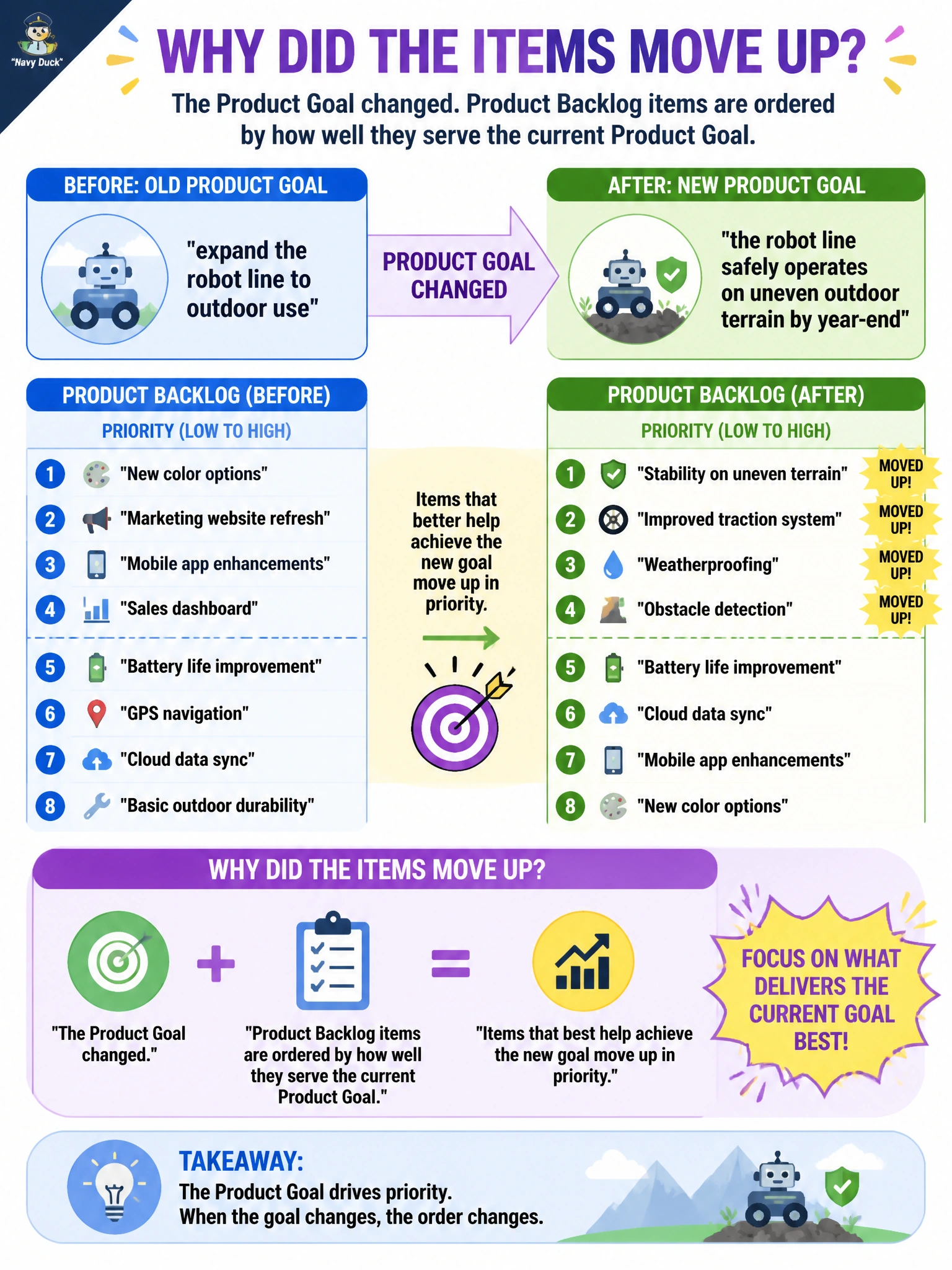
The Product Owner updates the Product Backlog's long-range statement from 'expand the robot line to outdoor use' to 'the robot line safely operates on uneven outdoor terrain by year-end,' and several previously low-priority items suddenly move up because they now clearly serve that statement. What best explains why the items moved?
Select an answer to reveal the explanation.
Short Explanation
When the destination changes, the map gets redrawn — items that barely mattered for 'expand outdoor' suddenly matter a lot for 'safely handle uneven terrain.' That's the Product Goal doing exactly what it's there to do: giving the Product Owner a lens for what belongs near the top.
Full Explanation
The Product Goal is the long-term objective the Product Backlog serves, and when the Product Owner sharpens or changes it, the relative value of existing Product Backlog items shifts along with it — that's exactly what happened here. Items about terrain sensing or suspension calibration that looked marginal under a vague 'expand to outdoor use' statement become clearly valuable once the goal specifically names uneven-terrain safety, so the Product Owner reorders the backlog to reflect that. This is a Product Goal effect, not a Sprint Goal effect: the Sprint Goal is scoped to a single Sprint's Sprint Backlog and doesn't reach back to reorder the whole Product Backlog. It's also not a Definition of Done change — Done describes a quality bar for calling work releasable, not a statement of product direction, and tightening it wouldn't explain items moving up in priority. And nothing here involved a stakeholder vote; the Product Owner made a unilateral direction change and then re-evaluated the backlog against it, which is the Product Owner's accountability, not a group decision. A concrete check: do the newly elevated items each map clearly to the new Product Goal's wording, or did they move for an unrelated reason?