
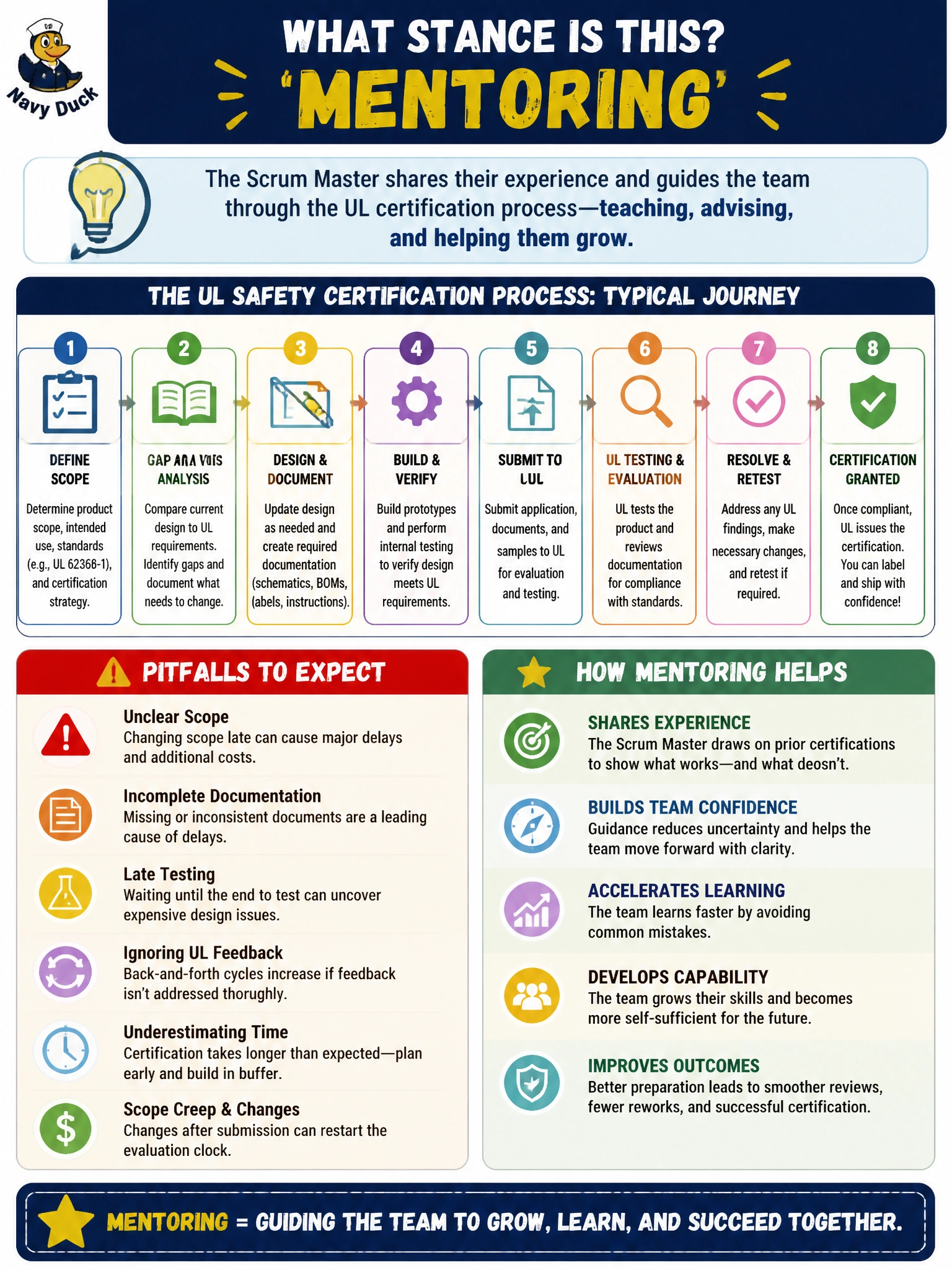
None of the Developers on a newly formed hardware Scrum Team have ever taken a product through a UL safety certification cycle before. The Scrum Master, who has personally guided two prior product certifications at a former employer, offers to walk the team through what that process typically looks like and the pitfalls to expect. Which stance is this?
Select an answer to reveal the explanation.
Short Explanation
When nobody on the team has been through this before, but the Scrum Master personally has, sharing that lived experience is mentoring — not a set of open questions, since there's nothing yet for the team to draw out of themselves. It's passing along what tends to happen, and what tends to go wrong.
Full Explanation
Mentoring is the sharing of the mentor's own relevant experience to help someone facing an unfamiliar situation, and that's the clean fit here: the Scrum Master has personally been through certification cycles before and offers that specific, lived knowledge to a team that has none. Coaching is the wrong label because coaching leans on questions that help people reason to an answer using knowledge or experience they already have; a team with zero exposure to certification has little of its own to draw out yet, which is why direct experience-sharing is more useful than a coaching conversation at this stage. Facilitating doesn't fit because there's no group event or decision-structuring happening — this is the Scrum Master offering their own background knowledge, not shaping how a group reaches a decision. Delegating isn't a recognized Scrum Master stance at all here, and nothing in the scenario involves handing off a decision or task to someone else. An operational check: ask whether the value being offered comes from the helper's own past experience with the specific situation (mentoring) or from questions designed to surface the other person's own thinking (coaching) — the two often get confused but call for different behavior.