
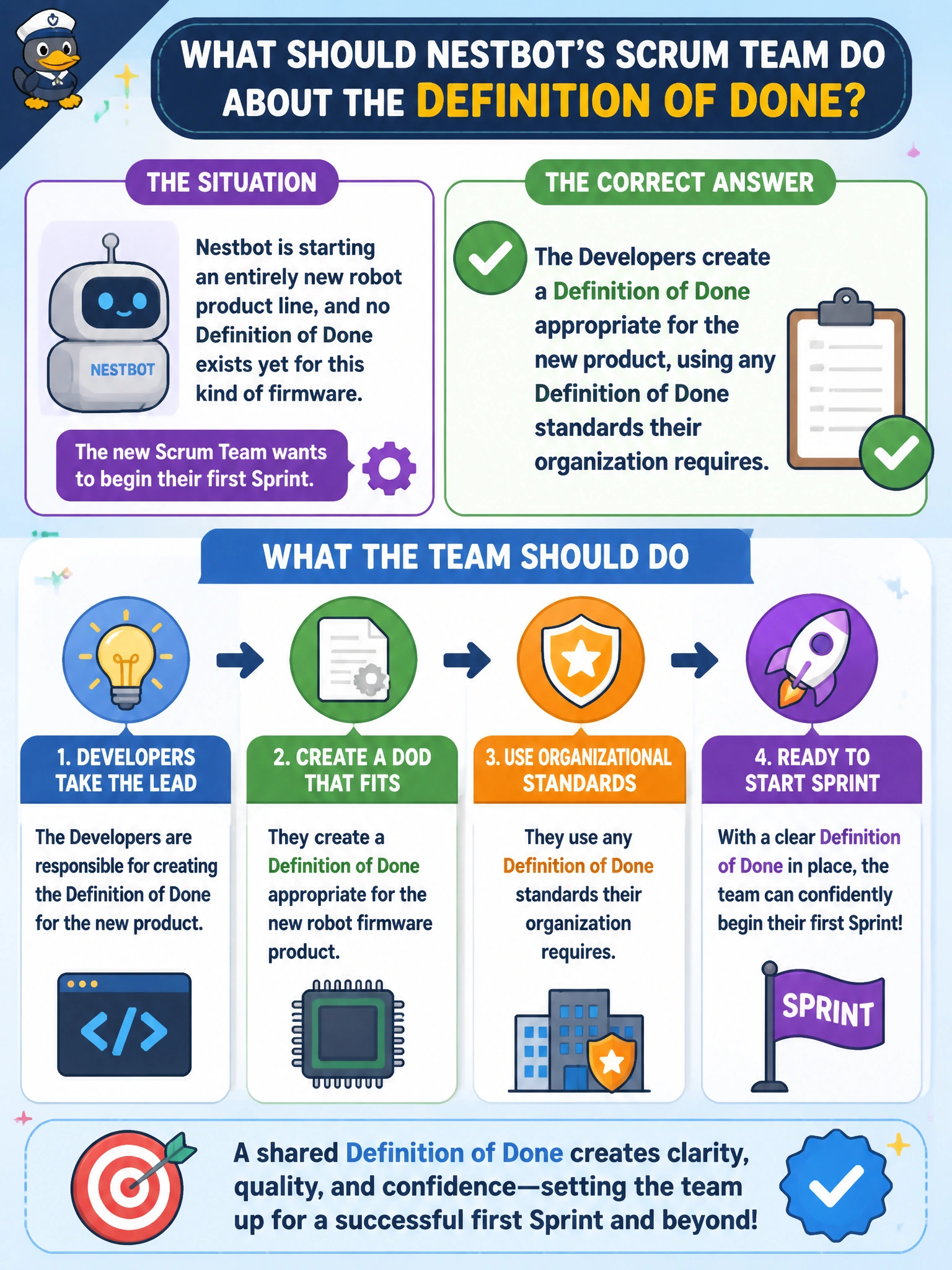
Nestbot is starting an entirely new robot product line, and no Definition of Done exists yet for this kind of firmware. The new Scrum Team wants to begin their first Sprint. What should they do about the Definition of Done?
Select an answer to reveal the explanation.
Short Explanation
No existing Definition of Done doesn't mean no Definition of Done at all; it means the Developers write one before they get going. They build it around this specific product, folding in whatever standards Nestbot already requires company-wide. It's created, not skipped and not borrowed wholesale from something unrelated.
Full Explanation
If no suitable Definition of Done exists for the kind of work a team is about to do, the Guide directs the Developers to create one appropriate for the product, incorporating any Definition of Done standards required by their organization. Skipping it entirely would mean the team has no shared, objective way to know when a Product Backlog item is genuinely finished, which undercuts the transparency the Increment is supposed to provide from the very first Sprint. Borrowing another product line's Definition of Done wholesale ignores that this is a different product with different technical realities, so an unrelated standard may be both too strict in places that don't apply and too loose in places that matter here. Waiting for the Product Owner to write it misplaces the responsibility; the Product Owner is accountable for product value, not for defining the technical bar for completed work, which belongs to the people doing that work. A practical check for Nestbot's new team: before their first Sprint Review, confirm the Definition of Done they wrote actually reflects this product's real constraints and any mandatory organizational criteria, rather than a copy-pasted document nobody revisited.