
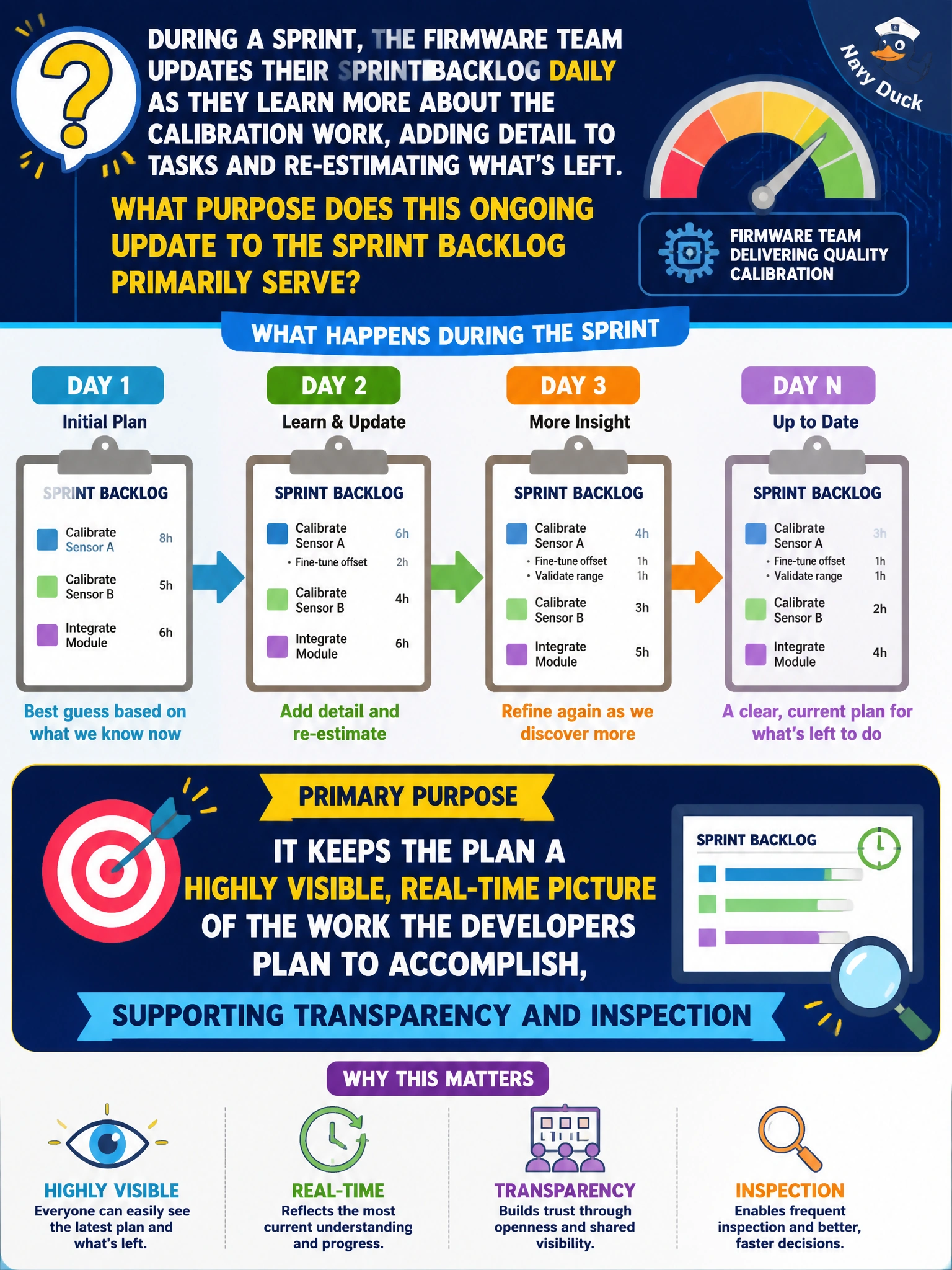
During a Sprint, the firmware team updates their Sprint Backlog daily as they learn more about the calibration work, adding detail to tasks and re-estimating what's left. What purpose does this ongoing update to the Sprint Backlog primarily serve?
Select an answer to reveal the explanation.
Short Explanation
A Sprint Backlog that's updated as the team learns isn't busywork, it's the whole point. It stays a real, current picture of the plan instead of a stale snapshot from the first day of the Sprint. That live picture is what lets anyone, including the team itself, actually see and inspect where things stand.
Full Explanation
Updating the Sprint Backlog throughout the Sprint keeps it functioning as intended: a highly visible, real-time picture of the work the Developers plan to accomplish, which supports both transparency for anyone looking at it and inspection during events like the Daily Scrum. As the calibration work reveals new detail, re-estimating and adding tasks is exactly the emergence the Sprint Backlog is built to capture, rather than a sign the original plan was wrong. Framing this as a mechanism for the Product Owner to add scope at will gets the direction backwards; scope changes still go through the Developers renegotiating with the Product Owner around the Sprint Goal, not through the Product Owner editing the plan unilaterally. There is no Guide requirement for a burndown chart specifically; teams may track progress however works for them, so long as remaining work is visible. And a current Sprint Backlog doesn't replace the Daily Scrum, which exists for the Developers to inspect progress and adapt the plan together, not merely to have current documentation. A concrete check: watch whether the Daily Scrum still happens even on days when the Sprint Backlog looks fully up to date.