
Which of the following describes a primary benefit of establishing and maintaining a transparent, structured disciplinary process for policy violations?
Select an answer to reveal the explanation.
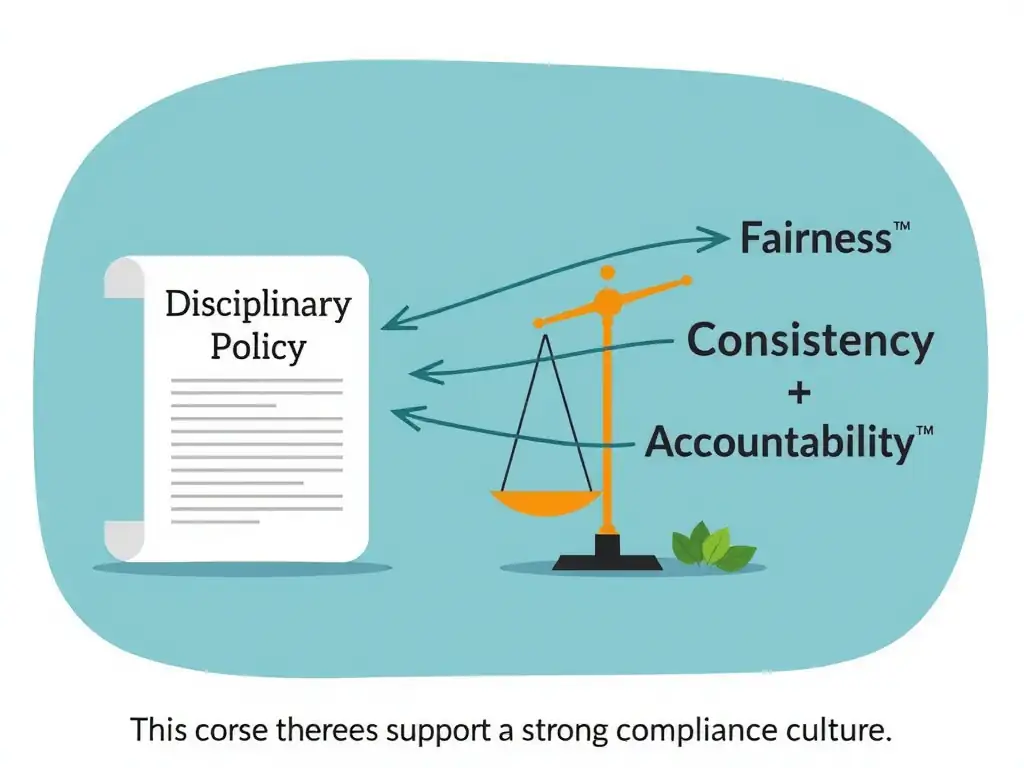
Short Explanation
Think of it like a sports team: if you play on one, you want the rules and consequences to apply to everyone. A clear, documented disciplinary process shows you'll be treated fairly, which builds accountability and makes compliance stick.
Full Explanation
A transparent and structured disciplinary process is a foundational component of organizational justice. Employees are far more likely to buy into a compliance program if they perceive it as fair and even-handed. Conversely, arbitrary or secret disciplinary actions breed cynicism and distrust. The correct description is that it promotes organizational justice by ensuring consistent, fair treatment, which strengthens a culture of accountability. A clear disciplinary process ensures that when policy violations occur, the response is consistent and predictable. This consistency prevents allegations of favoritism or discrimination, as similar infractions receive similar consequences regardless of the employee's rank or performance. Fostering this environment of organizational justice builds a culture of accountability where employees understand that compliance is non-negotiable and that everyone is held to the same standards. The claim that it completely eliminates the possibility of future compliance infractions by any employee is incorrect because no compliance process, no matter how rigorous, can guarantee that zero violations will ever occur. Human error and intentional misconduct cannot be entirely eliminated; the goal is to minimize their frequency and impact. The claim that it grants executive management the authority to terminate employees at will without documenting cause is incorrect because a structured disciplinary process actually restricts arbitrary termination. It requires documentation, investigations, and adherence to established guidelines, protecting employees from unfair dismissal. The claim that it serves as a symbolic public relations tool designed solely to impress regulatory inspectors without altering internal behavior is incorrect because using a disciplinary process as a mere public relations facade is ineffective and dangerous. Regulators look past formal policies to evaluate how they are actually implemented in practice; sham processes will not protect a company during a regulatory investigation.