
A company's board of directors wants to actively demonstrate its commitment to the organization's compliance program. Which action represents the most effective way for the board to fulfill this oversight duty?
Select an answer to reveal the explanation.
Short Explanation
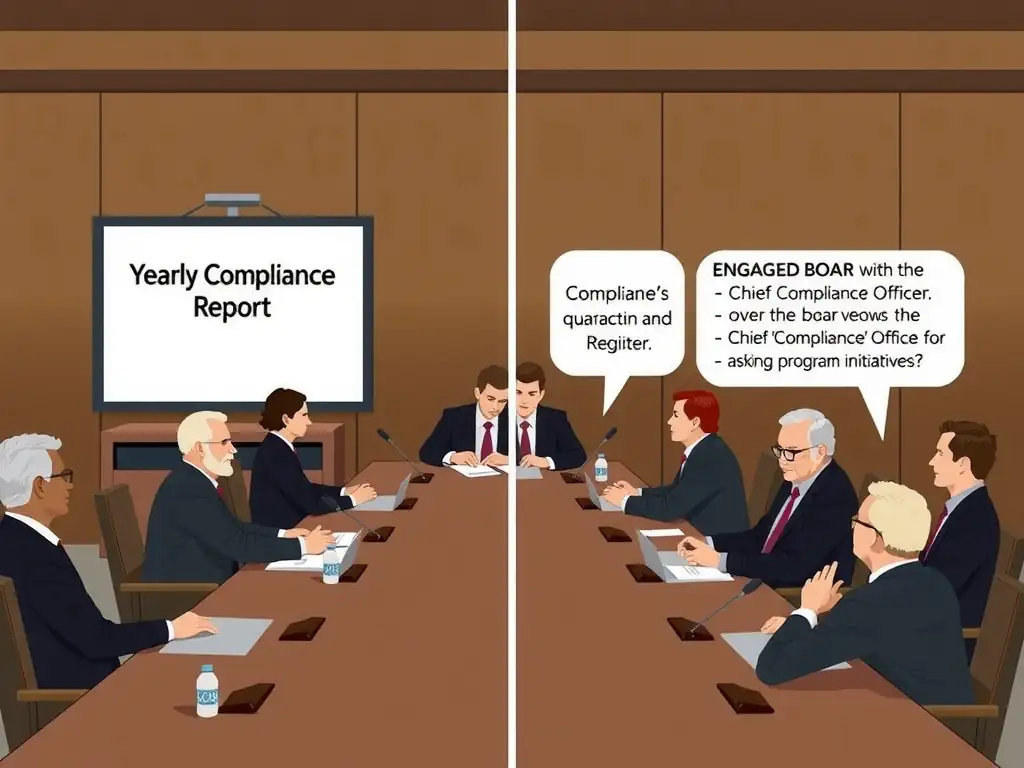
If board directors think compliance is just one annual report while eating donuts, they're in for rude awakening. Regulators want tone at top, so you need to hold regular compliance dialogues, ask tough questions about program performance, and champion strategic compliance initiatives. Don't just delegate oversight and wash your hands of it.
Full Explanation
The board of directors holds critical fiduciary duty to oversee organization's compliance program. Regulators, including DOJ, assess whether board is active and informed, and whether it exercises independent oversight of compliance function. This is often referred to as 'tone at top.' The correct action is engaging in regular compliance dialogues, asking critical questions about program performance, and championing strategic compliance initiatives. Effective board oversight requires active engagement and critical inquiry. Board members must schedule regular compliance updates, ask challenging questions to evaluate program effectiveness, and ensure Chief Compliance Officer (CCO) has direct access to board. By championing compliance initiatives and allocating necessary resources, board demonstrates genuine commitment to ethical corporate culture. The annual-only review action is incorrect because reviewing compliance reports only once yearly is passive and insufficient. Compliance risks change rapidly, and yearly review prevents board from identifying and addressing systemic issues in timely manner. The automated weekly email action is incorrect because receiving automated weekly emails is passive activity that does not constitute meaningful oversight or engagement. It can lead to information overload and lack of actual critical review. The full delegation to external corporate legal counsel action is incorrect because while board can utilize legal department for support, it cannot delegate ultimate oversight responsibility. The board must remain actively involved and retain direct, independent oversight of compliance program to maintain proper governance.