
A large financial institution hires a senior trader for its high-risk foreign exchange desk. Due to an onboarding database mismatch, the trader is never enrolled in the mandatory anti-money laundering (AML) and sanctions compliance training. What is the primary risk exposure resulting from this training gap?
Select an answer to reveal the explanation.
Short Explanation
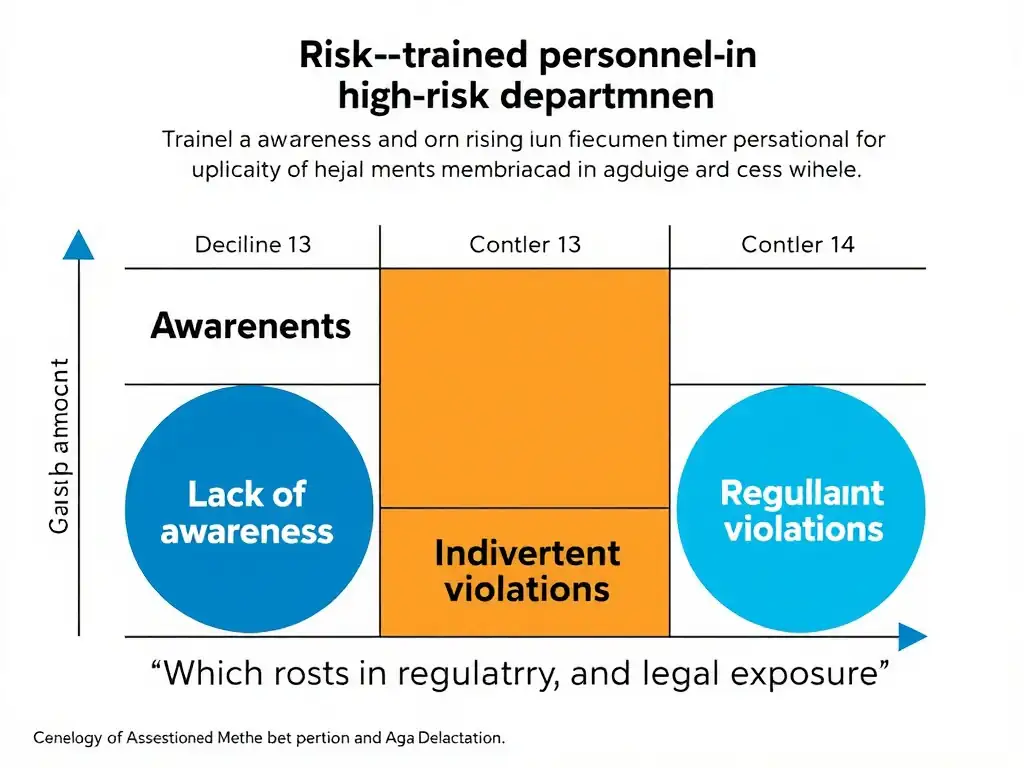
Check this out: ignorance is never a defense with regulators. If you put a new hire in a high-risk role without AML and sanctions training, they can stumble into prohibited transactions and put the firm in deep trouble. Keep your training tracking bulletproof.
Full Explanation
Training and education are fundamental pillars of an effective compliance program, as outlined by the U.S. Department of Justice (DOJ) guidelines for the Evaluation of Corporate Compliance Programs. When employees operate in high-risk areas, such as trading, sales, or procurement, they must have a clear understanding of the specific laws, regulations, and internal policies governing their activities.
The primary risk is that the employee may remain ignorant of critical regulatory constraints and unintentionally engage in prohibited transactions, exposing the firm to severe compliance violations. That is the immediate risk of a training failure: a lack of awareness of compliance rules leads to inadvertent policy violations. In a regulatory context, inadvertent violations still carry significant penalties, and a failure to train demonstrates that the company's compliance program was not functioning effectively in practice.
The statement that regulators will automatically issue an immediate financial penalty the moment the training deadline passes, regardless of whether a violation occurred, is incorrect because regulatory fines are typically not assessed immediately or automatically upon a simple training administrative delay; rather, penalties occur when a substantive violation is uncovered or during a regulatory audit that reveals systemic compliance program failures.
The statement that the employee's operational productivity and technical trade execution speed will decrease significantly is incorrect because compliance training is designed to mitigate regulatory and ethical risks, not to directly improve operational job productivity or execution speed, which are the domain of technical job training.
The statement that the compliance department will be forced to immediately replace its chief compliance officer due to the onboarding error is incorrect because a single onboarding administrative error, while serious, does not automatically trigger the termination or replacement of the chief compliance officer, although it does indicate a need for process improvement.
To prevent these gaps, compliance departments must implement automated training tracking systems that cross-reference HR onboarding data with compliance learning management systems (LMS) to ensure no high-risk employees slip through the cracks.